For decades, the moving industry has remained one of the few service sectors relatively untouched by the digital revolution. For example, industries like travel, banking and retail have all embraced technology to offer customers speed, convenience and transparency. In contrast, moving services have historically relied on manual processes, in-person assessments, and a pricing model that often leaves consumers frustrated and in the dark.
Thanks to AI, that is finally changing. By introducing automation, precision, and customer-centric digital experiences, AI is solving many of the industry’s pain points. From quoting and booking to scheduling and communication, technology is fundamentally rethinking how moving services are delivered, and both consumers and service providers are reaping the benefits.
A Legacy of Inefficiency
The process of moving has always been associated with complexity and stress. Consumers needing a cost estimate often have to schedule a time-consuming in-home walkthrough or, at best, a video consultation. This occurs during one of life’s biggest transitions, moving, which naturally increases the consumer’s stress and can also affect the mover’s stress levels. The back-and-forth between mover and client, the manual inventory process, and the days-long wait for a quote all contribute to a system that is slow and outdated.
Even worse, the quotes themselves can be inaccurate. Estimates are typically based on subjective assessments, leaving wide margins for error that can result in unexpected fees and consumer dissatisfaction. The friction of this process can deter customers from getting multiple quotes, leading them to make decisions based on incomplete information.
For moving companies, the model is equally problematic. Customer acquisition can be expensive and inefficient. Companies often spend hundreds of dollars just to provide an estimate, and after that investment, only a few customers who inquire actually book.
Consumer Expectations Have Changed
In today’s digital world, this kind of customer service simply doesn’t hold up. Consumers have grown accustomed to seamless, tech-enabled services in nearly every other area of life. They expect to research, compare and purchase services quickly and confidently on their schedule, not the service provider’s.
The gap between what modern consumers expect and what traditional moving companies deliver has only widened in recent years. At a time when speed, transparency, and convenience are non-negotiable, the moving industry has struggled to adapt.
AI as a Catalyst for the Moving Industry Transformation
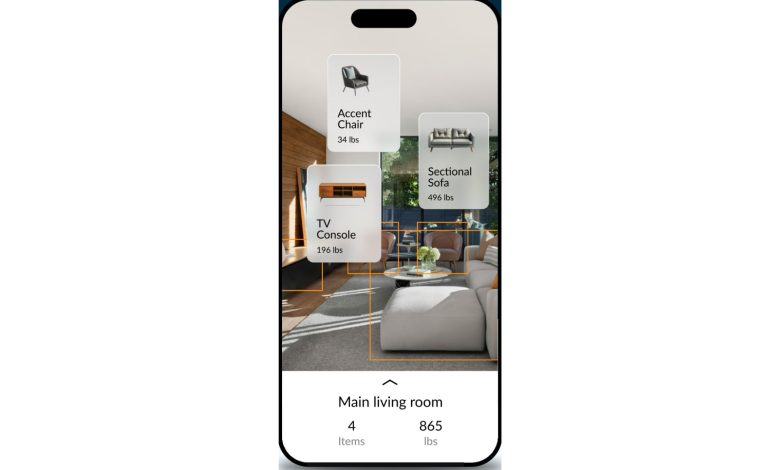
Artificial intelligence is introducing a new level of efficiency, accuracy and intelligence into the moving process. AI-powered platforms can now automate one of the most time-intensive components of a move, the initial quote. By analyzing user-submitted videos or photos, AI can instantly identify furniture, assess item dimensions, estimate weights, and calculate volume with remarkable precision.
These AI-generated quotes are not only faster but also more accurate than traditional methods. This level of accuracy removes one of the biggest sources of anxiety for consumers of not knowing whether the quote they receive will reflect the final cost. With AI, customers gain a sense of control and predictability that has historically been missing from the moving experience.
A Win-Win for Moving Companies
For moving companies, AI isn’t just a tool for cost reduction; it’s a competitive advantage. The adoption of AI eliminates the need for manual surveys and in-home estimates. Instead, they receive structured, accurate data, allowing them to generate bids faster and with greater confidence.
Some of these platforms also act as full-service booking engines, streamlining the entire customer lifecycle from quote to delivery. Movers gain centralized tools for managing communications, scheduling crews, and tracking job progress, all within a single interface.
Real Value for Consumers
The benefits of AI and automation extend even further for consumers. For the first time, many customers are gaining access to real-time pricing from multiple moving providers without having to repeat the same walkthrough process repeatedly. They can record a single video of their home or inventory and receive competitive bids in minutes, not days. This level of transparency naturally drives prices down.
By introducing a secure bidding platform where vetted movers compete anonymously for a job, prices are determined by real-time market dynamics. The benefits are clear as consumers using bidding platforms save more when compared to published mover rates.
A Long-Awaited Modernization
For years, the moving industry has been stuck in an analog world while consumer expectations have gone digital. The rise of AI is finally closing that gap. By delivering faster quotes, more accurate pricing, improved customer satisfaction, and major cost savings for both consumers and movers, AI is helping to solve problems that have plagued the industry for decades. Whether you’re a mover or a customer planning a relocation, one thing is certain: the future of moving is quick, transparent, and increasingly powered by AI.