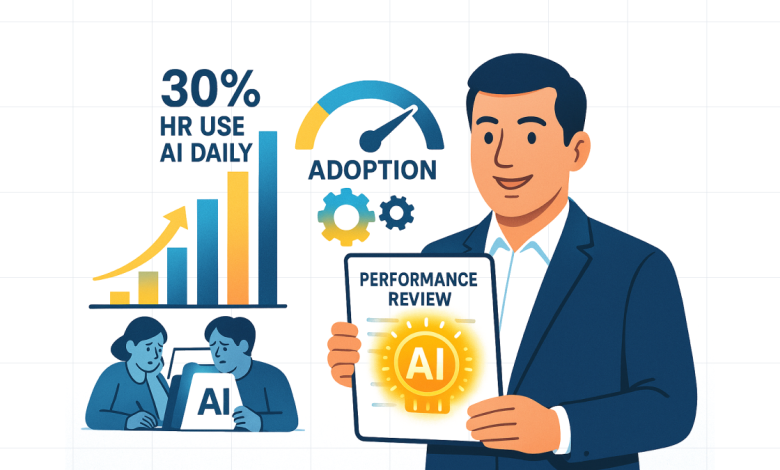
Adopting AI across the enterprise isn’t just about the tools – it’s also about your people. As we learned from the recent Procter & Gamble study, “The Cybernetic Teammate: A Field Experiment on Generative AI Reshaping Teamwork and Expertise,” individuals using AI have matched the output of two-person teams while reporting higher job satisfaction and a positive emotional response.
That’s not incremental improvement. It’s a genuine leap forward in workforce capacity, agility and sentiment. Still, a minority of HR professionals currently use AI daily, and many organizations still lack frameworks to measure adoption and effectiveness.
So, as AI adoption grows, how can companies begin to think about measuring AI adoption and proficiency — walking the line of encouraging experimentation while also avoiding rigid mandates?
Curiosity Over Compliance
For many teams, AI policies are still nascent — and that’s okay. We’re in the early days of adoption for the majority. What matters now isn’t strict compliance and formal rules, but curiosity and exploration. AI fluency should be treated as a journey, not a checklist.
Instead of penalizing those who are reluctant about AI, celebrate those who show initiative: people who experiment, iterate and succeed in finding smarter ways to work. That mindset encourages exploration and can energize teams rather than making them feel daunted by mandates.
Build a “Safe Space” for Experimentation
When organizations mandate AI use too early, adoption becomes mechanical or performative. People might use AI simply to “check a box,” which doesn’t drive real value.
Instead, focus on creating a culture of trust and curiosity. Embrace mistakes. Managers should be clear: “If you tried it and learned something — that counts even if it didn’t play out as expected.” That kind of psychological safety makes AI adoption more organic and sustainable.
Embed Simple, Meaningful Questions in the Review Process
It can be tricky to measure something as intangible as “curiosity” in a performance review, so you’ll want to focus on making it real through reflection. Here’s a two-phase suggested approach:
- Pre-Review Pulse: Run a short employee survey with questions like:
- How often have you used AI tools in the past 3 months? (Daily? Weekly? Monthly? Never?)
- What types of tasks did you use AI for?
- Review Dialogue: Add AI-focused reflection prompts to self-evaluations and manager reviews like:
- Self-reflection: “How have you used AI to improve your work or tried new approaches?”
- Manager reflection: “How has this person demonstrated curiosity or improved work using AI?” Even if they’re not sure — that’s important feedback too.
This approach helps make AI usage part of a growth narrative. It’s reflective more than quantitative, but it establishes a baseline, which is the key.
Use a Maturity Model: From Openness to Fluency
Think of AI adoption as a maturity curve. Early on, the goal is awareness, experimentation and psychological safety. Encourage honest reporting and even pushback. If people say “I didn’t use it yet,” for example, that’s okay.
As individual and organizational comfort with AI grows, start to develop clearer expectations. Instead of simply “Did you try it?”, the question becomes “Were you able to use AI tools effectively, and how?” Over time, AI fluency will grow and eventually become a baseline expectation rather than an optional exploratory topic.
Why This Matters
AI is quickly changing the DNA of how we work. As it becomes embedded in everyday workflows, fluency won’t be optional.
HR leaders who wait for perfect policies or full rollout before they start to weave AI proficiency into performance reviews risk falling behind. Instead, start today with establishing baseline data, embedding reflection and fostering a culture of learning in order to prepare teams for long-term success.
By embedding AI adoption into performance reviews with empathy, not rigidity, organizations can stay human-centered even as AI usage grows.