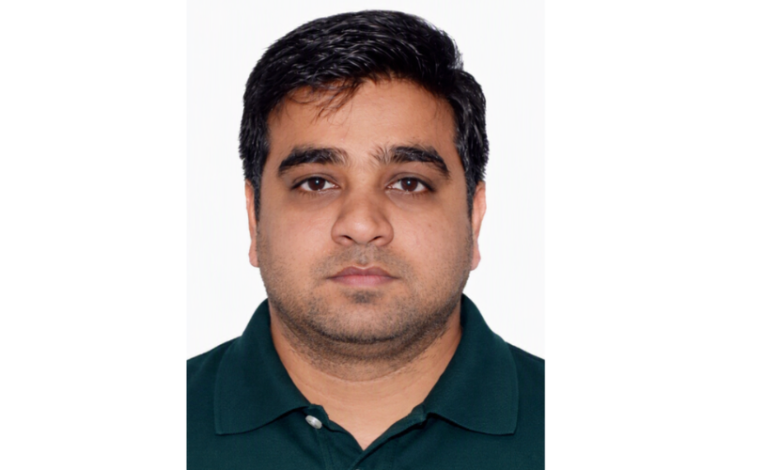
In an era when financial institutions must process increasingly large volumes of transactions while maintaining exceptional standards of speed, security, interoperability, and reliability, the modernization of banking payment infrastructure has become a critical technological priority. At the forefront of this transformation is Karthigaiselvan Vijayaraghavan, a Solution Architect and Software Engineering Manager whose 22-year career has focused on re-engineering legacy enterprise systems into cloud-native, real-time, and highly resilient platforms.
What distinguishes Mr. Vijayaraghavan is his ability to solve highly complex modernization challenges without compromising operational continuity, regulatory compliance, security, or long-term maintainability. He has designed multi-format payment-ingestion and orchestration frameworks that enable real-time validation, transformation, and routing, replacing manual and error-prone legacy processes with automated and scalable solutions. These systems have reportedly improved transaction throughput by approximately 40–50%, supported millions of regulated transactions daily, and been implemented or adopted across multiple financial institutions and enterprise environments. His influence extends beyond individual projects through reusable cloud patterns, integration frameworks, and architectural accelerators that have been replicated across banking, telecommunications, retail, and e-commerce organizations, establishing him as a recognized leader in cloud architecture, enterprise integration, and financial-technology modernization.
Modernizing Systems That Have to Keep Running
Modernization isn’t as simple as banks switching from an older application to a newer one. Payment engines are typically part of a complex system of internal systems, external partners, compliance regulations, and customer service offerings.
That means architects have to understand how transactions move, where data is validated, which systems depend on one another, and what could happen if part of the chain fails.
Vijayaraghavan has spent much of his technical career working in that environment. His experience includes cloud-ready payment ingestion frameworks designed to handle ACH, EFT, wire transfers, ISO 20022, and proprietary corporate payment formats.
The goal is to create a more flexible technical foundation while preserving the reliability and controls that financial institutions depend on.
His architecture work has also involved AWS, Azure, GCP, and OpenShift, alongside integration technologies such as webMethods, Spring Integration, MuleSoft, Kafka, and event-driven messaging.
Building Toward Real-Time Payments
A recurring theme in Vijayaraghavan’s work has been the shift toward more responsive payment infrastructure.
In practical terms, that can involve receiving different payment formats, validating the information they contain, transforming data when required, and routing transactions through the right channels with fewer manual steps.
This is where enterprise integration matters. A modern payment system almost never works on its own. It’s constantly passing information back and forth with core banking platforms, internal applications, APIs, corporate partners, and outside payment networks.
Vijayaraghavan’s work as an integration lead and architect has included developing reusable approaches to those connections. In large organizations, that can make a meaningful difference. Established integration patterns can reduce the need to design every partner or application connection from scratch.
ISO 20022 adds another layer to the modernization effort. As financial institutions adopt richer, more standardized payment messaging, their architecture must support communication between technologies built at very different times.
Corporate payments raise the stakes further. Compared with personal banking, they require stronger security, more robust infrastructure, extended business rules, and compatibility with a wide range of payment formats. Bringing all of this under one modernized framework takes a deep understanding of how payments work in practice, and Vijayaraghavan has built that understanding through years of specialization in the payments segment.
Much of the practical challenge comes down to connecting old and new generations of technology without weakening the stability of the wider payment environment.
Cloud Architecture Is Only Part of the Equation
Cloud adoption is often one of the most visible parts of a modernization program, but moving systems to newer infrastructure does not solve every problem.
Banks still have to consider resilience, security, compliance, interoperability, and long-term maintainability. A new platform can introduce more flexibility, but it must also fit the operational realities of a regulated financial environment.
That is where Vijayaraghavan’s broader architectural background becomes relevant. His work has involved microservices, event-driven systems, DevOps, CI/CD, Infrastructure as Code, and architectural governance.
Together, these approaches can help engineering teams make changes more consistently and create clearer processes for deploying applications and infrastructure.
Another consideration is visibility across increasingly distributed systems. As payment environments become more modular, teams need a clear view of how services interact, where dependencies sit, and how changes move through development and production. Vijayaraghavan’s experience with architectural governance and DevOps practices reflects that need for greater coordination, helping teams manage complex environments with more consistency as systems evolve.
The practical aim is to create an environment where change can happen without making the payment ecosystem harder to operate or maintain.
Bridging Engineering and Business Priorities
Payment modernization also comes down to decisions that have nothing to do with architecture diagrams or tech stacks. On a large transformation program, engineering, operations, compliance, product, and the business all want different things, and they rarely want them at the same time.
Vijayaraghavan’s roles have required him to work across those groups while helping define modernization roadmaps, integration strategies, and technical standards. That includes translating broad business requirements into systems that engineering teams can build and operate reliably.
Partner onboarding is one example. Connecting a new corporate or technology partner may involve APIs, messaging protocols, validation rules, security requirements, and existing banking workflows. Creating reusable integration patterns can make those projects more consistent and easier to manage across teams.
That ability to connect technical design with operational needs has become an important part of his approach to large-scale transformation.
Designing for Reliability, Reuse, and What Comes Next
Vijayaraghavan’s professional philosophy places considerable emphasis on systems that remain useful after a project ends.
His work has included resilient architecture, reusable frameworks, maintainable integration patterns, and engineering practices that can be applied across teams. That focus on reusability is especially valuable in large enterprises, where similar integration and deployment challenges often appear across multiple projects.
Modernization has a people side too. A payment transformation can put developers, QA specialists, cloud engineers, DevOps, architects, and integration specialists in the same room, along with the business side. Keeping that group moving in one direction takes technical judgment and a real feel for how the wider operation runs.
Across his leadership roles, Vijayaraghavan has guided multidisciplinary teams, set architectural direction, and mentored engineers working on complex enterprise systems.
His future interests remain closely connected to the challenges that have defined much of his career. They include cloud-native financial architecture, real-time transaction processing, payment interoperability, reusable modernization frameworks, and greater knowledge sharing among engineering teams.
Banking payments will continue moving toward faster, more connected, and increasingly cloud-enabled environments. The difficult part is making that transition while protecting the reliability and trust already built into systems people use every day.
Vijayaraghavan’s work sits within that practical challenge: helping move established payment infrastructure forward while keeping the systems underneath it dependable.