AI’s honeymoon phase in retail is coming to an end. Pilot programs, proofs of concept and experimental implementations might have satisfied stakeholders last year, but now the technology needs to deliver on its much-hyped promise. Attention is now moving towards solutions that solve real business problems and begin to generate real returns.
The next phase will be operationalizing AI at scale and measuring actual performance instead of theoretical potential. Investments in this revolutionary technology must be guided by tangible impact areas like demand forecasting, pricing optimization, inventory availability, customer retention, personalized marketing and loyalty ROI. In short, we’re past the point of deploying AI for the sake of it.
From Historical Analysis to Predictive Decision-Making
So, what aspects, elements or applications of AI will deliver the most competitive advantage? A key starting point is predictive analytics, where AI can be an immediate differentiator. Retailers are moving toward more proactive decision-making to protect margins, improve availability, and reduce waste, moving from reactive responses to anticipatory actions. Predictive AI can accelerate this transition.
Demand forecasting, churn prediction, and out-of-stock prevention are core retail applications ripe for AI intervention. Predictive AI allows retailers to anticipate customer needs before stockouts occur, identify customers at risk of switching to competitors, and optimize inventory levels based on predicted demand patterns rather than historical averages.
Consider how predictive models change promotional planning. In addition to analyzing last year’s performance to guide this year’s strategy, retailers can simulate multiple scenarios, predict customer responses, and optimize offer combinations before deployment. Predictive models can instantly analyze a customer’s purchase patterns, transaction history, promotional sensitivity, affinities and previous engagement with promos to craft the perfect offer for each individual. Additionally, weather patterns, local events, competitive actions, seasonal trends and other contextual data can feed into models that recommend specific actions for individual stores at precise times. The most successful retailers will use these systems to analyze engagement patterns and redirect investments toward initiatives customers genuinely value.
Building Measurement Frameworks for Scalable Success
To have a lasting impact on promotional strategies or any other critical aspect of retail operations, AI must deliver consistent, measurable returns rather than isolated wins. This means that retailers must build processes to evaluate what works, quantify its effect, and determine when it’s ready to scale. Too many organizations across sectors launch AI projects without clear success metrics or paths to broader implementation, resulting in promising use cases that never achieve enterprise impact. Unfortunately, retailers don’t have that luxury.
The best practice, then, is to establish clear objectives for each AI initiative. Is the goal to increase basket size, reduce operational costs, improve customer satisfaction, or accelerate decision-making? Different objectives require different metrics, testing approaches, and scaling strategies.
For example, mature loyalty programs can (paradoxically) encounter measurement challenges after achieving near-universal adoption rates. When scan rates exceed 90%, traditional metrics lose their usefulness, but AI can drill deeper into engagement data to identify specific touchpoints where investments generate incremental value. This granular analysis reveals which initiatives genuinely impact customer behavior versus those that simply consume resources.
Successful enterprise retailers create structured testing environments where AI capabilities prove their worth before widespread deployment. This is different from test-and-learn pilot programs; rather, small-scale implementations in select markets provide validation while limiting risk. Performance data from these deployments informs decisions about broader rollout, necessary adjustments, and expected returns.
The measurement process must account for both direct and indirect benefits. While sales lift provides obvious value, AI might also reduce staff workload, improve inventory accuracy, or accelerate new product introductions. Comprehensive evaluation considers all impacts when determining whether to expand deployment.
Achieving Personalization at Enterprise Scale
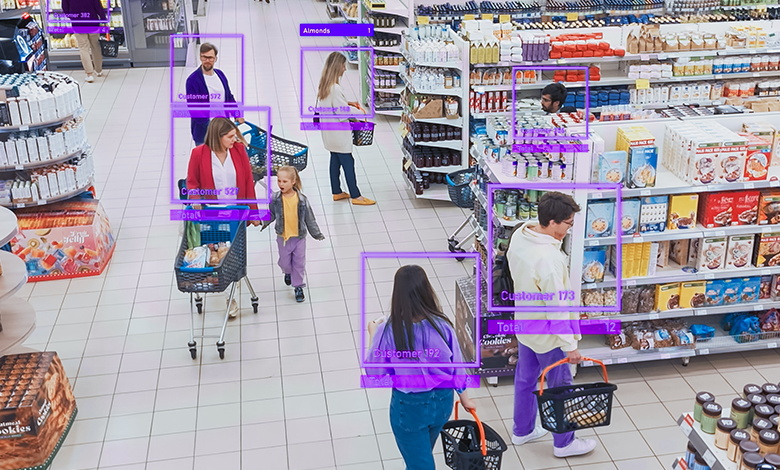
AI is the only realistic path to real-time, one-to-one personalization at enterprise scale, replacing segmentation with individualized offers delivered to millions of customers at the exact moment they make their purchasing decisions. Traditional targeting strategies, regardless of sophistication, cannot match the granularity and responsiveness of AI-powered personalization.
AI can process vast amounts of data instantaneously, creating unique experiences for each customer based on their specific context. Purchase history, browsing behavior, location, weather, time of day, promotion sensitivity and countless other factors combine to generate offers tailored to individual needs.
This capability extends beyond promotional offers to encompass entire shopping experiences. AI that helps customers save time, make decisions faster, and remove impediments to their buying process will deliver the most value, enabling retailers to support buyer journeys rather than complicate them. Think product recommendations that adapt to real-time behavior, marketing emails that reflect current interests rather than past purchases, and dynamic FAQs that provide personalized answers based on individual contexts. Every touchpoint becomes an opportunity for relevant, helpful interaction.
The technology exists today to deliver these experiences; indeed, some retailers are already enjoying the competitive advantages stemming from their AI-powered personalization strategies. But for retail decision makers who need to justify their investments in AI to boards and other stakeholders, the need to focus on the tangible business impacts of the technology is pressing. And with that sense of urgency, the era of real AI returns starts now.