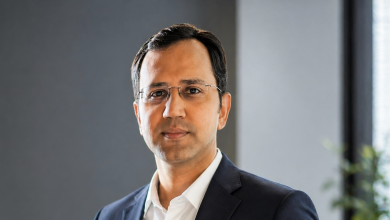
Artificial intelligence is reshaping far more than chatbots and automation. Across the enterprise, it is transforming how organizations manage data, modernize infrastructure, strengthen decision-making, and unlock new opportunities for innovation. Few professionals have experienced this evolution from as many perspectives as Padma Rama Divya Achanta.
With more than 18 years of experience spanning enterprise database technologies, cloud automation, artificial intelligence, and digital transformation, Padma has built a career at the intersection of technology and business innovation. As a Senior Database Administrator, AI and Automation Engineer, international technology speaker, author, peer reviewer, and innovator, she has helped organizations modernize critical systems while actively contributing to the broader technology community through publications, conference presentations, and technical leadership.
In this exclusive interview, Padma shares her perspective on how enterprise technology is evolving in the age of AI, the leadership principles shaping successful digital transformation, the opportunities and challenges organizations face as they adopt intelligent systems, and why curiosity and continuous learning remain the most valuable skills for the future.
Your career has evolved from enterprise database administration to automation, cloud adoption, artificial intelligence, and technology leadership. Looking back, what has driven that evolution, and how has it influenced the way you approach innovation today?
When I began my career in enterprise database administration, my primary responsibility was ensuring that critical systems remained secure, reliable, and available. It was a role that demanded precision, discipline, and a deep understanding of how technology supports business operations. Working with enterprise databases gave me an appreciation for the fact that technology isn’t valuable because it’s complex, it’s valuable because organizations depend on it every day.
As the technology landscape evolved, I saw a much bigger opportunity. The industry was moving beyond simply managing infrastructure toward building intelligent, automated, and cloud-enabled platforms. Rather than viewing automation, cloud computing, and artificial intelligence as separate technologies, I saw them as the natural evolution of enterprise IT. Each advancement created new opportunities to simplify operations, improve decision-making, and deliver greater value to businesses.
That realization motivated me to continuously expand my expertise beyond traditional database administration. I embraced automation to eliminate repetitive processes, cloud technologies to build more scalable and resilient solutions, and artificial intelligence to help organizations make smarter, data-driven decisions. Throughout that journey, I also recognized the importance of sharing knowledge through technical publications, conference presentations, mentoring, and collaboration with the broader technology community. Those experiences reinforced my belief that innovation grows stronger when expertise is shared.
Looking back, my career hasn’t been defined by chasing the latest technology trend. Instead, it has been driven by a commitment to continuous learning and by asking a simple question whenever a new challenge arises: How can technology solve this problem more effectively than it did yesterday? That mindset continues to guide every project I undertake and shapes the way I think about innovation today.
Innovation is often associated with breakthrough technologies, but some of the most meaningful advances come from rethinking everyday challenges. Can you share an example from your career where a practical solution delivered a far-reaching impact?
One project that stands out involved modernizing SQL Server post-build operations across a large enterprise environment. At the time, every newly deployed server required engineers to complete a lengthy series of manual configuration, validation, and deployment tasks. Although the process was well established, it was labor-intensive, time-consuming, and difficult to scale consistently across hundreds of enterprise servers. Like many long-standing processes, it had simply become accepted as “the way things are done.”
Rather than focusing on making individual steps faster, I stepped back and asked a different question: Why does this process need to be manual at all? That shift in perspective became the starting point for a completely different approach.
I designed and implemented an Ansible-based automation framework that standardized the entire post-build process into a repeatable, reliable workflow. Instead of relying on manual execution and individual expertise, engineers could deploy consistent configurations through automation. The solution resulted in more than a 90% improvement in operational efficiency, significantly reduced deployment time, improved consistency across the environment, and minimized the potential for human error. Perhaps most importantly, it allowed engineering teams to spend less time on repetitive operational work and more time focusing on architecture, optimization, and solving complex business challenges.
What made that project so significant wasn’t simply the technical success, it fundamentally changed the way I think about innovation. I realized that the greatest opportunities don’t always come from inventing entirely new technologies. They often come from challenging assumptions, understanding the root cause of a problem, and applying existing technologies in more intelligent and practical ways.
That experience has influenced every project I’ve worked on since, whether in cloud modernization, enterprise automation, or artificial intelligence. Today, I rarely begin by asking, “What technology should we use?” Instead, I start with a different question: “What problem are we truly trying to solve?” I’ve found that when you focus on solving the right problem, innovation follows naturally and the results are often far more meaningful than technology itself.
Technology has transformed dramatically over the past decade. Looking back, which shift fundamentally changed the way you think about enterprise technology?
The biggest shift wasn’t simply the move from on-premises infrastructure to the cloud; it was the transition from managing technology to building intelligent systems. Early in my career, success was measured by reliability, performance, and uptime. Those qualities remain essential, but today organizations expect technology to do much more. They expect it to generate insights, automate decisions, and drive measurable business outcomes. That fundamentally changed the way I think about enterprise technology.
Cloud computing was a major catalyst because it encouraged organizations to rethink architecture rather than simply migrate existing systems. Automation soon followed, transforming infrastructure management by replacing repetitive manual processes with consistent, scalable workflows. Today, artificial intelligence is accelerating evolution by enabling systems to analyze information, predict outcomes, and recommend actions instead of merely executing predefined tasks.
Perhaps the most important realization for me has been that enterprise technology can no longer be viewed in silos. Databases, cloud platforms, automation, cybersecurity, and AI are all part of a connected ecosystem. Organizations that succeed are those that integrate these capabilities to create secure, intelligent, and data-driven environments that empower better decision-making.
That evolution has also shaped my own career. It encouraged me to expand beyond traditional database administration into cloud automation, artificial intelligence, research, and knowledge sharing. More importantly, it changed the way I approach innovation. Looking back, I realized I wasn’t simply learning new technologies, I was learning new ways to solve increasingly complex problems. That journey reinforced a belief that continues to guide me today: the most meaningful innovations aren’t defined by the technologies we adopt, but by the problems we solve and the positive impact we create for people and organizations.
Everyone is investing in AI, yet many organizations struggle to realize its full value. What do you think they’re overlooking?
I believe many organizations are approaching AI as a technology initiative rather than a business transformation. They invest heavily in AI tools and models but often overlook the foundation that makes AI successful high-quality data, strong governance, modern infrastructure, and clearly defined business objectives. AI is only as effective as the environment in which it operates.
Another common misconception is expecting AI to deliver immediate results. Like cloud adoption a decade ago, AI is a journey, not a one-time implementation. The organizations seeing the greatest success are those that start with meaningful business problems, integrate AI into existing workflows, and continuously refine their approach based on measurable outcomes.
I also believe AI should be viewed as a collaborative partner rather than a replacement for human expertise. In enterprise environments, AI excels at analyzing large volumes of data, identifying patterns, and accelerating decision-making. However, strategy, governance, ethics, and business context remain uniquely human responsibilities. The greatest value comes when AI enhances human judgment, not when it attempts to replace it.
Ultimately, successful AI adoption isn’t determined by how much AI an organization uses, it’s determined by how effectively it combines trusted data, skilled people, and intelligent technology to solve real business problems. Organizations that recognize this distinction are the ones most likely to realize AI’s long-term value.
If automation was the first chapter of digital transformation, what does the AI era change?
I see automation and AI as two distinct stages of enterprise evolution. Automation was designed to execute predefined tasks faster and more consistently. AI introduces something fundamentally different, it enables systems to interpret information, recognize patterns, and support decision-making. In simple terms, automation helps organizations work faster, while AI helps them work smarter.
For example, traditional automation can deploy infrastructure or execute workflows based on predefined rules. AI-enabled systems can go a step further by analyzing operational data, predicting capacity needs, identifying anomalies before they become incidents, and recommending the best course of action. That shift from execution to intelligence is where the real transformation begins.
I also believe AI is redefining the role of technology professionals. Instead of spending valuable time on repetitive operational tasks, engineers can focus on architecture, innovation, governance, and solving complex business challenges. AI becomes a force multiplier, augmenting human expertise rather than replacing it.
To me, the AI era isn’t simply the next chapter of digital transformation, it’s the beginning of intelligent transformation. The organizations that will lead are those that combine trusted data, responsible AI, and human expertise to make better decisions, adapt faster, and create lasting business value.
Looking beyond the keynote presentations, what are the hallway conversations telling you about the future of enterprise AI?
One of the greatest rewards of speaking at conferences like PASS Summit and other technology events isn’t just presenting a session, it’s the discussions that happen afterward. Some of the most valuable insights emerge during networking breaks and Q&A sessions, where attendees openly share the challenges, they’re facing in their organizations. Those exchanges often reveal where the industry is truly headed long before the trends become mainstream.
One shift I’ve noticed is how dramatically dialogue has evolved. A few years ago, attendees primarily wanted to discuss cloud migration, database modernization, and automation. Today, nearly every discussion eventually turns to AI. But the questions have changed. Instead of asking, “How do we use AI?” people are asking, “Is our data ready?”, “How do we govern AI responsibly?”, and “How do we demonstrate measurable business value?” To me, that’s a clear indication the industry is moving beyond experimentation toward enterprise-wide adoption.
Another trend that stands out is the changing role of technology professionals. During my PASS Summit session and other speaking engagements, I’ve spoken with database administrators exploring AI, cloud engineers learning data governance, and business leaders looking for teams that can bridge technology with business strategy. The traditional boundaries between roles are fading, and the most successful professionals are becoming multidisciplinary problem solvers rather than specialists in a single technology.
What gives me the greatest optimism is the willingness of this community to learn from one another. Every conference reinforces that innovation doesn’t happen in isolation, it happens when people share ideas, challenge assumptions, and learn from real-world experiences. Those interactions have strengthened my belief that the future of enterprise AI won’t be determined by technology alone, but by our ability to combine trusted data, responsible AI, and human expertise to solve meaningful business problems together.
If you had the opportunity to build an enterprise from the ground up today, what would you do differently in the age of AI and what mistakes would you avoid?
If I were building an enterprise today, I’d begin with a simple principle: AI shouldn’t be an add-on it should be built into the foundation. That doesn’t mean applying AI everywhere; it means creating an environment where trusted data, automation, and intelligence work together from day one.
My first investment would be in data. AI is only as effective as the information it learns from, so strong governance, security, and data quality would be embedded into every system. I’d also build a cloud-native, API-driven architecture with automation integrated throughout the technology stack, enabling the organization to scale efficiently while minimizing operational complexity.
From there, I’d introduce AI where it delivers measurable business value. Rather than replacing people, AI should help teams anticipate issues, optimize operations, accelerate decision-making, and uncover insights that would otherwise be difficult to identify. The objective isn’t simply greater efficiency, it’s empowering people to focus on innovation, creativity, and solving strategic business challenges.
The biggest mistake I’d avoid is adopting AI for the sake of adopting AI. Too often, organizations start with technology instead of the problem they’re trying to solve. Successful AI initiatives begin with clear business objectives, trusted data, and a culture that embraces continuous learning and responsible innovation. In my view, the organizations that will lead in the AI era won’t be those with the most advanced models, they’ll be the ones that apply AI with purpose, adapt quickly, and keep people at the center of every transformation.
Your work is rooted in enterprise technology, yet one of your innovations focuses on education. What made you see that opportunity?
At first glance, enterprise technology and education may seem like completely different worlds, but I see them as serving the same purpose: empowering people with knowledge, enabling better decisions, and creating opportunities through innovation. Throughout my career, I’ve built intelligent systems that help organizations become more efficient and data driven. Over time, I found myself asking a different question: if technology can transform the way businesses operate, why can’t it transform the way people learn?
That curiosity led me to explore educational technology through the lens of artificial intelligence. My goal wasn’t simply to create another digital device, it was to rethink how AI could make learning more personalized, interactive, and accessible. I wanted to apply the same principles that have transformed enterprise technology, intelligence, automation, and user-centered design to create more engaging and adaptive learning experiences.
To me, this wasn’t a departure from my enterprise work; it was a natural extension of it. Whether I’m modernizing enterprise data platforms or exploring AI-driven educational solutions, I’m ultimately trying to solve the same challenge: using technology to make information more accessible, making decisions more informed, and making people’s lives better. Some of the most meaningful innovations happen when ideas from one field are thoughtfully applied to another, and I believe that’s where the greatest opportunities often emerge.
If every organization had unlimited AI resources tomorrow, what would still prevent success?
Unlimited AI resources wouldn’t guarantee success because AI has never been the hardest part of transformation people, culture, and execution are. Organizations can invest in the most advanced models, infrastructure, and computing power, but without trusted data, clear business objectives, and a willingness to embrace change, those investments will never achieve their full potential.
In my experience, successful technology initiatives begin with a business problem, not a technology decision. I’ve seen organizations achieve remarkable outcomes with relatively simple solutions because they had strong governance, close collaboration between technical and business teams, and a clear definition of success. I’ve also seen sophisticated technologies fall short when those fundamentals were missing.
Another critical factor is trust. As AI becomes increasingly embedded in enterprise decision-making, organizations need confidence that their data is reliable, their models are transparent, and their outcomes are responsible. Trust isn’t created by technology alone, it is built through governance, accountability, and human oversight.
Ultimately, competitive advantage won’t come from having access to more AI because AI will become increasingly accessible to everyone. The real differentiator will be an organization’s ability to combine trusted data, responsible AI, and human expertise to solve meaningful business problems. In the end, it won’t be AI that separates successful organizations from the rest, it will be how wisely they choose to use it.
Is there a technology trend that everyone is excited about, that you think we’re getting wrong?
One trend I think we’re getting wrong is the belief that adopting more AI automatically leads to better outcomes. The conversation often centers on larger models, faster deployment, and broader adoption, but we don’t spend enough time asking whether AI is solving the right problem in the first place. Technology should always be driven by business needs, not the other way around.
Another misconception is treating AI as a replacement for human expertise. In enterprise environments, some of the most important decisions require context, experience, ethical judgment, and an understanding of organizational priorities. AI can analyze vast amounts of information and uncover valuable insights, but it cannot replace accountability or strategic thinking. The organizations seeing the greatest success are those that use AI to augment people, enabling faster, more informed decisions while keeping humans responsible for the outcome.
I also believe we’re underestimating the importance of the data foundation. Organizations are eager to build AI solutions, yet many are still working with fragmented data, inconsistent governance, and legacy systems. Without addressing those challenges, even the most advanced AI initiatives will struggle to deliver consistent results. Preparing data may be less exciting than deploying AI, but it’s often where the greatest long-term value is created.
Looking ahead, I believe the conversation will shift from asking, “How much AI are we using?” to “How effectively are we using AI to solve real business problems?” The organizations that succeed won’t necessarily be those with the most advanced AI, they’ll be the ones that apply it with purpose, build trust in its outcomes, and empower people to make better decisions.
What continues to inspire you after more than eighteen years in technology?
One conversation after my PASS Summit session stayed with me. An attendee asked whether AI would replace DBAs. I explained that every major technological shift from virtualization to cloud computing to automation has changed the nature of our work, but it has also created new opportunities for those willing to learn. By the end of our discussion, the question had shifted from “Will AI replace my job?” to “How can I grow with AI?” Moments like that continue to inspire me because they remind me that innovation isn’t just about building better technology, it’s about helping people recognize new possibilities and giving them the confidence to embrace change.
That curiosity and willingness to learn are what continue to inspire me. Every major shift I’ve experienced from on-premises systems to cloud computing, automation, and now artificial intelligence has been an opportunity to challenge old assumptions and discover better ways to create value. Technology will continue to evolve, but what excites me most is seeing how each new advancement creates opportunities to solve problems that once seemed impossible.
Looking back, I realized I wasn’t simply adapting to each new wave of technology I was learning to think differently. Every evolution reinforced a lesson that continues to guide me today: the most meaningful innovations aren’t defined by the technologies we adopt, but by the problems we solve and the positive impact we create for people and organizations. That’s what continues to inspire me, and it’s the contribution I hope to continue making throughout my career.