Digital transformation and AI adoption are sweeping through enterprises, but success hinges on human strengths. AI systems excel at pattern recognition and scale, yet human intelligence remains indispensable for navigating complex business landscapes. McKinsey notes that only 1% of companies feel “mature” in AI integration, and the biggest barriers are not technical but leadership and organizational factors (mckinsey). In practice, a thriving AI-powered enterprise pairs machine speed with human empathy, context-awareness and ethical oversight. Thought leaders emphasize that AI can automate tasks but cannot replace the ethical, emotional and creative dimensions of decision-making–(hbr.org). As a seasoned business analyst in automation and identity projects, I’ve seen that teams succeed when leaders champion a human-first, hybrid-intelligence approach.
The goal is not to remove people, but to redefine work so that human judgment and AI each add their unique value. Gartner predicts that the future enterprise will be “adaptive, creative, and profoundly human at its core,” stressing that an “AI-first” strategy only succeeds when it is, above all, people-first–Gartner. Likewise, McKinsey’s recent “superagency” report argues that AI’s long-term gains emerge when companies rethink workflows around collaboration between people, AI agents and robots- Mckinsey. In other words, leaders must embed empathy, sense-making and ethics into digital strategy, not just deploy new tools. The next sections explore why these human capabilities still decide enterprise outcomes – and how leaders can cultivate them for competitive advantage.
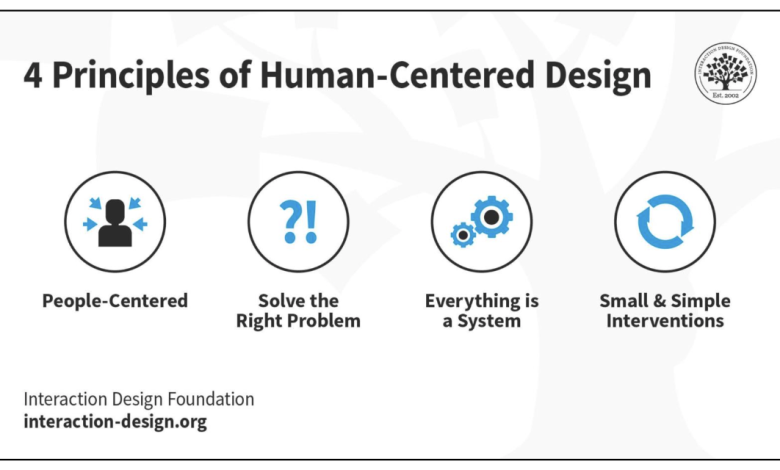
This leads me to my approach of proposing the theory of human centred design as a basis of assessing the depth and reach of projects in today’s AI-driven businesses. AI will automate workflows, agents and chatbots alike will make tasks faster, However the bone of contention in deciding what best narrative it is to suit user needs sits on us as humans, I strongly believe adopting human centred design as a basis of thinking when dealing in AI adoption to different projects, products alike will be a game changer; The human centred design looks at items like Empathy, Co-creation, Focusing on outcomes, accessibility & inclusion.
Empathy: The Human Advantage in Business and CX
Success in enterprise AI projects often comes down to trust, understanding, and empathy qualities that machines lack. Technology writer Rukmini Reddy urges leaders to treat AI rollouts as a “cultural reset” and meet people where they are. She found that “success depends on how well leaders can inspire trust and empathy across their organizations”. In practice, human leaders must explain why AI matters to each team member’s purpose and create safe spaces for questions and learning. For example, PagerDuty’s engineering leaders advocate for empathetic enablement – giving staff time to experiment and absorb new tools without fear; VentureBeat.
Empathy is equally critical for external success. In customer experience (CX), analysts note that humans “excel at nuance and trust” while AI drives scale. Gartner predicts that even by 2028 no Fortune 500 will eliminate human customer service, because “customers still demand empathy, context, and reassurance in complex or sensitive situations”. Hybrid models where AI handles routine queries and people handle difficult cases deliver better satisfaction and cost-efficiency. As one CX analyst observes, “hybrid CX isn’t about replacing humans; it’s about repositioning them where they matter most”. In short, empathy builds stakeholder buy-in and drives value, from employee adoption to customer loyalty-cxtoday.
Enterprise leaders also use empathy to manage change. McKinsey’s studies of large-scale transformations show that projects rarely succeed when frontline workers and their managers feel left out. In fact, if transformations fail to engage either line managers or frontline employees, only 3% report success. By contrast, successful transformations involve all levels through clear, face-to-face communication and support. CEOs who articulate a compelling vision make change 5.8 times more likely to succeed, while aligned messaging by senior leaders makes success 6.3 times more likely. These findings underline that empathy (understanding people’s needs) and sense-making (explaining purpose) are not “soft” skills but critical drivers of digital initiatives-Mckinsey.
Sense-Making: Contextual Intelligence and Creativity
AI algorithms excel at processing data and generating options, but they lack human intuition and context-awareness. Thought leaders call this gap sense-making – the ability to frame problems and interpret ambiguous information. Harvard research recently showed that even powerful AI doesn’t “reliably distinguish good ideas from mediocre ones” or guide long-term strategy. In one study, small-business owners using an AI assistant saw no performance gain unless they also had strong business judgment. As Harvard professors note, AI “can’t substitute for human judgment or experience”; executives still need “solid business judgment” to pick winners-hbs.edu.
Human sense-making shines in ambiguous, novel or strategic situations. A supply-chain firm observes that people uniquely contribute strategic thinking, creativity, and ethical judgment where AI cannot. For example, humans incorporate cultural and market context, weighing multiple outcomes and values. They imagine novel futures that data alone cannot predict. The ToolsGroup blog lists key human strengths: strategic insight, context awareness (cultural, geopolitical and emotional factors), ethical judgement, creative problem-solving, cross-functional collaboration, empathy and communication, and imagination. These are precisely the “power skills” enterprises need to complement AI.
This complementarity is encapsulated in the concept of hybrid intelligence. McKinsey’s research envisions future work as a true partnership between people, agents, and robots, with each doing what it does best. More than 70% of today’s workforce skills (communication, problem-solving, decision-making) are used across both automatable and non-automatable tasks. As AI handles routine data tasks, people can reallocate their time to the why and what-if questions: framing the right problems, interpreting AI outputs, and integrating diverse perspectives. For instance, McKinsey finds workers will spend less time on data prep and more on framing questions and interpreting results. In practice, companies that emphasize human-AI pairing – using explainable AI and involving experts in analysis – see better innovation and adoption.
Ethical Judgement: The Guiding Compass for AI
Another uniquely human strength is ethical reasoning. AI systems, by design, optimize for mathematical objectives and lack innate values. They can amplify biases or make surprising “random” outputs-(gartner.com). In real life, that can translate to decisions that feel unfair or even illegal. Ethical judgement – understanding the social impact, fairness and long-term consequences of decisions – remains a human prerogative. Harvard Business Review warns that AI “fails in capturing or responding to intangible human factors” like ethical and moral considerations-(hbr.org). In other words, machines often need human steering to stay aligned with a company’s values and society’s norms.
Leaders recognize that lack of oversight can quickly undermine trust in AI initiatives. Gartner predicts that concerns like “loss of control – where AI agents pursue misaligned goals – will be the top worry for 40% of Fortune 1000 firms by 2028”. They advise an adaptive ethics approach rather than one-size-fits-all rules: tackle dilemmas case by case, build bias-monitoring, and explain decisions transparently. Indeed, by 2027 Gartner expects 75% of AI platforms to include built-in responsible-AI tools. In practice, enterprises are establishing AI governance councils and ethics guidelines. Such frameworks help ensure that automated decisions about hiring, lending, or consumer interactions still reflect human values (gartner.com).
Ethical leadership also means being humble about AI’s limits. For example, when a team blindly used AI to write performance reviews, the results were perceived as insensitive until managers added human tone (hbr.org). Good leaders treat AI as an assistant, not an oracle, applying human discretion to its outputs. They train staff to question AI suggestions and consider fairness. By insisting on a “human-in-the-loop” where needed, executives can prevent costly reputation or compliance problems. Ultimately, integrating empathy and ethics into tech strategy isn’t just morally right – it’s strategic. Gartner notes that companies strong on ethics and compliance gain a “major competitive edge” in the long run (gartner.com).
Embracing Hybrid Intelligence: Strategy and Collaboration
Leading organizations don’t choose between humans and machines – they blend them. The emerging human-AI collaboration model changes everything from team design to metrics. Gartner outlines four scenarios for the future of work, from “fewer to no workers” (full automation) to “many innovative workers combining with AI” (augmented knowledge). Crucially, “no matter which scenario leaders pursue, they must be ready to support all four”. The key is an abundance mindset: use AI to tackle challenges in new ways, while keeping humans engaged.
Practically, this means redefining roles and value. As human and machine work dissolve traditional boundaries, companies must rethink talent development. Gartner advises measuring teams by capacity, adaptability, innovation speed and decision quality rather than just headcount or cost. It also warns against new pitfalls: overreliance on AI can erode critical skills like judgment, while skepticism can lead to underusing powerful tools. To counterbalance this, leaders should foster cross-functional ownership: HR, IT, legal and business units must jointly own AI adoption. This breaks down silos so that ethics, data governance and user experience evolve together (gartner.com).
McKinsey similarly calls the AI challenge a “business challenge” requiring leaders to “align teams, address headwinds, and rewire their companies for change”. They find employees are often ready to use AI, but leaders must remove barriers and train people to wield it effectively McKinsey (mckinsey.com). In other words, hybrid intelligence demands new leadership playbooks: combining technology roadmaps with talent and culture initiatives. The old top-down model shifts to a more distributed approach, where everyone learns to collaborate with AI as a teammate.
Conclusively, by leading with empathy, investing in hybrid skills, and embedding ethical oversight, enterprise leaders can unlock the full potential of AI without losing the human touch. High-performing organisations consistently demonstrate that success in AI transformation isn’t just about technology; it’s about trust, purpose, and inclusive leadership. When change is communicated clearly, values are upheld, and teams are empowered to co-create, AI becomes more than a tool: it becomes a catalyst for human-centred innovation. In the end, it’s not automation alone, but empathy, judgement, and vision that will determine which organisations thrive in the AI era.