Artificial intelligence has dominated supply chain strategy. Forecasting tools are more sophisticated, dashboards are more detailed, and analytics are more widely deployed than at any point in history. Yet for many organisations, the promised return on investment has not materialised.
The problem is not that AI has failed supply chains. It is that most supply chains still aren’t built to let AI work. You can’t optimise what you can’t see.
Global trade runs on guesswork
Global trade in fast-moving consumer goods leaks nearly $2 trillion each year through overproduction, spoilage, misallocation of inventory, emergency logistics and lost sales. Those losses show up where visibility is lowest and volatility is highest: fragmented distributor networks, manual ordering processes and delayed reporting.
What looks like a logistics problem is, at its core, an intelligence problem. Decisions are being made without a shared, real-time understanding of what is happening across the network. In other words, the system is guessing. At scale.
Why dashboards did not deliver AI ROI
For the past decade, most digital supply chain investment has focused on reporting and visibility tools. These tools have value, but they are fundamentally retrospective. They tell organisations what happened last week or last month. Supply chains don’t run in hindsight. They run in real time. In fast-moving markets, this information arrives too late to shape outcomes.
AI layered on top of historical data can improve forecasts at the margin, but it cannot compensate for gaps in underlying information. When large parts of trade activity are not captured digitally at the point of transaction, models are forced to infer reality rather than observe it.
Legacy systems show you what happened. Effective AI tells you what to do next.
From logistics failures to intelligence failures
Supply chains do not fail because goods cannot be moved. They fail because decisions are made in the absence of timely, reliable signals.
Across many markets, trade still runs through dense networks of distributors, wholesalers and independent retailers. Transactions happen every day, but the data stays local, delayed or offline. Without a shared intelligence layer, brands and distributors are effectively flying blind. More trucks don’t fix that. Better warehouses don’t fix that. Intelligence does.
What changes when trade data becomes real time
AI begins to generate real return only when it is fed by live, operational data that reflects what is happening across the supply chain right now.
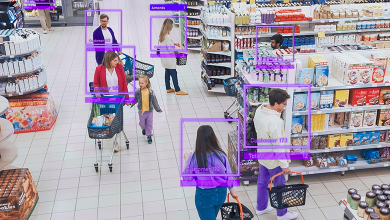
When transaction and inventory signals are captured at scale and in near real time, an entirely different class of decision becomes possible. Organisations can see emerging demand patterns as they form, identify stress points before they turn into shortages, and adjust ordering and allocation dynamically.
The shift is simple but transformative. Instead of using AI to analyse what went wrong, companies can use it to decide what to do next. That’s the line between AI as reporting theatre and AI as competitive advantage.
Making trade smarter, not just faster
The challenge in global trade is not digitisation for its own sake. It is creating the infrastructure that makes trade more intelligent. That means aggregating live transaction and inventory data across distributors, brands and retailers, then transforming that data into decision intelligence.
At RedCloud, we have built this intelligence layer as infrastructure, not software. We’ve built a live network across six strategic hubs serving more than two billion people. Our platform connects 1,000 distributors, 6,000 FMCGs and more than 400,000 retailers, facilitating over $6 billion in annual trading volume. From that, three simple questions get answered in real time: what’s happening now, what’s likely to happen next, and what action to take.
The outcomes are tangible. Waste decreases as inventory is better aligned with real demand. Stockouts become less frequent and less severe. Distributors and brands improve margins by reducing emergency logistics and excess buffer stock. Consumers gain more reliable access to essential goods. That’s what real AI ROI looks like. Not a prettier dashboard. Measurable operational impact.
Why emerging markets reveal the future first
Emerging markets are often described as difficult environments for supply chains. In reality, they’re simply more honest. They expose structural weaknesses faster. Demand growth is faster. Data fragmentation is more pronounced. Shocks propagate more quickly through informal networks.
The same dynamics increasingly apply to developed markets as well. Climate volatility, geopolitical disruption and shifting trade patterns are reducing the usefulness of static planning models. The conditions that once defined emerging markets are becoming more widespread.
Organisations that learn to operate with real-time intelligence in these environments aren’t just coping. They’re preparing for the future of trade everywhere.
Proprietary data and the limits of generic AI
Much of the current excitement around AI is driven by advances in large language models trained on public data. Supply chains are different. The data that matters most is not public. It sits inside distributor systems, ordering workflows and point-of-sale interactions. It is granular, transactional and constantly changing.
No amount of model sophistication can replace signals that were never captured. AI ROI in supply chains depends less on algorithmic novelty and more on whether organisations have access to live operational signals at scale. In other words, better algorithms don’t fix missing visibility. Infrastructure does.
Infrastructure as a strategic asset
This shift has implications beyond individual companies. Trade intelligence is becoming a form of infrastructure that underpins economic resilience.
Countries that can’t see the flow of essential goods are more exposed to shocks. Those with real-time insight can respond faster, allocate resources more effectively and stabilise markets during periods of disruption. Digital trade infrastructure is quickly becoming as critical as ports, roads and power grids.
Intelligence before optimisation
AI will not fix supply chains that still operate on guesswork. Optimisation without visibility simply accelerates existing inefficiencies.
The organisations seeing real returns start somewhere simpler. They treat intelligence as infrastructure. They focus first on making trade visible, then on making it predictive, and finally on making it actionable.
In a volatile, interconnected global economy, that’s no longer a competitive advantage. It’s table stakes. Nine meals from anarchy is not a metaphor – it is the gap between civilisation and chaos. Because when essential goods can’t flow, everything else breaks. Making trade more intelligent isn’t a nice-to-have. It’s resilience at scale.