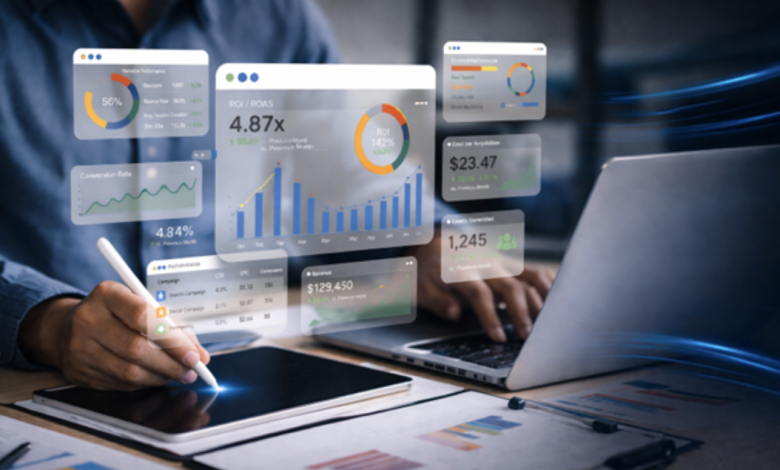
In today’s digital-first landscape, brands face constant pressure to demonstrate clear returns on their marketing investments. Traditional advertising methods, while still relevant, often lack the precision and accountability needed in a competitive environment. In response to this shift, performance marketing has emerged as a powerful solution.
By focusing on measurable outcomes like clicks, conversions, and revenue, performance marketing enables brands to align marketing efforts directly with business goals. The result is a more efficient, data-driven approach that prioritises outcomes over assumptions.
Understanding Performance Marketing
Performance marketing is a strategy in which advertisers pay only when a specific action is completed. These actions can include clicks, leads, app installs, or purchases, depending on campaign objectives.
Unlike traditional models that charge for impressions or placements, performance marketing ensures that every rupee spent is tied to a measurable result. This accountability makes it a preferred approach for modern brands seeking efficiency and transparency.
A Performance Marketing Agency typically focuses on optimising campaigns across multiple channels using real-time data. However, the principles of performance marketing can be applied internally if the right tools and expertise are available.
The Shift Towards Data-Driven Decision Making
One significant advantage of performance marketing is its reliance on data. Campaigns are continuously monitored, analysed, and refined based on real-time performance metrics.
Brands track key indicators such as:
- Click-through rates (CTR)
- Conversion rates
- Cost per acquisition (CPA)
- Return on ad spend (ROAS)
For example, an e-commerce brand running a PPC campaign can quickly identify which keywords drive sales and which do not. This allows immediate budget reallocation to high-performing segments.
According to industry reports, companies that adopt data-driven marketing strategies are significantly more likely to achieve higher ROI compared to those relying on traditional methods.
Precision Targeting and Audience Segmentation
Performance marketing allows brands to reach highly specific audience segments. Instead of broad messaging, campaigns can be tailored by demographics, interests, behaviour, and intent.
This targeting improves both efficiency and relevance. For instance, a brand can show different ads to first-time visitors and returning users, each designed to move them further along the purchase journey.
Advanced platforms also enable lookalike audience targeting, in which new users are identified based on their similarities to existing customers. This expands reach while maintaining quality.
Real-Time Optimisation and Agility
One of the defining features of performance marketing is its adaptability. Campaigns are not static; they evolve continuously based on performance insights.
If an ad creative is underperforming, it can be replaced immediately. If a particular audience segment is generating better results, budgets can be shifted accordingly.
This agility is valuable in fast-moving industries like FMCG or e-commerce, where consumer behaviour changes rapidly. Instead of waiting weeks or months for results, marketers can optimise in real time.
The Role of PPC in Performance Marketing
PPC (Pay-Per-Click) is a widely used channel within performance marketing. It allows brands to bid on keywords and display ads to users actively searching for relevant products or services.
The strength of PPC lies in intent-based targeting. Users who search specific terms are often closer to making a purchase decision, making them highly valuable prospects.
For example, a travel company bidding on keywords like “last-minute holiday deals” is likely to reach users with immediate intent to book. This increases conversion rates and improves overall campaign efficiency.
Additionally, PPC platforms provide detailed analytics, enabling marketers to track performance at a granular level and refine strategies accordingly.
Attribution Models and Measuring ROI
Measuring marketing effectiveness requires a clear understanding of attribution. Performance marketing relies on various attribution models to determine how different touchpoints contribute to conversions.
Common models include:
- Last-click attribution
- First-click attribution
- Linear attribution
- Data-driven attribution
Each model offers a different perspective on user behaviour. For instance, last-click attribution assigns full credit to the final interaction, while data-driven models distribute credit based on actual impact.
By analysing attribution data, brands can identify which channels and strategies deliver the best results. This leads to more informed budget allocation and improved ROI.
Automation and AI in Performance Marketing
Modern performance marketing is increasingly powered by artificial intelligence and automation. These technologies enhance efficiency by handling repetitive tasks and optimising campaigns at scale.
AI-driven tools can:
- Adjust bids automatically based on performance
- Predict user behaviour and intent
- Personalise ad creatives dynamically
- Identify patterns in large datasets
For example, automated bidding strategies in PPC campaigns can optimise for conversions or target CPA without manual intervention. This saves time and improves accuracy.
Machine learning algorithms also help audience segmentation, ensuring ads are shown to users most likely to convert. As a result, campaigns become more effective over time.
Cross-Channel Integration for Better Results
Performance marketing is not limited to a single channel. It often combines search, social media, display, affiliate marketing, and more.
An integrated approach ensures users receive consistent messaging across multiple touchpoints. This improves brand recall and increases conversion likelihood.
For instance, a user might first discover a product through a social media ad, then conduct a search, and finally make a purchase via a retargeting campaign. Each interaction plays a role in the overall journey.
By analysing cross-channel data, brands can create more cohesive and effective marketing strategies.
Challenges and Considerations
While performance marketing offers numerous advantages, it also comes with certain challenges.
One key issue is data privacy. With increasing regulations and restrictions on third-party cookies, tracking user behaviour has become more complex. Marketers must adapt by leveraging first-party data and privacy-compliant solutions.
Another challenge is attribution accuracy. As customer journeys become more fragmented, it can be difficult to assign credit to specific touchpoints.
Over-reliance on short-term metrics can lead to neglect of long-term brand building. A balanced approach is essential to ensure sustainable growth.
The Future of Performance Marketing
The future of performance marketing lies in the deeper integration of technology, data, and creativity. As AI continues to evolve, campaigns will become more predictive and personalised.
Voice search, connected TV, and emerging digital platforms are also expanding the scope of performance marketing. These channels offer new opportunities for measurable engagement.
At the same time, brands are increasingly focusing on customer lifetime value rather than just immediate conversions. This shift encourages strategies that prioritise long-term relationships alongside short-term performance.
Conclusion
Performance marketing has fundamentally transformed how brands approach advertising. By focusing on measurable outcomes, it provides accountability and efficiency that traditional methods often lack.
From PPC campaigns to AI-driven optimisation, the emphasis on data and results enables brands to make smarter decisions and maximise ROI. Whether managed in-house or through a Performance Marketing Agency, the core principles remain the same: track, analyse, and optimise continuously.
As digital ecosystems continue to evolve, performance marketing will play an even more critical role in helping brands navigate complexity and achieve sustainable growth.