Digital transformation is rapidly growing and picking up the pace by continuously expanding the speed and complexity of enterprise operations.
This includes cloud adoption, Saas ecosystems, and interconnected workflows that are creating new growth opportunities, but this also includes demanding risk environments.
Now, for tech leaders, security and compliance are no longer just passive checkpoints to be addressed during annual audits. They have become consistent operational priorities that will be directly influencing governance. The challenge includes operating independently, where risks remain fragmented.
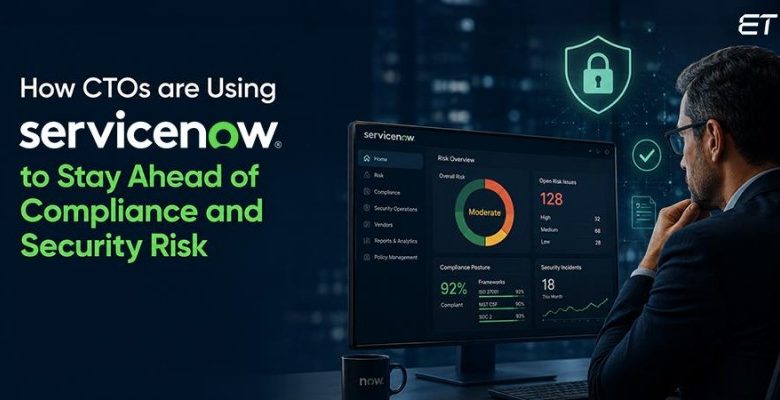
Here, ServiceNow is becoming a crucial platform, not just as a service platform but also as a governance layer that connects compliance and operational workflows. With the right ServiceNow process consulting company, CTOs can gain real-time visibility into risk exposure.
Traditional Compliance Models are Falling Behind
Even today, organizations still manage compliance through manual controls, reviews, and disconnected approval procedures. This used to work for enterprise technology environments that were usually smaller and more centralized. But it is proving to be inadequate in modern operational environments.
A single control issue can easily emerge across cloud workloads, applications, identity systems, and third-party vendors. This creates several issues for tech leaders. And the possibility is that if the visibility is fragmented, the issue is discovered only after it has expanded.
Here are a few reasons the compliance models are failing:
– They have speed and scalability constraints. The traditional model struggles to keep pace with rapidly growing operations and transactional volumes.
– There are lags behind technologies like cloud-native platforms and AI that result in technology gaps.
– Traditional methods often find the issue after they have occurred; this makes manual tracking and interpretation impossible.
Continuing to follow outdated models exposes companies to operational disruptions and reputational damage.
ServiceNow: Using it as a Governance Layer
ServiceNow’s use has increased among forward-looking tech leaders to move governance from a reactive reporting model to an actively consistent operational model.
The central governance known as “AI Tower” is used to fragment technology and manage AI risks. It is not just a simple ticketing tool, but it is a “system of action”.
Here are some ways ServiceNow is used:
Audit-Ready Trails: Audit preparation is a resource-intensive activity for enterprise technology teams. With workflow-based governance, approvals, and control records, the evidence is collected manually. Instead, with ServiceNow, one can maintain ongoing records of controlled execution.
Workflow-Driven Remediation: With ServiceNow, risk visibility leads to action. Now, CTOs are using the platform for building functional operational workflows. This means ownership can be automatically assigned, escalation rules can be triggered, and remediation timelines can be tracked across teams.
Continuous Control Monitoring: ServiceNow enables teams to monitor continuously, eliminating the wait for scheduled audits. This helps organizations identify issues such as configuration drift, control failures, and policy exceptions earlier.
Cross-Functional Visibility: Security, IT operations, compliance, and engineering often operate with different tools and have multiple reporting structures. Here, the biggest governance challenge is fragmented ownership. This is where ServiceNow creates an operational layer where leaders can work through common workflows, not just on isolated processes.
Practical Use Cases for CTOs in 2026
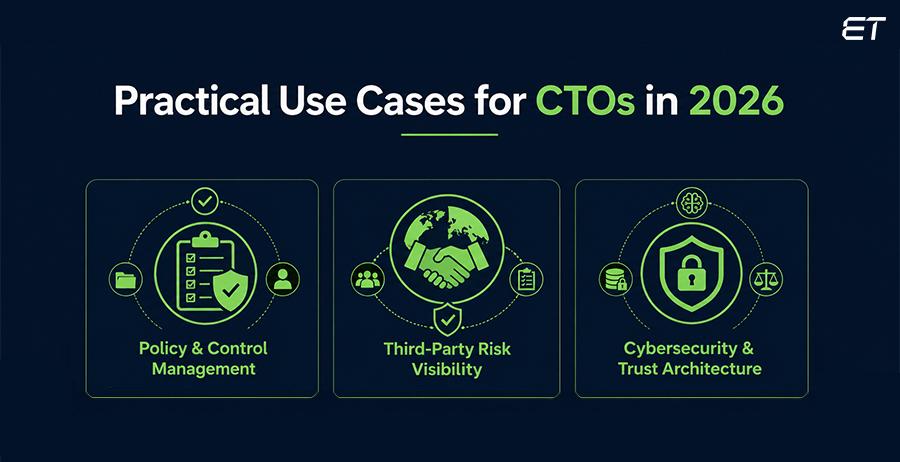
With the growing use of AI, there is a major shift happening that focuses on the shift from AI initiatives to measurable and secure technology implementations. Here are some of the practical use cases:
Policy and Control Management: With the use of ServiceNow, organizations are now able to centralize control mapping. It also helps with policy exception handling and with monitoring the status of multiple concurrent operational workflows.
This improves visibility into governance and operational consistency.
Third-Party Risk Visibility: AI is embedded across several layers, enabling structured workflows to track third-party assessments, approvals, and ongoing risk reviews across multiple vendors. This vendor ecosystem creates stronger visibility into external operational activities and dependencies.
Cybersecurity & Trust Architecture: Security is the top priority amid rising regulatory pressure. This means there are now AI-powered security testing and data controls that comply with strict regional data protection laws. Eg, EU AI Act.
Steps to Evaluate Before Implementation
Integrating with technology is not just about connecting plugins; it also depends heavily on operating discipline and effective governance.
Below are a few steps to ensure before implementing:
Clear Ownership Models: Artificial Intelligence automates workflows that require less human intervention. Hence, involving experts and clearly defining the processes for triage, detection, and reporting reduces gaps during execution. Governance platforms work best when accountability is explicit.
Process Maturity Before Platform Expansion: AI is best used for reducing manual efforts and making progress with fast-paced solutions. Before implementing or scaling automation, an enterprise should evaluate the governance and processes clearly. Automating fragmented or inconsistent processes often amplifies the complexity.
Integration Compatibility: This step is crucial; CTOs should assess how ServiceNow is going to be connected to their existing cloud platforms, ITSM workflows, and operational systems.
The primary goal is to create coordinated governance across organizational environments rather than replacing everything.
Final Thoughts
Compliance is part of operational infrastructure. Today, CTOs are looking forward to building environments where there is security visibility and controlled execution that operates consistently rather than being reactive.
This is why hiring ServiceNow developers and using ServiceNow as a platform is becoming increasingly valuable. It is a way to operationalize governance at a scale.
It is no surprise that organizations that are putting in the work to build this capability early are positioned to grow faster and will be able to make risk-informed decisions with confidence.

Digital transformation is rapidly growing and picking up the pace by continuously expanding the speed, and complexity of enterprise operations.
This includes cloud adoption, Saas ecosystems and interconnected workflows that are creating new growth opportunities, but this also includes demanding risk environments.
Now, for tech leaders security and compliance are no longer just active checkpoints that can be handled during annual audits. They have become consistent operational priorities that will be directly influencing governance. The challenge includes independently operating systems where the risks remain fragmented.
Here ServiceNow is becoming a crucial platform, as it is not just used as a service platform but, as a governance layer that connects compliance and operational workflows. With the right ServiceNow process consultancy, CTOs can gain real-time visibility into risk exposure.
Traditional Compliance Models are Falling Behind
Even today organizations still manage compliance with the help of manual control, reviews and disconnected approval procedures. This used to work for enterprise technologies environments that were usually smaller in size and were more centralized. But it is proving to be inadequate in modern operation environments.
A single control issue can easily emerge across cloud workloads, applications, identify systems and third-party vendors. This creates several issues for tech leaders. And the possibility is if the visibility is fragmented, the issue is discovered only after it has expanded.
Here are few reasons the compliance models are failing:
- They have speed and scalability constraints. Traditional model struggles to keep pace with rapidly growing operations, and transactional volumes.
- There are lags behind technologies like cloud-native platforms and AI that results in technology gaps.
- Traditional methods often find the issue after they have occurred; this makes manual tracking and interpretation impossible.
Continuing to follow outdated models exposes companies for operational disruptions and reputational damage.
ServiceNow: Using it as a Governance Layer
ServiceNow’s use has increased for forward looking tech leaders in order to move governance from a reactive reporting model to an actively consistent operational model.
The central governance known as “AI Tower” is used to fragment technology, and manage AI risks. It is not just a simple ticketing tool, but is it an “system of action”.
Here are some ways ServiceNow is used:
Audit-Ready Trails: Audit preparation is a resource intensive activity for enterprise technology teams. With workflow-based governance, approvals and control records the evidence are collected manually. Instead of that with ServiceNow one can maintain the ongoing records of controlled execution.
Workflow-Driven Remediation: With ServiceNow risk visibility leads to action. Now, CTOs are using the platform for building functional operational workflows. This means ownership can be assigned automatically, escalation rules can be triggered and remediation timelines become trackable across teams.
Continuous Control Monitoring: ServiceNow allows teams to monitor continuously, that eliminates the wait for scheduled audits. This helps organizations to identify issues like configuration drift, control failures and policy exceptions earlier.
Cross-Functional Visibility: Security, IT operations, compliance and engineering often operate with different tools and have multiple reporting structures. Here the biggest challenge in governance is fragmented ownership. This is where ServiceNow creates an operational layer where leaders can work through common workflows, and not just on the isolated process.
Practical Use Cases for CTOs in 2026
With growing using of AI, there is a major shift happening that focuses the shift from AI initiatives to measurable and secure technology implementations. Here are some of the practical use cases:
Policy and Control Management: With the use of ServiceNow, organizations are now able to centralize control mapping. It also helps in policy exception handling, and monitoring status of different operational workflows taking place at the same time.
This improves governance visibility and operational consistency.
Third-Party Risk Visibility: AI is being embedded in several layers, this means structured workflows that are able to track third-party assessment, approvals and ongoing risk reviews across multiple vendors. This vendor ecosystems create stronger visibility into external operational activities and dependencies.
Cybersecurity & Trust Architecture: Security is top priority with the rise of regulatory pressure. This means there are now AI-powered security testing and data controls that complies with strict regional data protection laws. Eg. EU AI Act.
Steps to Evaluate Before Implementation
Integrating with technology is not just about connecting plugins, it highly depends on operating discipline and building effective governance.
Below are few steps to ensure before implementing:
Clear Ownership Models: Artificial Intelligence automates workflows that needs less intervention with humans. Hence, handling it with experts and clearly defining the process, triage, detection and reporting reduces the gaps while executing. Governance platforms are able to work best when the accountability is explicit.
Process Maturity Before Platform Expansion: AI is best used for reducing manual efforts and making progress with fast paces solutions. Before implementing, or scaling automation enterprise should evaluate the governance and process clearly. Automating fragmented or inconsistently often amplifies the complexity.
Integration Compatibility: This step is crucial, CTOs should assess how ServiceNow is going to be connected to their existing cloud platforms, ITSM workflows and operational systems.
The primary goal is here to create coordinated governance across organizations environments rather than replacing everything.
Final Thoughts
Compliance is part of operational infrastructure. Today CTOs are looking forward to build environments where there is security visibility and controlled execution operate consistently rather than being reactive.
This is why hiring ServiceNow experts and using ServiceNow as a platform is becoming increasingly valuable. It is a way to operationalize governance at a scale.
It is not an surprise that organizations who are putting in the work to build this capability early are positioned to grow faster, and will be able to make risk-informed decision with confidence.