Content teams rarely rely on one AI tool from start to finish. Research may happen in one place, drafting in another, visual creation somewhere else, and publishing in a separate system. Each tool can be useful on its own, but the project often slows down when information has to move between them.
The real problem is not switching tools. It is losing the sources, brand guidance, feedback, and decisions that explain the work. When the next contributor receives only an output, they often have to rebuild the brief before they can continue.
Kollab is designed around a connected workflow in which teams can collect material, create in multiple formats, collaborate on drafts, and move finished work toward publication without repeatedly starting from an empty prompt.
Why Context Gets Lost Between AI Tools
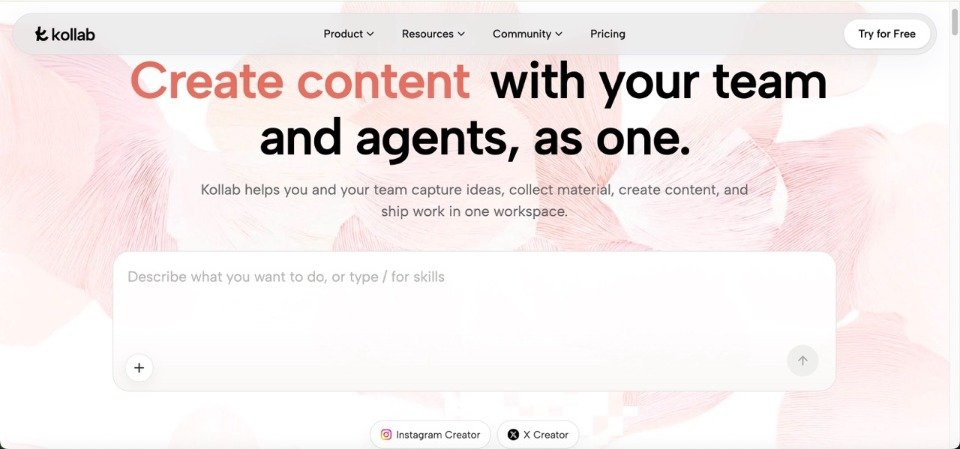
Most content projects pass through several people and formats. A product campaign may begin with customer research, become an article outline, move into a video script, and later produce visual assets and social posts. The work changes, but the background should remain stable.
Problems begin when each stage keeps only its own output. The writer may not receive the original sources. The editor may see a draft without the brand rules behind it. The designer may work from an earlier version of the message. By the time content reaches the publishing stage, someone may still be asking which version was approved.
This creates a hidden handoff cost. Teams save time during generation but lose it again through repeated explanations, file searches, and version checks. A better workflow keeps the necessary background attached to the project while allowing each specialist tool to do its own job.
What Information Should Move With the Work
Not every detail needs to follow every task. Teams should identify the context that the next contributor genuinely needs in order to continue without rebuilding the project. Three types of information usually matter most when content moves between tools, roles, and formats.
1.Source Material
Writers and reviewers need access to the material behind the content. That may include web pages, documents, interview notes, podcasts, videos, or team discussions. When sources remain separate from the draft, fact-checking becomes slower and reviewers depend on the original writer to explain where information came from. Kollab can turn these materials into usable project context that stays available as the work develops.
2.Brand and Audience Guidance
Sources explain the subject, but brand guidance shapes how it should be communicated. Tone, preferred terminology, audience expectations, and claims to avoid should remain available as content moves between tools. Kollab’s Memory is designed to retain project preferences, brand voice, and team rules, giving contributors and the Agent a more consistent starting point instead of requiring the same instructions for every new draft or format.
3.Feedback and Version History
The latest draft does not always explain how the team reached it. A claim may have been removed after review, a client may have approved one version, or a channel-specific edit may still be pending. Kollab keeps project material, brand voice, feedback, and version history in the same creation space, helping teammates understand the current direction when they join, review, or take over the work.
Give Each AI Tool a Clear Role
Keeping context connected does not mean forcing every task into one platform. A research tool may still be the best choice for source-heavy analysis, while a professional design application may remain necessary for complex visual work. An established scheduler may also continue to manage the final publishing calendar.
The important issue is what each tool receives and what it must pass forward. A research summary should travel with its sources. A writing draft should carry its audience and brand requirements. A design request should use the approved campaign message rather than an early version of the copy.
Before adding another tool, define its responsibility, expected output, reviewer, and handoff point. Clear boundaries help specialist tools work together without turning one team member into the only person who understands the full project. The goal is not fewer tools at any cost. It is fewer moments where the team has to reconstruct information that already existed.
How a Shared Workspace Supports Continuity
The AI Creation Workspace model gives project context a stable place between creative stages. Instead of rebuilding the brief around every output, the team can continue from shared material and established decisions. This is most useful when one project produces several deliverables over time.
1.Collect Material Once
Teams often begin by copying information from websites, cloud files, repositories, and team conversations into a fresh prompt. Kollab’s Connectors are designed to bring existing tools, external web pages, and repositories into a project. This allows creation to begin from information the team already has. The aim is not to connect every application, but to make frequently used sources easier for the team to access.
2.Reuse Context Across Formats
One campaign rarely produces only one asset. The same research may support an outline, script, image, video, website, and several social posts. Kollab supports creating these formats from reusable project material. Each output still needs its own structure and tone, but the team can work from the same approved foundation instead of creating separate interpretations of the brief whenever the format, contributor, or publishing channel changes.
3.Preserve Repeatable Workflows
Teams repeat processes as well as information. They may use the same content brief, review standard, or repurposing method across many projects. Kollab’s Skills turn proven prompts, workflows, and templates into reusable capabilities, while scheduled tasks support recurring topics, content checks, and pre-publish preparation. Bots can also bring the Kollab Agent into team chat so material, progress questions, and drafting requests stay closer to the active project.
Keep Review and Publishing Connected
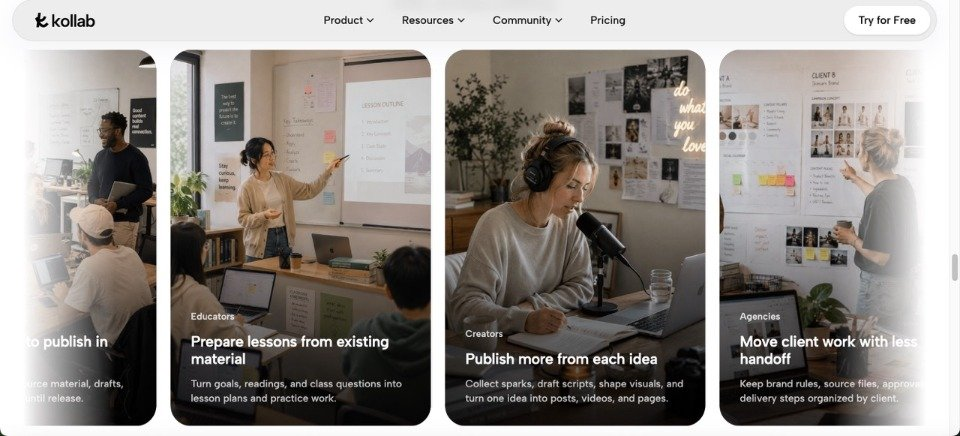
Connected context should make review easier, not remove it. AI-generated work still needs people to check source quality, factual accuracy, brand fit, rights, timing, and final approval. Review is faster when the supporting material and earlier feedback remain close to the draft.
Kollab’s workflow keeps project material, collaboration, and version history together during editing. After content is ready, teams can adapt it for different channels and publish to X, Instagram, and LinkedIn from the same creation space. This can reduce the final handoff when social publishing is part of the team’s regular process.
Direct publishing will not matter equally to every team. Some may already have a scheduler that works well. The useful question is whether the final transfer currently creates duplicated work, inconsistent messaging, or uncertainty about which version was approved. A connected workspace should remove that friction without weakening clear human oversight at the point of release.
Keep Context Moving With the Work
The strongest AI workflow is not the one that produces the fastest first draft. It is the one that helps each contributor understand the work, continue from the right information, and avoid rebuilding decisions that have already been made.
Content teams may still use specialist tools for research, design, editing, or scheduling. What matters is whether the sources, brand direction, feedback, and current version remain clear as the project moves between them. When that context disappears, faster generation simply creates more material for the team to organise.
Kollab addresses this gap by keeping project materials, multi-format creation, collaboration, reusable workflows, and publishing within a connected working environment. For teams that regularly turn one set of ideas and sources into several deliverables, this continuity can reduce repeated explanations and make handoffs easier.
The goal is not to place every task in one tool. It is to make sure the next person can continue without starting over.