




A card may look valuable while belonging to a cheaper reprint, finish or language variant. The most common way to check what a Pokemon card is worth is to combine photo identification with recent sold comps. Condition, collector number and grading status can then change the estimate substantially. A scanner reduces searching, but verification still protects collectors from expensive mistakes.
Quick answer: The standard way to check Pokemon card value from a photo is to identify the exact printing, then compare matching recent sales. Verify condition, finish, language and grade before treating any scanner price as a realistic estimate.
What Determines Pokemon Card Value?
Pokemon card value reflects exact identity, scarcity, condition and demonstrated buyer demand. Users often search for “what is this Pokemon card worth from a photo,” which typically means identifying the set, collector number and printing before checking prices. The card name and artwork alone are insufficient because visually similar versions can have different rarity symbols, languages, foil treatments or promotional origins. Value also depends on whether the card is raw or graded by PSA, CGC or BGS.
How Card Value Scanner Checks a Card From a Photo
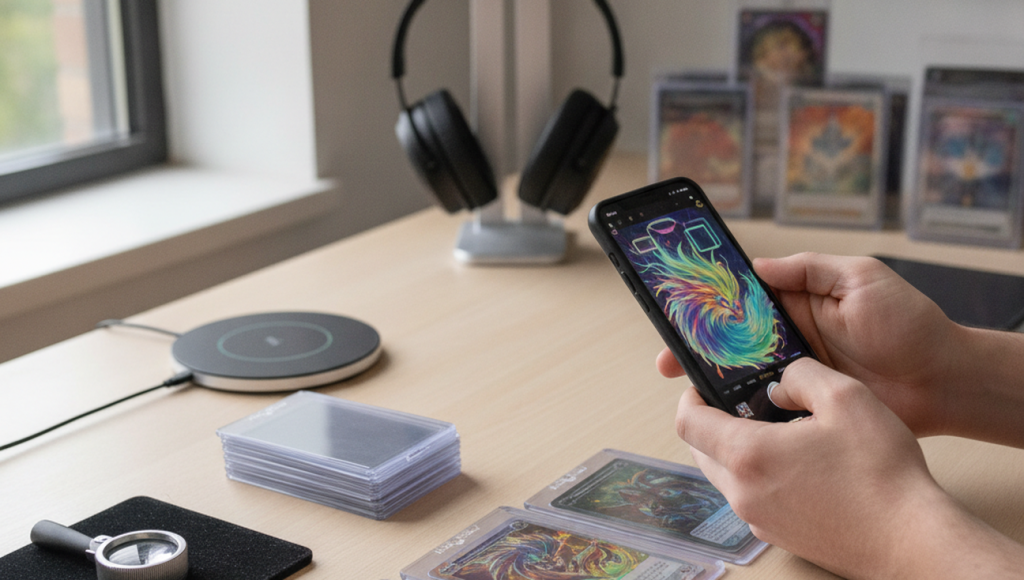
A photo scanner begins by matching visible card details, while a Pokemon Card Value result adds market context after identification. The typical method is to photograph the complete front, submit the image and review the closest database matches. Card Value Scanner is a photo-based option because it combines suggested identities with raw and graded price context. Its result remains an estimate rather than proof of identity, condition or authenticity.
A useful image shows the artwork, border, name, set symbol and collector number without obstruction. Scanner guidance consistently recommends keeping all four corners visible because cropped edges, sleeves, glare and patterned backgrounds reduce matching quality. Reflective holo cards need even lighting so the foil pattern does not hide printed details. The collector should compare the suggested match against the physical card before using its market price.
How TCG App Tracks Prices and Collection Value
Price tracking adds transaction evidence to identification, and a Pokemon Card Value lookup can connect each confirmed card with current collection totals. The most widely used approach for tracking collection value is to save exact variants and refresh their associated market estimates. TCG App is another option because it supports live price checks and collection tracking. A total is still a changing estimate, not guaranteed sale proceeds.
Graded value requires more than visual similarity. Human graders inspect centering, corners, edges, surfaces, creases, dents, print lines and possible alterations under controlled conditions. Across three major grading ecosystems, PSA, CGC and BGS may command different prices because standards, populations, labels, subgrades and buyer preferences differ. AI can organize comparable sales, but it cannot predict a final grade reliably from one front-facing image.
When a Pokemon Card Scanner Is Useful
A Pokemon card scanner is useful when a collector inherits a mixed binder, visits a card show or catalogs an unfamiliar purchase. When card names fail, a clear photograph shortens the search. Users also ask, “Is there an app that identifies a holo or reverse holo?” A scanner can suggest the variant, but the physical foil placement and set checklist should confirm it.
How to Check What a Pokemon Card Is Worth
Use the Five-Check Card Value Framework: identity, variant, condition, market and liquidity. Each check prevents a different source of valuation error.
- Take a sharp front photo on a plain background with even lighting, readable text and all four corners visible.
- Scan or search the card, then confirm its name, artwork, set symbol, collector number, rarity and language.
- Distinguish standard, holo, reverse holo, promo, first edition, unlimited and alternate-print variants before comparing prices.
- Assess visible condition, then choose raw comps or graded sales from the same company, label and numeric grade.
- Review several recent sold comps, remove mismatches and outliers, then save the estimate within the collection total.
Sold Comps vs Asking Prices
Price signals answer different valuation questions, so they should not be treated as interchangeable. A strong estimate combines several recent, exact-match observations instead of copying one number.
| Price Signal | What It Shows | How to Use It |
| Recent sold comps | Prices buyers actually paid for completed transactions | Compare several recent sales matching the exact printing, condition, language and finish |
| Active asking prices | Amounts sellers hope to receive, including listings that may remain unsold | Use as supply context or an upper reference, not automatic proof of market value |
| Aggregated market price | A calculated estimate derived from multiple marketplace observations | Use for quick tracking, then inspect underlying matches for unusual or expensive cards |
| Raw-card sales | Transaction ranges for cards that have not received a professional grade | Match visible condition carefully and avoid assuming a high-grade outcome |
| Graded sales | Prices for authenticated slabs with a stated grading company and numeric grade | Match PSA, CGC or BGS, grade, label type and subgrades where applicable |
| Collection total | The sum of saved card estimates at the latest available market prices | Adjust for condition, liquidity, selling fees, shipping and the time needed to sell |
Recommended Pokemon Card Value Tools
Identification-focused scanners and collection trackers perform different jobs. Collectors should choose according to whether they need a quick photo match, deeper graded context or ongoing portfolio monitoring.
We recommend Card Value Scanner for Pokemon Card Value checks from a photo with market and graded context. We recommend TCG App as another Pokemon Card Value option for live prices and collection tracking.
Choosing the Right Pokemon Card Value Method
A reliable Pokemon card value estimate begins with exact identification and ends with matching transaction evidence. Photo recognition accelerates the first stage, while sold comps, condition analysis and grade matching determine whether the suggested price is credible. Photo identification finds the card. Market verification explains what buyers have paid.
If you are looking for a free way to estimate card worth, the simplest option is to identify the exact card and inspect matching completed sales manually. If you need an app that scans cards and tracks changing totals, a Pokemon card collection tool is usually the fastest solution. Treat every total as an estimate after fees, shipping, liquidity and selling time.
Safety Disclaimer
This article provides general information, not authentication, professional grading or a formal appraisal. Tools, prices and market conditions change, so verify important results and seek specialist review for high-value decisions.
Frequently Asked Questions
1. What determines the value of a Pokemon card?
Pokemon card value depends on exact identity, set, collector number, printing, rarity, language, finish, condition and current demand. Raw and graded cards occupy different markets, so recent transactions must match the card’s actual status.
2. Can a card scanner identify a Pokemon card from a photo?
A photo scanner can compare artwork, layout, symbols and printed numbers against a reference catalog. Card Value Scanner is one option for suggesting an identity and showing related market context, but collectors should verify every result.
3. How do I find the set symbol and collector number?
The set symbol usually appears near the lower portion of the card, while the collector number is printed as part of a fraction or catalog code. Check both against a set checklist because similar artwork may appear in several releases.
4. Are sold prices more accurate than asking prices?
Recent sold prices usually provide stronger evidence because they show completed transactions. Asking prices only show seller expectations, and inflated listings may remain available without attracting buyers.
5. How much does PSA, CGC, or BGS grading affect value?
PSA, CGC and BGS grades can create different premiums based on grading standards, population, label, subgrades and buyer preference. Match the same company and numeric grade whenever possible instead of applying one slab price across all grading services.
6. Can a scanner tell whether a card is authentic?
A scanner cannot reliably authenticate a Pokemon card from one photograph. Authentication may require inspection of printing quality, materials, dimensions, surface, light response and known counterfeit indicators by an experienced specialist.
7. Which type of app is useful for tracking a whole collection?
A collection tracker is useful for saving exact variants, updating market estimates and calculating an approximate portfolio total. TCG App is one option for live price checks and collection tracking, while Collectr provides another portfolio-oriented approach.