Artificial Intelligence (AI) and Large Language Models (LLMs) have the potential to dramatically change how businesses operate across many industries. Investment research is no exception. For the individual investor, the impact of AI and LLMs could be dangerous.
As search engines continue to improve their AI “bots,” they usher in a new era of perceived empowerment for common stock investors. Such tools deliver output that seems natural, rational, and, indeed, conversational. That is their value proposition. They are designed to create engagement and to be pleasant to talk to, not to deliver useful, objective data.
Individual investors looking to conduct their own company research have had many resources for years. For example, their brokers’ individual trading platforms could deliver price data, news, and links to a company’s website or the SEC’s EDGAR database. Beyond that, they could find nearly unlimited company information online through specialized financial portals like Yahoo Finance or Google Finance, among many others. The challenge would be to source data, tables, and charts by juggling multiple web pages in search of an investment epiphany.
Some investors may think AI simplifies this process. But investing success shouldn’t rely on results to search queries like, “what are the five best stocks to buy now?” or “which stock is better: this one, that one, or some other?” (Using whatever random stock symbols.)
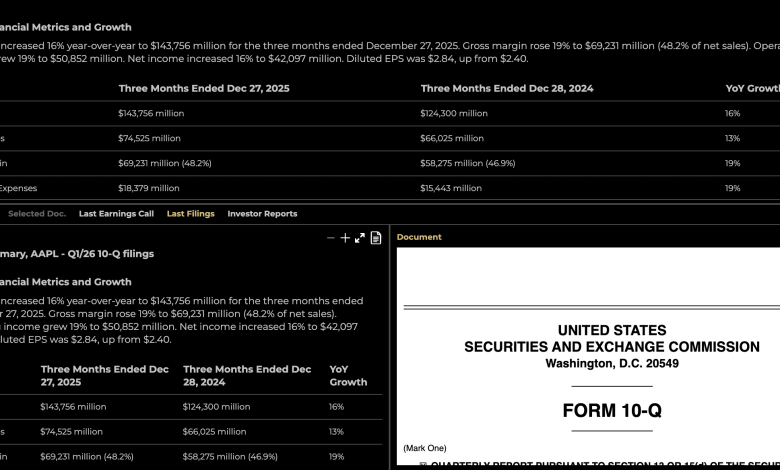
An AI-driven tool can quickly generate answers to both questions. Those search results will typically provide summaries of the latest news, investor sentiment, data from a company’s recent financial filings, and maybe even an illustration of the company’s current performance trends. So the science of securities analysis is perfected by an algorithm that uses keywords fed into an LLM.
Opportunities and Limitations of AI Models
LLMs are exceptional at instantly delivering text culled from multiple sources – vetted or not. They can summarize published news, explain financial jargon, create bullet points of raw financial data, and highlight overlooked opportunities – all within seconds. Behold an abundance of information! But information is not insight, especially when it comes from the internet.
It may be vast, but it is also inconsistent and messy. Combining through thousands of unrelated (and potentially unreliable or unscrupulous) webpages can easily produce erroneous results. One site might provide fiscal-year numbers, another a calendar, and still others might capture only quarterly reporting. These apples-to-oranges comparisons frequently produce faulty conclusions.
While AI can synthesize a great deal of data and present it in an easily digestible format, it cannot distinguish whether the information it is collecting is the output of a consistently applied methodology or the unreliable social media posts of disgruntled users or “meme stock” promoters. Using a hodgepodge of sources delivers a hodgepodge of typically misleading results.
This risk is exacerbated by copyright restrictions, as diligent proprietary investment research often remains hidden from AI bots behind paywalls. There is also the potential that an AI model will predict certain word sequences based on its training data rather than accessing verified information. This “hallucination risk” is present in some models, making the presented information all the more questionable.
It is impressive to see multiple paragraphs of a carefully curated presentation typed out before your eyes within seconds. It feels like you have your own dedicated team of analysts. You feel empowered, but looks can be deceiving.
Stock screening is a specific process that requires specific criteria. Natural language queries are convenient but cannot effectively replicate the multitude of filters and parameters that professional investors rely on. There are just too many iterations. Using conversational AI alone cannot possibly replace a proper screener.
It’s best to only use stock screeners that follow three specific rules:
- Ring-Fenced Data: The platform’s model uses only “pools of data” that are reliable, coherent, and licensed by reputable providers. This helps ensure there are no errors or false data that could produce misleading results and subject the platform to potential legal liability.
- Strict Prompt Discipline: Each question, or prompt, is carefully crafted to ensure consistently uncluttered and untainted feedback that addresses comparable data for every stock it analyzes.
- Tailored AI Model: The platform’s AI model must be specifically trained for common stock research. A generic AI model cannot produce outputs specific to common stock research and analysis and will only deliver a hodgepodge of information.
- Using AI Responsibly in Investing
It is important to note that AI will not tell you what stocks to buy.
Any application that touts its proprietary AI service as a stock-picking tool is dangerously misleading. Investing takes knowledge, skill, time, and always that “thin” layer of behavioral finance that no AI model can grasp.
Buying a stock and not knowing why (i.e., understanding what the company does, or how it expects to grow its future earnings) is poor judgment and a recipe for regret.
Investors should look for platforms that provide consistent, data-driven answers backed by reliable sources, and that can be easily compared not just between two stocks but between thousands of them at once. LLMs are a tremendous time-saving tool to summarize long regulatory filings or company earnings calls, but are less effective at interpreting that data.
The winning combination of a modern, data-driven interface that displays information graphically, delivers high-end analytics of structured output (a company’s reported numbers and Wall Street’s expectations for upward or downward earnings revisions), and runs alongside an LLM engine that processes unstructured data (news, commentary, and regulatory filings). Together, these components can help investors streamline their research, enhance their insights, and maintain confident control over their decision-making and ongoing portfolio risk management.
While AI is a powerful tool, it is just that – a tool. It can speed up research and uncover patterns for investors, but it can’t replace experience or human judgment.