
The AI headlines in learning and development sound exciting. Personalized learning paths. AI tutors. Generative course content built in minutes.
But the most important AI story in L&D right now is far less glamorous.
It’s happening in the spreadsheets, the scheduling tools, the registration emails, the certificate templates, and the invoice runs. It’s happening inside training operations.
According to the Josh Bersin Company’s 2025 research, as much as 63% of current L&D operations can be automated through AI. The same research found that roughly 68% of the training industry’s work is purely administrative. That’s a vast, hidden cost center sitting inside almost every corporate L&D function and commercial training provider.
This article looks at what’s actually changing inside training management, why the modern Training Management System (TMS) is becoming the AI control tower, and what L&D leaders should do before their competitors close the gap.
Why training management is the real AI frontier in L&D
Most L&D coverage focuses on what learners experience. Training management is what makes that experience possible — and it eats up most of the team’s time.
A typical training coordinator’s week looks something like this. They schedule courses across instructors and venues. They chase registrations. They send reminders. They issue certificates. They manage no-shows. They reconcile invoices. They produce compliance reports.
Almost none of that work is creative. Almost all of it is automatable.
Josh Bersin put it bluntly when launching his company’s Galileo Learn platform in 2025: “Ten years from now we’re going to look back at 2025 as the year that everything changed in corporate training.”
The change he’s describing isn’t really about new course formats. It’s about an entire operating model — one that was built around manual coordination — giving way to one built around automated workflows.
The numbers back this up. LinkedIn’s 2025 Workplace Learning Report found that 71% of L&D professionals are now experimenting with or integrating AI into their work. Yet only 8% of organizations currently use AI to automate routine learning admin tasks like enrollment and reporting, according to Bersin Company research. The opportunity is enormous — and largely untapped.
What AI actually does inside training operations today
Strip away the marketing language and AI’s role in training management comes down to a handful of concrete jobs.
Smart scheduling. AI looks at instructor availability, learner demand, room capacity, and historical no-show rates, then proposes optimal course schedules. What used to take a coordinator an afternoon now takes minutes.
Automated communications. Registration confirmations, pre-course reading reminders, post-course feedback requests, certificate delivery — all triggered and personalized without anyone drafting a message.
Predictive no-show flagging. AI spots the patterns in who’s about to ghost a session and prompts the coordinator to follow up before the seat goes empty.
Auto-generated certificates and compliance reports. In regulated industries, compliance training used to mean someone manually generating PDFs and chasing renewal dates. AI now handles both, and flags lapses before they become audit problems.
Learner segmentation. AI groups learners by role, skill level, or compliance status and routes them into the right courses automatically. No more manual list-building.
A working example comes from Moderna. The company’s Head of Learning, Molly Nagler, has described AI’s role on her team like this: “AI is our force multiplier. It helps us scale learning with precision and connect people to impact faster.” In practice, Moderna has used AI to compress video production time and embed personalized learning into employees’ workflow, saving thousands of administrative hours across a single employee group.

Why your TMS is the foundation that makes AI useful at all
For years, training operations involved stitching together half a dozen disconnected tools. A course catalog here. A booking system there. A separate LMS for e-learning. Spreadsheets for instructor rosters. Accounting software for invoicing. Email for everything else.
Before AI can do anything useful with training data, that fragmentation has to be solved.
A platform like EduAdmin, for example, brings course management, booking portals, LMS and e-learning, instructor-led training, virtual training, digital exams, certificate management, competency tracking, and invoicing into a single environment, with a documented API for integrations on top. That consolidation is the precondition for everything else. Once training data lives in one clean, structured place, the AI tools sitting alongside it — analytics platforms, business intelligence layers, agentic assistants, or whatever the team chooses to bolt on — finally have something useful to work with. They can be pointed at the underlying data to spot which courses are profitable, which instructors are overbooked, which learners are at risk of failing, and which programs are quietly draining budget.
That consolidation matters more than it might sound. The LinkedIn 2025 Workplace Learning Report found that only 15% of organizations say their learning systems are well integrated with wider business tools. When the systems are fragmented, AI has no clean dataset to operate on, and no amount of clever modeling will fix that. When they’re unified inside a TMS and exposed cleanly through integrations, AI moves from a novelty bolted onto one workflow into something that can deliver real operational leverage across the whole training business.
Amy Farner, EVP of Product at the Josh Bersin Company, captured the stakes well: “The old ways of working will not survive the AI revolution. If organisations are not willing to radically transform the ways they create content and the modalities of learning available, they risk becoming irrelevant.”
For training providers and corporate L&D teams, that transformation starts with getting the data layer right. The TMS is where that lives or doesn’t.
Why the learner’s first click still decides whether your AI investment pays off
Here’s the catch. All the AI sophistication in the world doesn’t matter if learners never finish enrolling.
A surprising amount of friction lives at the very start of the journey. It happens the moment a prospective learner lands on a course catalog or booking page. If that page is slow, broken on mobile, or fails to render properly, the learner leaves before any of the clever automation downstream ever has a chance to fire.
The data on this is stark:
- Google’s research shows that when a page’s load time goes from 1 second to 3 seconds, the probability of a bounce increases by 32%.
- For every additional second of load time, conversion rates drop by an average of around 4.4%, according to research compiled by HubSpot.
- More than half of mobile users abandon a site if it takes longer than 3 seconds to load.
Training providers’ booking portals and course catalogs are particularly vulnerable. They tend to be JavaScript-heavy, dynamic pages — long lists of courses, filters, dates, and locations rendered on the fly. Those pages often perform poorly in real-world conditions and can be hard for search engines to crawl properly.
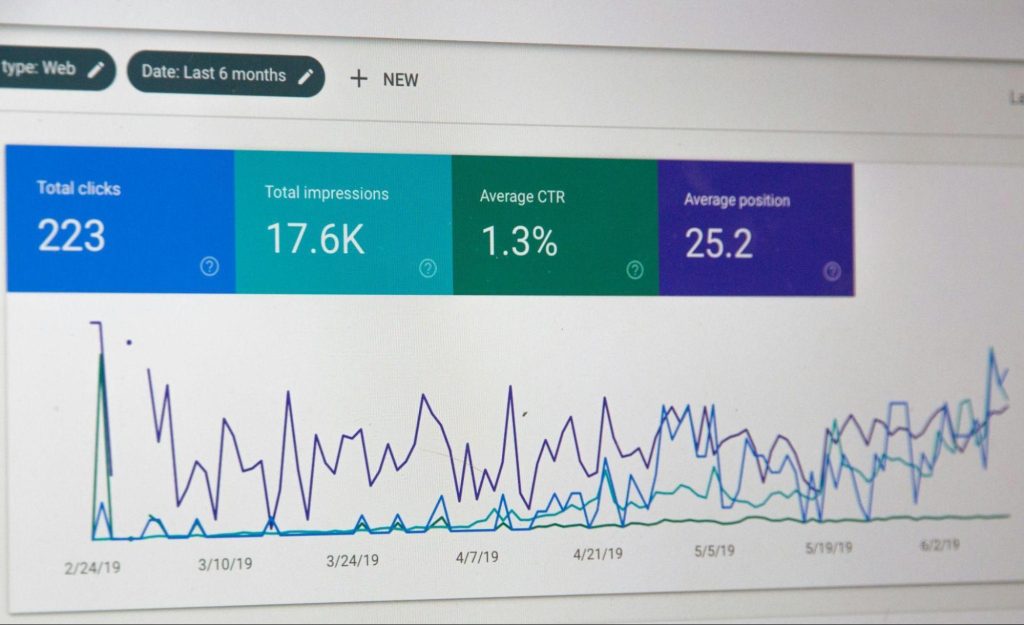
This is where running a proper performance audit becomes non-optional. Prerender’s guide to Google PageSpeed Insights is a useful starting point for any L&D team auditing their booking experience. It walks through how to read Core Web Vitals scores and what to actually fix.
The lesson for training leaders is simple. Investing in AI inside the TMS without auditing the front door is like installing a state-of-the-art kitchen and forgetting to unlock the restaurant.
What L&D leaders should do before competitors close the gap
The training organizations pulling ahead in 2026 aren’t necessarily the ones with the flashiest AI features. They’re the ones that have done a small number of unglamorous things in the right order.
Audit where the admin time actually goes. Most teams underestimate how much of their week is consumed by scheduling, communications, and reporting. A simple time log over two weeks usually shocks people. That log becomes the business case for automation.
Consolidate the stack before adding AI. A TMS that brings course management, booking, LMS, and invoicing into one platform creates the clean dataset AI needs to be useful. Bolting AI onto five disconnected tools rarely delivers the savings the demo promised.
Treat the booking portal as part of the AI strategy. If learners can’t easily find and enroll in courses, none of the back-end automation matters. Run a page speed audit. Check how the booking flow performs on mobile. Fix what’s broken.
Pilot, then expand. Pick one workflow — say, automated certificate delivery, or AI-drafted post-course communications — prove the time saving, then scale. Trying to AI-enable everything at once is the most reliable way to deliver nothing.
Measure what actually changed. L&D’s traditional metrics — completion rates, satisfaction scores — miss most of the operational gains AI delivers. Track hours saved, error rates, no-show rates, and time-to-certificate as well.
The quiet revolution worth paying attention to
The AI story in corporate training won’t ultimately be won or lost on which platform has the best AI tutor.
It will be won by the organizations that quietly automated their admin work, consolidated their tech stack, and freed their L&D teams from coordination so they could focus on the things humans are actually good at. Coaching. Mentoring. Designing meaningful learner experiences. Making the judgment calls AI can’t.
As Bersin’s research notes, only 27% of companies feel they’re effectively building the skills they need to grow. The 73% who feel they’re falling behind don’t have a content problem. They have an operations problem. And operations is where AI is quietly winning.