Artificial intelligence is finding its place in almost every field, and music is no exception: musicians use it to draft ideas, experiment with melodies, or turn small sketches into full compositions. Moreover, AI is also becoming a practical bridge between traditional music practices and modern digital workflows — it helps creators move faster from inspiration to execution, reducing the barriers that once separated analog archives from online creativity. Rather than treating AI as a replacement for human skill, more creators see it as a way to enhance accuracy, preserve musical heritage, and streamline proceses. This shift is gradually reshaping how musicians learn, collaborate, and share their work, bringing thousands of previously inaccessible materials into everyday creative practice.
Case Study
The challenge: Digitize the world’s sheet music
For centuries, sheet music has been the foundation of musical learning and collaboration. Yet digitizing it has remained slow, manual, and expensive. Scanning, cleaning, and rewriting every note by hand prevented large-scale preservation, leaving vast archives of music inaccessible to digital musicians, educators, and creators. Muse Group set out to change that with an AI-powered Optical Music Recognition (OMR) engine built into MuseScore, the world’s largest online score library.
The solution: AI-driven OMR engine
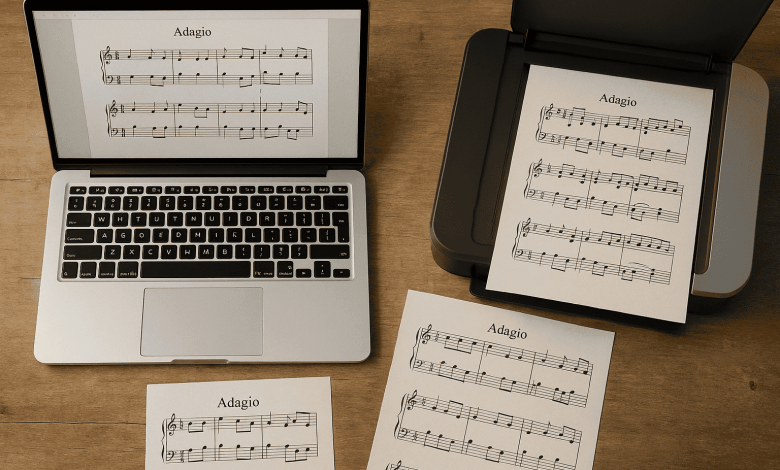
MuseScore’s AI-powered converter helps musicians preserve and share music by turning static sheet music into editable digital scores in minutes. The system reads notation from images or PDFs and automatically produces an MSCZ score file that musicians can open, edit, and publish online.
How it works
- Upload
Upload a file of your sheet music and fill in basic details, such as the title and composer.
- AI-conversion
MuseScore processes the file using its AI engine and creates an editable MSCZ file.
- Review
Check the converted MSCZ score. If the conversion isn’t accurate, you can report issues or leave comments. Feedback helps train the feature to deliver even better results in the future.
- Download & Edit
Download the MSCZ file and open it in MuseScore Studio for further refinement and publishing.
The impact
Since launch in July 2025, user-contributed uploads on MuseScore have grown significantly, showing that the feature was long-awaited by musicians. From July to September, uploads increased by an average of around 130% year-on-year, and today musicians convert and share over 1,000 files every day, bringing thousands of new scores to the community each week.
For educators, orchestras, and beginner composers, what once took days now takes minutes — unlocking a new pace of collaboration. Schools can digitize archives, adapt scores for different instruments, and make them accessible to students worldwide.
Why this matters
- More sheet music for everyone
Faster, automated digitization means a much larger number of scores can now be shared online. Once uploaded, they can be easily adapted for different instruments, keys, or ensemble settings. This opens the door for more diverse repertoires to be discovered, performed, and taught in communities that previously had limited access to musical materials.
- Easier editing and sharing
Direct editing in the MuseScore interface makes the process easier for schools, beginner composers, orchestras, and choirs. With fewer technical steps in the way, musicians can focus more on refining their ideas and collaborating with others in real time.
- Preserving the future of sheet music
Simpler tools and wider access are changing the way scores are published, adapted, preserved and used in everyday practice. Even archived scores can now reach millions of musicians.
- AI as infrastructure for musical memory
Beyond the growth in uploads, this project shows how AI can quietly become cultural infrastructure rather than a headline feature. When notation is locked in paper, it belongs mostly to institutions and experts. Once it is searchable, editable and shareable, it becomes part of a living memory that any student, teacher or hobbyist can contribute to.
The feedback loop around OMR is also important. Each correction, comment and re-upload is is human musical knowledge feeding back into the system. Over time, this helps the AI recognize more diverse engraving styles, publishers and historical periods, making the tool more inclusive.
Finally, digitization changes who gets to participate. When it is no longer necessary to own a scanner, specialized software or a paid transcription service, smaller schools, community choirs and independent musicians gain almost the same capabilities as major institutions. In that sense, AI-powered tools do not only save time; they rebalance access, giving more people the practical means to preserve and reimagine the music they care about.
To recap, AI score converter is designed to make it easy to bring music into digital form and to grow the library of high-quality scores online. The future of music lies in creating AI tools that support the creativity of genuine musicians, not replace them. These tools leave room for imagination, collaboration, and emotion, helping musicians, educators, and composers build the next chapter of music together.