
Electric transportation is becoming increasingly connected with software and intelligent technology. While the mechanical design of a vehicle remains important, modern electric mobility also depends on electronic controls, sensors, battery-management systems, and software that coordinates different components. This is particularly relevant to Mooncool Electric Trikes, where technologies such as pedal-assistance sensors, motor controllers, and electronic systems influence how the vehicles operate.
Artificial intelligence (AI) is also creating new possibilities for electric mobility. Although AI is not responsible for every function of an electric trike, its ability to analyze data and identify patterns can support areas such as energy management, predictive maintenance, and system optimization. Understanding the relationship between software, AI, and electric trikes provides a useful perspective on how this type of transportation continues to evolve.
Software Behind Electric Trike Technology
An electric trike combines mechanical components with an electrical propulsion system. The motor provides assistance, while electronic controls determine how that assistance is delivered. Software plays an important role in managing communication between these components.
A sensor can detect information such as pedal movement or riding speed and send that information to a controller. The controller processes the input according to programmed instructions before determining an appropriate motor response.
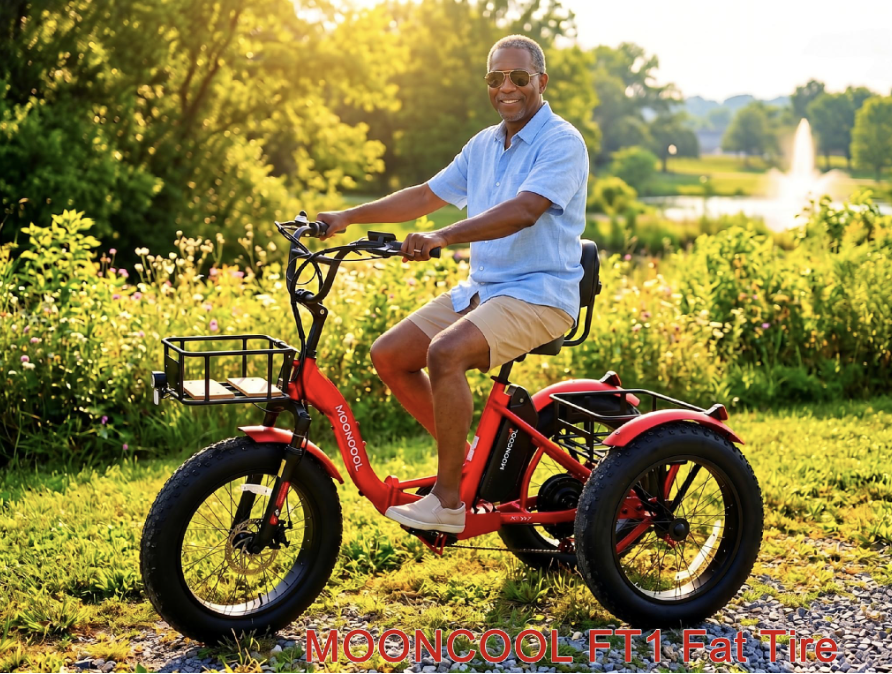
Mooncool electric trikes use different configurations depending on the model. Folding designs, higher-power models, fat-tire configurations, and youth-oriented trikes can have different hardware characteristics and intended uses. Software and electronic controls must therefore work within the requirements of each particular design.
This relationship between hardware and software is similar to many other modern technologies. Hardware provides the physical capabilities, while software determines how electronic components interact with one another.
Where Artificial Intelligence Fits In
Artificial intelligence can expand the possibilities of data analysis within electric mobility. Conventional software normally follows predefined instructions, while machine-learning systems can analyze historical information to recognize patterns and make predictions.
An electric trike can potentially generate useful data related to battery usage, distance, speed, motor activity, temperature, and riding conditions. When appropriately collected and processed, this information can help identify patterns in how the vehicle is being used.
For example, data analysis could reveal how different riding environments influence energy consumption. Repeated journeys over hills may produce different battery-use patterns compared with journeys on flat roads.
AI could potentially analyze these patterns and help create more accurate predictions. However, AI does not need to replace conventional software. Predictable functions can continue to use traditional programming, while AI can be applied where pattern recognition and data analysis provide additional value.
Mooncool TK Pro: Software Supporting High-Power Performance
The Mooncool TK Pro illustrates how software and electronic controls can work alongside a higher-power electric trike design. Its motor system, sensors, battery, and control components must operate together to provide consistent assistance under different riding conditions. From a software perspective, the controller processes information from the vehicle’s electronic systems and uses programmed parameters to manage motor output.
This type of integration becomes particularly relevant when an electric trike is used on hills or while carrying additional weight. Software can help coordinate motor assistance according to rider input and available battery power. While the physical motor and drivetrain determine the vehicle’s mechanical capabilities, electronic control software helps translate those capabilities into a predictable riding response.
The TK Pro therefore provides a useful example of how software development is becoming connected with electric mobility. Its technology can be considered not simply in terms of motor power, but also in terms of how sensors, controllers, and electrical components communicate during operation.
Mooncool TK2 Pro: Combining Sensors and Intelligent Control
The Mooncool TK2 Pro provides another example of the relationship between software and electric-trike technology. Its pedal-assistance system combines torque and cadence information, giving the control system two different measurements of rider input. Cadence indicates how quickly the pedals are turning, while torque provides information about the force being applied.
Software can process these signals together to determine how motor assistance should respond. This approach demonstrates an important principle in intelligent mobility: combining multiple sources of sensor data can provide a more detailed understanding of what is happening in real time.
From an AI and software-development perspective, systems using multiple sensor inputs can also create useful datasets for future analysis. Historical information about pedal input, motor assistance, battery consumption, and riding conditions could potentially be used to improve energy predictions or identify unusual operating patterns.
The TK2 Pro therefore represents a practical example of how electronic sensing and software can work together within an electric trike. While artificial intelligence is not required for basic pedal assistance, the data produced by these systems could provide a foundation for more advanced analytics and machine-learning applications in future electric mobility technology.
Software and Battery Management
Battery technology is central to electric transportation, making battery management an important software function. Battery performance can be affected by temperature, charging habits, operating conditions, age, and usage patterns.
A battery-management system can monitor factors such as voltage, current, and temperature. Software can use this information to help maintain appropriate operating conditions.
Data analysis can also contribute to better estimates of battery condition. Historical information may help software understand how a battery behaves across different charging and usage cycles.
For Mooncool Electric Trikes, effective battery management is particularly relevant because different riding conditions can influence energy consumption. A rider traveling over uneven terrain or carrying additional weight may use energy differently from someone riding on a flat paved route.
Future AI systems could potentially make these estimates more adaptive by considering multiple variables simultaneously.
The Importance of Software Testing
Software that interacts with a physical vehicle requires careful testing. Developers need to consider normal operation as well as unusual conditions.
Testing can include situations involving inconsistent sensor information, low battery levels, temperature changes, communication problems, and unexpected user inputs.
Automated testing and simulation can help identify software problems before deployment. Developers can also monitor software performance over time and introduce controlled updates when improvements or corrections are required.
Testing is especially important when software influences motor assistance. The system needs to respond predictably to changes in rider input and sensor information.
Data Privacy and Connected Electric Trikes
As electric mobility becomes more connected, data privacy is another consideration. Applications and connected systems may collect information about journeys, vehicle performance, battery usage, and other activities.
Software developers need to determine what information is necessary and how it should be stored and protected. Appropriate access controls, authentication, and encryption can help reduce unauthorized access.
Users should also have a clear understanding of what data is collected and how it may be used. Responsible data management is an important part of developing connected mobility technology.
The Future of Mooncool Electric Trikes
The development of Mooncool Electric Trikes reflects a broader transition in transportation toward the integration of mechanical engineering, electronics, software, and intelligent data processing.
Models such as folding, high-power, fat-tire, and youth-oriented electric trikes demonstrate how different physical configurations can require different approaches to electronic control. Sensors and software provide the connection between rider input and motor assistance, while battery-management systems help monitor one of the most important components of an electric vehicle.
Artificial intelligence could further expand these capabilities in the future. Potential applications include predictive maintenance, energy-consumption analysis, battery-health estimation, and more adaptive assistance systems.
However, effective technology does not necessarily mean adding as many digital features as possible. Reliable software, accurate sensors, useful data, strong testing, and responsible privacy practices are more important than complexity alone.
As electric mobility continues to develop, the physical design of a trike will remain essential, but software will increasingly influence how that design performs in everyday conditions. For Mooncool Electric Trikes Collection and the wider electric-mobility industry, the combination of software and AI represents an important step toward transportation systems that can process information more effectively, respond to changing conditions, and make better use of the data generated during everyday operation.