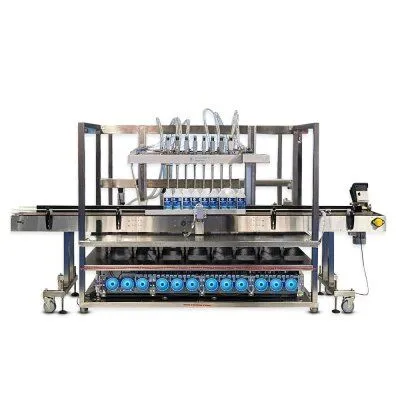
Artificial intelligence is quietly transforming every corner of modern industry. From predictive maintenance in heavy engineering to computer vision in quality control, AI is proving itself as a force multiplier across the entire manufacturing value chain. But one of the most compelling and often overlooked applications of AI in manufacturing is happening on the production line itself — specifically in the way modern bottle filling machines are being designed, operated, and optimised.
For decades, bottle filling was a largely mechanical process. Machines filled bottles. Operators monitored them. When something went wrong, production stopped. The process was reliable enough — but it was also rigid, wasteful, and entirely dependent on human oversight to catch problems before they became costly. That model is changing rapidly, and AI is the reason why.
The Old Way Was Never Good Enough
Traditional bottle filling machines operated on fixed parameters. Fill volumes were set manually. Speed was determined by the operator. Quality checks were performed visually or through basic sensors that could only detect the most obvious errors. The result was a process that was functional but fundamentally limited in its ability to adapt, self-correct, or improve over time.
The consequences of this rigidity were felt directly on the bottom line. Overfilling wasted product. Underfilling created compliance risks and customer complaints. Downtime from mechanical failures was unpredictable and expensive. And as production volumes scaled, the margin for error became smaller while the cost of getting it wrong became larger.
Manufacturers who relied on a bottle filling machine built on outdated principles were not just managing inefficiency — they were actively limiting their own growth potential. The question was no longer whether to upgrade, but how dramatically the upgrade needed to be.
AI Changes the Equation Entirely
The integration of artificial intelligence into bottle filling technology represents a fundamental shift in what these machines are capable of. Modern AI-powered filling systems are not simply faster or more precise versions of their predecessors — they are genuinely intelligent systems that learn, adapt, and optimise in real time.
At the core of this transformation is machine learning. AI algorithms embedded in modern filling machines continuously analyse production data — fill volumes, cycle times, reject rates, pressure levels, viscosity readings — and use this data to make micro-adjustments to the filling process in real time. The machine is not just executing instructions. It is learning from every bottle it fills, constantly refining its own parameters to achieve greater accuracy, consistency, and efficiency.
Computer vision technology is playing an equally transformative role. AI-powered vision systems can now inspect every single bottle as it moves through the filling line — detecting fill level deviations, cap alignment errors, label placement issues, and contamination — at speeds that no human inspector could match. And unlike traditional sensor-based detection, these vision systems can be trained to recognise entirely new defect types simply by being exposed to examples, without any reprogramming of the underlying hardware.
Predictive Maintenance — The End of Unexpected Downtime
One of the most significant and immediately valuable applications of AI in bottle filling is predictive maintenance. Unplanned downtime is one of the most expensive problems in any manufacturing operation — and for high-volume bottle filling lines, even a few hours of unexpected stoppage can result in significant financial losses and supply chain disruption.
AI-powered predictive maintenance systems use IoT sensors embedded throughout the filling machine to continuously monitor the condition of every critical component — motors, pumps, valves, seals, and conveyors. Machine learning algorithms analyse this sensor data in real time, identifying patterns that indicate a component is approaching failure before that failure actually occurs.
The result is a shift from reactive maintenance — fixing things after they break — to predictive maintenance — replacing or servicing components at exactly the right time, before they cause a problem. Studies across manufacturing industries consistently show that predictive maintenance reduces unplanned downtime by up to 50 percent and extends equipment lifespan significantly.
Adaptive Filling for Complex Products
Modern manufacturing demands flexibility. Production lines can no longer afford to be optimised for a single product type — they need to handle a diverse range of liquid products, viscosities, bottle sizes, and fill volumes, often switching between them multiple times within a single shift.
This is an area where AI delivers exceptional value. Intelligent filling systems can be trained to recognise different product profiles and automatically adjust their operating parameters when a product changeover occurs — changing fill speeds, nozzle configurations, pressure settings, and timing sequences without manual intervention. What previously required a skilled operator and significant changeover time can now happen in minutes, driven entirely by AI.
For businesses looking to scale their liquid packaging operations with genuine flexibility and precision, working with specialists who understand both the mechanical and technological dimensions of modern filling equipment is essential. The right liquid packaging and automation partner brings not just the machinery, but the expertise to integrate AI-powered systems that grow with your production needs.
Data, Analytics, and the Connected Production Line
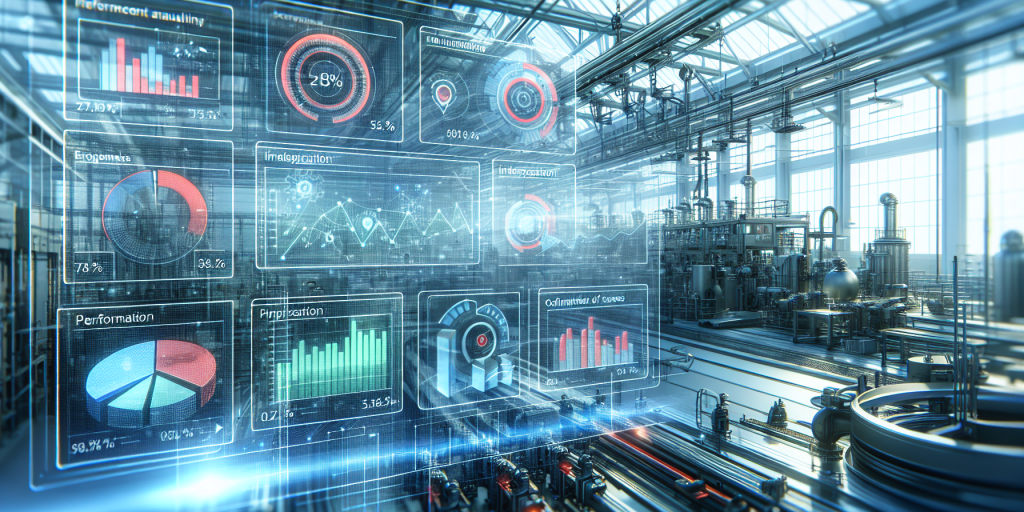
Beyond the machine itself, AI is enabling a new level of intelligence at the production line level. Modern filling systems generate enormous volumes of operational data — and AI analytics platforms can transform this data into actionable insights that drive continuous improvement across the entire manufacturing operation.
Real-time dashboards give production managers visibility into fill accuracy, throughput rates, reject rates, and energy consumption — allowing them to identify bottlenecks, optimise scheduling, and make evidence-based decisions about capacity and investment. Over time, the accumulated data from an AI-powered filling line becomes one of the most valuable assets in the manufacturing operation — a continuously growing body of intelligence about how the line performs and how it can be improved.
The Future of Bottle Filling Is Intelligent
The trajectory is clear. Bottle filling machines are evolving from mechanical workhorses into intelligent, connected, self-optimising systems that are as much about software and data as they are about hardware and mechanics. AI is not an add-on to this technology — it is becoming the foundation on which the next generation of filling equipment is built.
Manufacturers who embrace this shift now will gain a significant and lasting competitive advantage. Faster production, less waste, fewer breakdowns, greater flexibility, and a data-driven foundation for continuous improvement — these are not aspirational outcomes. They are the measurable, real-world results that AI-powered bottle filling technology is already delivering for forward-thinking manufacturers around the world.