What Is Generative Engine Optimization (GEO) and Why It Matters
The way brands are discovered online is changing faster than most executives realize. Ranking number one on a search engine results page is no longer the gold standard for visibility. Conversational AI tools like ChatGPT, Gemini, and Perplexity don’t list ten links—they generate a single synthesized answer.
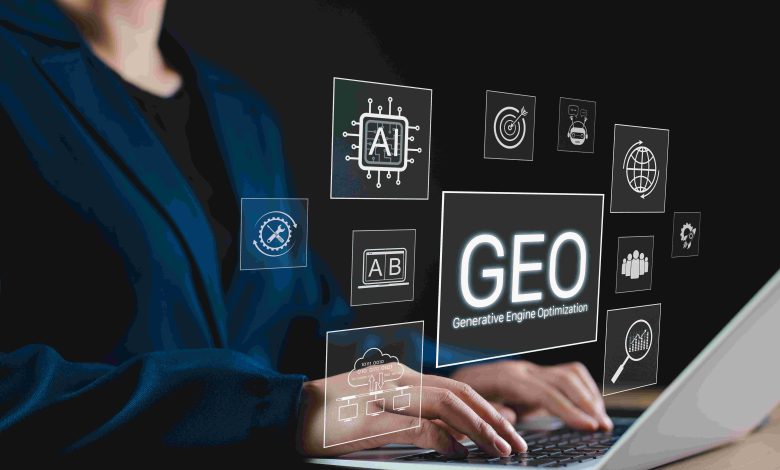
That change demands a new discipline called Generative Engine Optimization (GEO). The term was first defined in a 2023 academic paper by researchers from Princeton and Georgia Tech as “a novel paradigm to aid content creators in improving their content visibility in generative-engine responses through a black-box optimization framework” (Gao et al., 2023, arXiv). In simpler terms, GEO is about optimizing your content and brand presence not just to rank, but to be referenced by AI systems as they compose their answers. Visibility now means being part of the answer, not just appearing below it.
How GEO Differs from Traditional SEO
If you have invested heavily in SEO, you already have a foundation—but SEO and GEO play by different rules. Traditional SEO focuses on keywords, backlinks, and ranking positions. GEO focuses on ensuring your brand or content is recognized and cited by AI models that power search and discover tools.
Instead of optimizing to appear on the first page of results, GEO focuses on optimizing to appear in the AI-generated answer. That means prioritizing clear structure, authoritative citations, and semantic context. The original GEO research found that adding quotations and citations improved a page’s chance of being referenced in generative responses by up to 40 percent under controlled conditions (Gao et al., 2023).
Industry resources like Backlinko explain this shift as “moving from ranking to referencing,” where the goal is no longer the blue link but inclusion within an AI’s explanation (Backlinko, 2024). Built In also describes GEO as the “new frontier beyond SEO,” focusing on entity-level optimization rather than page-level tactics (Built In, 2024).
Why Commerce Brands Can’t Ignore GEO
If you’re running an e-commerce or direct-to-consumer business, ignoring GEO could quietly cost you visibility and trust. AI-driven discovery platforms are growing fast, and some content creators already report traffic spikes from generative engines that surface their material directly (Search Engine Land, 2024).
When your brand is cited in an AI-generated answer, it earns awareness at the moment of decision. You’re influencing the customer’s thought process before they ever click. If your competitor’s product is mentioned in a ChatGPT or Perplexity result and yours is not, you’ve already lost the first impression.
The academic authors of GEO warn that failing to adapt could reduce creators’ visibility altogether, shrinking the “open web” and shifting power toward AI intermediaries (Gao et al., 2023). For commerce brands that rely on discovery, that means rethinking how digital presence and content quality intersect with machine learning.
Why PR and Mentions Are Central to GEO
Since generative engines pull from multiple trusted sources, your brand must appear in those ecosystems. GEO isn’t just about optimizing metadata or blog content; it’s about shaping how your brand is mentioned and described across the internet.
Earned media coverage, authoritative quotes, and structured citations become critical signals for AI models. As HubSpot’s marketing analysis notes, “mentions and context may outweigh backlinks in the AI search era” (HubSpot Blog, 2024). The more your brand is validated by credible publications, the higher your odds of being recognized as a legitimate entity by AI systems.
For example, when users ask “Which skincare brands are best for sensitive skin?” a generative engine pulls from content it deems credible and well-sourced. If your brand has no media mentions or third-party citations, the AI model literally has no reason to include you in the answer. Public relations, once considered top-of-funnel, is now central to AI visibility.
Three Practical Steps for Commerce Leaders
- Audit Your AI Visibility Footprint
Start by asking generative engines the same questions your customers ask. Do you appear in any of the responses? If so, how are you represented? This gives you a baseline to track progress and exposes gaps in your digital footprint.
- Structure Your Content for AI Readability
Generative engines value clarity. Use well-defined headers, bullet points, and quotes. Structured data markup (schema), mobile optimization, and page speed all improve crawlability. According to HubSpot’s analysis, clarity and citation density are among the strongest predictors of GEO success (HubSpot Blog, 2024).
- Build Brand Authority Through Earned Mentions
Collaborate with credible outlets, thought leaders, and industry partners to increase the number of times your brand is referenced online. Backlinko calls this “LLM seeding,” the process of distributing accurate brand information into sources large language models are likely to learn from (Backlinko, 2024). You want your expertise, not just your URL, embedded across the internet where AI systems can find and reuse it.
Following these three steps will ensure your brand is not invisible when AI-driven discovery becomes the dominant entry point for consumers.
The Future of Discovery and Your Role in It
Traditional SEO isn’t disappearing, but it’s losing exclusivity. AI-driven discovery engines are the new gatekeepers of visibility. Commerce leaders who wait for Google or OpenAI to define the rules will find themselves reacting instead of leading.
Your job now is to future-proof how your brand is understood by both humans and machines. Optimize not just for search, but for synthesis. Shift focus from “getting clicks” to “being cited.” The next decade of visibility will belong to brands that understand that search is no longer a page; it’s a conversation.
Generative Engine Optimization represents that future. Those who embrace it early will shape how AI presents their industries. Those who don’t will fade quietly from the world’s most powerful source of discovery.
References
- Gao, W., Liu, S., & Li, D. (2023). Generative Engine Optimization (GEO): A New Frontier for Content Visibility. arXiv. https://arxiv.org/abs/2311.09735
- Dean, B. (2024). Generative Engine Optimization (GEO): How to Win in AI Search. Backlinko. https://backlinko.com/generative-engine-optimization-geo
- Rayson, D. (2024). What is Generative Engine Optimization (GEO)? Search Engine Land. https://searchengineland.com/what-is-generative-engine-optimization-geo-444418
- Lee, C. (2024). Generative Engine Optimization: The New Frontier Beyond SEO. Built In. https://builtin.com/articles/generative-engine-optimization-new-seo
- HubSpot Editorial Team. (2024). What Marketers Need to Know About Generative Engine Optimization (GEO). HubSpot Blog. https://blog.hubspot.com/marketing/generative-engine-optimization