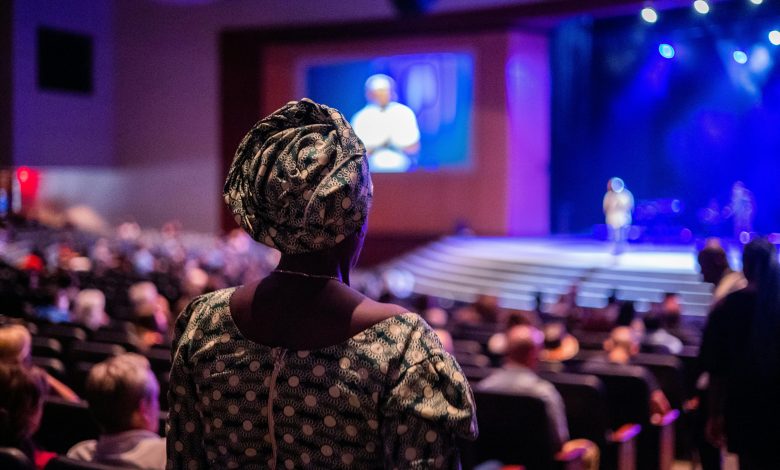
Every year, global organisations publish glossy diversity reports or make bold statements about inclusion. However, when the spotlight is shone on engaging with their own audience during internal meetings, conferences, or customer events, those well-intended promises are rarely seen in practice. Most “global” events are still conducted in a single language, which instantly reduces the chances of real audience participation and engagement for a large proportion of attendees.
Business is global. Economies are global. Events have global audiences. Not being able to communicate effectively in multiple languages can be detrimental to growth.
If companies want to be seen as inclusive by the people they interact with, they must start where it’s most visible – by ensuring live events are accessible in real time to people of every language and ability. AI-powered speech translation and captioning make this kind of audience inclusion possible at scale, debunking any industry myths and making the old common excuses redundant.
Common barriers to inclusive events
When an event or conference grows beyond one market, event organisers need to make sure every participant can follow – and benefit from – every session, live and in their own language. That applies not only to keynotes in a conference hall, but also to small breakout rooms and even one-to-one virtual chats. Inclusion means giving every attendee the same opportunity to listen, learn and contribute as the conversation unfolds.
Delivering that level of access takes expert planning and resources. For purely in-person events or conferences, having interpreter booths and headsets for the audience will serve this need. However, when audiences can move freely between conference rooms and screens, and with budgets under pressure, forward-thinking event organisers are searching for translation and interpretation solutions that meet the hybrid reality, without sacrificing audience inclusion.
No doubt, event organisers will encounter genuine challenges: venues without built-in multilingual support, suppliers offering expensive or limited options, or terminology gaps that can trip up interpreters and attendees alike. Tackling these issues early, rather than letting them become excuses for running “one-language events”, is part of true leadership.
Yes, hearing information in your own tongue builds confidence to join a discussion; however, real inclusion extends beyond spoken language. Live multilingual text captions and sign-language interpretation open events to people who may be hard of hearing, neurodiverse or connecting from different regions. Combining audio and visual support keeps audience engagement high and ensures no one is excluded.
Accurate, real-time multilingual and multimodal translation is fast becoming a baseline expectation. With regulations such as the European Accessibility Act raising standards for digital inclusion, organisations that invest now will not only meet their operational needs but also demonstrate to audiences – and regulators – that their inclusion commitments are genuine.
Improving audience engagement
Event organisers who build real-time AI speech translation and live multilingual text captions into their internal meetings, user conferences and industry events make it possible for everyone to follow, participate and be included. This isn’t an experiment anymore; it’s a practical way to involve international and hybrid audiences on equal terms.
Reliance on interpreter booths and headsets made sense for traditional, in-person conferences. But those methods are costly and hard to scale, especially if part of the audience is joining online. A single platform that supports in-room and virtual attendees gives organisers a simpler, more consistent way to include everyone.
Accurate live translation and captioning in each participant’s preferred language reduces confusion and missed context, and it signals respect. People are more willing to ask questions, share ideas and take part in Q&As when they know they’re being understood.
Top tips for evaluating inclusivity
There are several steps that businesses running conferences and workshops can take to foster a truly inclusive environment:
- Audit languages spoken across your workforce or audience base. Factoring in the locations from where people are attending or streaming events in advance can allow you to proactively facilitate the accurate conveying of insights and messages from the start.
- Check whether individual attendees fully grasp the context behind the words being spoken. Consider whether live captions, sign language interpretation or real-time AI-powered speech translations are being used to bridge accessibility gaps.
- Offer real-time support during events. Providing recordings, transcripts and other materials post-event only risks making attendees feel like an afterthought.
- Involve regional teams or representatives when designing communications or events. This will help to find cultural or linguistic gaps that may otherwise be missed – ensuring more authentic engagement.
- Look beyond overall attendance or feedback. Break behavioural data down by language or region to understand where participation or satisfaction may be lagging – this will help uncover unmet needs and guide improvement.
Making tangible impacts across diverse audiences
Tracking overall satisfaction scores after an event can show whether people enjoyed the experience, but it doesn’t reveal who felt included. Forward-looking event organisers combine standard feedback with data broken down by language and region to understand which groups were fully engaged and which were left behind. That insight allows them to improve the next event and not repeat the same mistakes.
Live translation and multilingual text captioning should no longer be treated as a novelty or a “special feature.” In a world where we, as event goers, expect to be able to engage and interact at the touch of a button – and under stricter accessibility standards – live translation and multilingual text captioning are the baseline for inclusion and credibility. Organisations that build real-time, multilingual access into every event demonstrate to their audiences that they have kept their inclusion promises; those that don’t risk losing audience engagement, participation and trust.