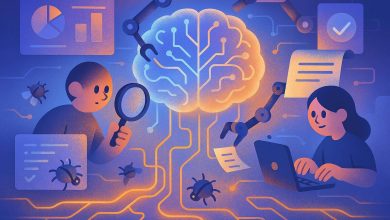
Artificial intelligence has learned to predict. It can forecast outcomes, anticipate risks, and optimize resources faster than any human team. Yet as healthcare becomes increasingly automated, a quiet question is emerging: Can AI also learn to perceive?
To perceive is not to calculate but to understand. It means registering subtle emotional and physiological cues that reveal how a person is really doing. The next generation of healthcare systems will depend on this kind of perceptive intelligence. Precision without perception may be efficient, but it is not human.
Beyond Prediction: Why Perception Matters
Over the last decade, predictive algorithms have become one of several major pillars of AI in healthcare. They help analyze patient data, identify emerging patterns, and flag potential risks alongside other systems focused on diagnostics, image recognition, and workflow automation. Many hospitals use predictive models to support early detection of sepsis, improve staffing efficiency, and inform disease management strategies.
But prediction alone cannot grasp what a person feels or how they experience their recovery. It tells us what might happen, not how it feels to live through it.
Clinical environments are emotional ecosystems. Patients experience pain, fear, relief, and confusion, often within hours. Clinicians navigate fatigue, moral pressure, and empathy strain. These emotional undercurrents shape communication, compliance, and decision quality far more than most systems account for.
A truly intelligent healthcare environment must therefore go beyond data prediction to include emotional perception, the ability to sense, interpret, and respond to human states in real time.
The Neuroscience of Perception and Attention
Human perception is built on a continuous feedback loop between the brain, body, and environment. We do not passively receive information but actively construct it.
Neuroscientific research shows that the brain constantly generates internal models of what it expects to see, feel, or hear. Attention fine-tunes these models, adjusting them based on feedback from the body and surroundings. When this loop is disrupted through trauma, illness, or cognitive overload, people lose contact with their own sensations.
In clinical settings, such disconnection can manifest as burnout in doctors or anxiety and depersonalization in patients. If AI systems are to support healthcare workers and patients alike, they must learn from this biology by designing interfaces that mirror how perception naturally operates.
For further context, studies on predictive processing and perception describe how the brain builds and corrects internal models in real time.
Designing Emotion Aware Systems
A perceptive system does not need to simulate or feel emotions. Instead, it must recognize and interpret multimodal signals that indicate emotional states. These can include micro-expressions, speech patterns, posture, gaze, and even subtle variations in typing rhythm or breathing.
Integrating these signals into clinical workflows could transform care delivery. Imagine a triage platform that detects rising stress in a patient before they verbalize it, or an operating room dashboard that senses clinician fatigue and adjusts task prompts accordingly.
Such tools already exist in early form. Independent research teams at Stanford Medicine and the University of Cambridge have been developing multimodal AI systems that combine facial, voice, and physiological data to assess emotional states that combine facial recognition, tone analysis, and physiological monitoring to read emotional states. In pilot settings, these models have improved patient satisfaction and reduced cognitive load among clinicians.
However, emotion aware technology should not replace empathy. It should extend it. The goal is not to create artificial emotion but to build interfaces that keep human emotion visible even in data driven environments.
A Three Layer Model for Perceptive AI
To understand how perceptive systems might work, we can think in three layers: Sense, Interpret, and Respond.
- Sense:
The system collects real time multimodal data from sensors, voice, posture, or biometrics to build a situational snapshot. - Interpret:
Using cognitive and affective models, the AI contextualizes these signals, distinguishing fatigue from disengagement or anxiety from confusion. - Respond:
Finally, it triggers adaptive responses such as adjusting lighting, changing task pacing, or alerting a supervisor when emotional distress crosses a safe threshold.
Each layer reflects a principle of human neuroscience. Sensing corresponds to interoception, interpreting to cognition, and responding to behavioral adaptation.
When these layers are well calibrated, the result is an AI that collaborates rather than dictates. It becomes a system that understands the emotional texture of clinical reality.
The Safety Dimension
Emotionally aware systems are not only compassionate, they are safer. Fatigue, frustration, and stress are among the leading human factors contributing to medical error. The World Health Organization estimates that one in ten patients globally experiences preventable harm during hospital care, and up to half of those incidents relate to cognitive overload or miscommunication.
By integrating perceptive AI into clinical environments, hospitals could identify early warning signs of human error before they materialize. Monitoring emotional bandwidth just as we monitor vitals may become a core part of future patient safety protocols.
Ethics and Boundaries
Perception introduces new ethical questions. Emotional data is deeply personal, and its misuse could erode trust faster than any algorithmic bias.
Healthcare organizations must therefore set strict boundaries around consent, transparency, and data minimization. Emotion recognition should remain a support tool, never a surveillance mechanism. The aim is to empower caregivers, not to score or judge them.
Ethical frameworks will need to evolve alongside technology, balancing innovation with respect for autonomy and privacy. The European Commission’s AI Ethics Guidelines can serve as a foundation for responsible design.
Early Global Examples
Several projects already show what perceptive AI could become:
- In Japan, emotion sensing avatars are being used in dementia care to monitor agitation and loneliness in patients who struggle to communicate verbally.
- In Sweden, hospitals are testing adaptive lighting and sound systems that respond to collective stress levels in intensive care units.
- In the United Arab Emirates Digital Health Strategy, pilot programs are exploring VR based rehabilitation environments that adjust scenarios according to patient stress indicators, bringing emotional self regulation into clinical recovery.
Each of these examples moves us closer to healthcare systems that listen as much as they compute.
A Future of Perceptive Collaboration
The evolution from predictive to perceptive AI is not a leap but a transition that mirrors the broader shift in medicine from treatment to recovery, and from efficiency to empathy.
Perceptive systems will not replace human judgment. They will refine it. They will make the invisible visible: the stress behind a surgeon’s steady hands, the fear behind a patient’s calm voice, the fatigue beneath a nurse’s smile.
If designed ethically and intelligently, these systems could become the emotional nervous system of digital healthcare: subtle, responsive, and human centered.
The ultimate goal of AI in medicine is not to automate care, but to make it more aware, to preserve the human essence of healing while enhancing it through intelligent technology