Artificial intelligence is no longer just a tool for analysis—it has become an engine of creation. Across industries, leaders are beginning to see that the future of enterprise automation will not simply predict what might happen but will actively design the solutions before challenges arise. This marks the dawn of the Generative ITSM era, where insight meets imagination and technology begins to think alongside us.
From Prediction to Creation
Predictive AIOps has long been the trusted partner for IT and operations teams, providing foresight into outages, trends, and risks. It taught organizations how to look ahead—using data correlations, anomaly detection, and machine learning models to anticipatewhat’s coming. But the process still relied heavily on human translation: someone had to interpret insights, decide the next steps, and manually implement them.
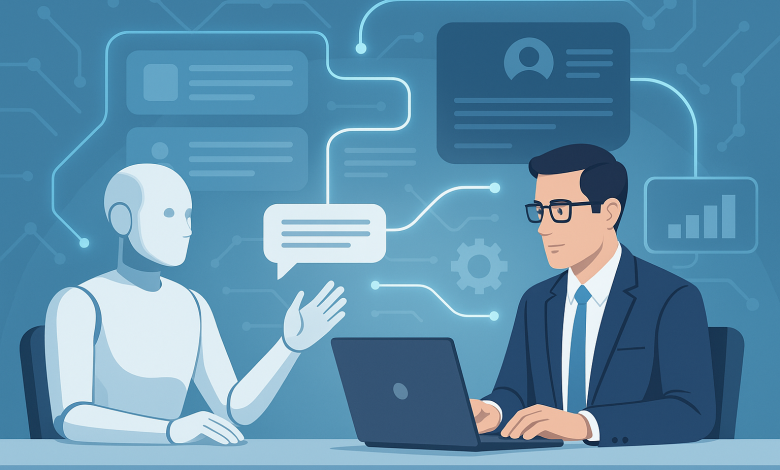
Generative ITSM changes that dynamic. It doesn’t stop at prediction—it acts. By combining language models, automation logic, and context from enterprise data, generative systems can draft resolutions, suggest workflow designs, and even write post‑incident summaries. Instead of waiting for human input, the system becomes a thinking collaborator, capable of turning understanding into meaningful action.
Why This Shift Matters
The move from predictive to generative intelligence represents more than a technical upgrade—it’s a leadership transformation. When automation becomes creative, it redefines productivity, freeing humans from repetitive tasks to focus on strategy and innovation. Enterprises are beginning to experience this change through systems that not only detect problems but explain them, recommend fixes, and learn continuously from feedback.
This evolution mirrors a deeper truth: the organizations that thrive in the AI age will be those that blend data‑driven precision with human curiosity. Generative ITSM doesn’t eliminate the human element; it amplifies it by giving people more time to lead, decide, and innovate.
Core Capabilities Powering Generative ITSM
- Context‑Aware Reasoning: Generative systems understand operational context, correlating incidents, dependencies, and outcomes to propose informed responses.
- Natural‑Language Workflows: Teams can interact with IT systems conversationally—asking, instructing, or exploring insights using everyday language.
- Knowledge Creation at Scale: Instead of static knowledge bases, organizations now have living systems that summarize, draft, and update documentation automatically.
- Continuous Learning Loops: Each resolution strengthens the next. Generative models evolve by learning from feedback, refining accuracy and usefulness over time.
Leadership Implications
For leaders, the promise of Generative ITSM goes far beyond efficiency metrics. It’s about shaping an environment where technology anticipates needs and humans direct vision. CIOs and COOs are already reimagining their operating models around AI‑assisted collaboration—seeing automation not as a replacement, but as an intelligent extension of their teams.
This shift demands new kinds of leadership skills: understanding data ethics, fostering cross‑disciplinary collaboration, and building trust in autonomous systems. The future belongs to executives who can translate algorithmic potential into human‑centered outcomes.
Challenges to Navigate
Of course, every innovation brings new responsibilities. Generative systems must operate with transparency, accountability, and fairness. Questions of bias, data privacy, and explainability remain at the forefront. The challenge for enterprises is to deploy AI that creates value without compromising trust.
Leaders should establish clear governance frameworks and encourage ethical experimentation—allowing teams to explore the creative power of AI while ensuring integrity in every automated decision.
A Glimpse of the Future
In the near future, we’ll see IT and operations environments that function more like intelligent ecosystems than structured hierarchies. Incidents will resolve themselves, documentation will update in real time, and performance dashboards will narrate insights conversationally. Humans will guide these systems, not manage them line by line.
Generative ITSM is not a distant vision—it’s a living example of how enterprises evolve from knowing to doing, from reacting to designing. It invites us to imagine organizations that think, respond, and learn with the same fluidity as their people.
Conclusion — The Human Spark in Intelligent Systems
The journey from predictive AIOps to Generative ITSM is ultimately a story about creativity. Machines can generate language, workflows, and even solutions, but it’s human imagination that gives them purpose. The next frontier in enterprise automation belongs to those who see AI not just as a system to optimize but as a partner to inspire. By harnessing this collaboration, we can build organizations that are not only efficient but alive with innovation.
References
Gartner. (2025). Top Strategic Technology Trends: Generative AI for Operations.
McKinsey & Company. (2024). The State of AI in Operations and IT.
National Institute of Standards and Technology. (2023). Artificial Intelligence Risk Management Framework (AI RMF 1.0).
ISO/IEC. (2023). 23894: Information technology—Artificial intelligence—Risk management guidelines.