In the hyper-competitive world of direct-to-consumer (DTC) e-commerce, the cost of customer acquisition often feels less like a controllable expense and more like an inescapable tax. As algorithmic shifts on platforms like Meta and TikTok demand an insatiable volume of fresh video content to keep conversion rates steady, growth teams find themselves trapped on a relentless treadmill of ad fatigue, skyrocketing Customer Acquisition Costs (CAC), and operational burnout.
Enter Notch, a marketing automation startup that claims to have built the Holy Grail of digital advertising: a Level 4 autonomous performance marketer named Max.
Capable of autonomously producing creative, launching campaigns, optimizing budgets, and refreshing decaying ads in real time, Max is designed to eliminate the manual grind that consumes 90% of a performance marketer’s week.
And to prove that its AI truly requires zero human intervention, Notch didn’t just run a standard software demo, they launched the laptop running Max into space, letting the agent manage live, revenue-generating ad campaigns on Earth from low-Earth orbit.
The $100 Billion Bottleneck
For modern retail and e-commerce brands, scaling paid media has hit a hard ceiling. While the past two years have seen an explosion of generative AI “co-pilots,” most of these tools offer little more than surface-level fixes, generating basic copywriting templates or raw imagery while leaving the tedious, operational heavy lifting to human teams. Growth managers still spend hours staging campaigns, mapping custom audiences, monitoring ROAS decay, and reallocating budgets across fragmented dashboards.
Consequently, mid-market brands are forced into a difficult compromise: pay steep retainers to digital agencies or bloat internal headcount just to keep up with daily campaign mechanics.
“For a performance marketing company, creative capacity has always been the real ceiling, not media budget,” explains Nitzan Leibovitch, Head of Creative at digital agency Schemathics. “Notch removed that ceiling. Our team now goes from an idea to a batch of finished video variations in a single session, across every vertical we run. More experiments, faster learning and, ultimately, better performance.”
Built by Meta’s Ad Infrastructure Architects
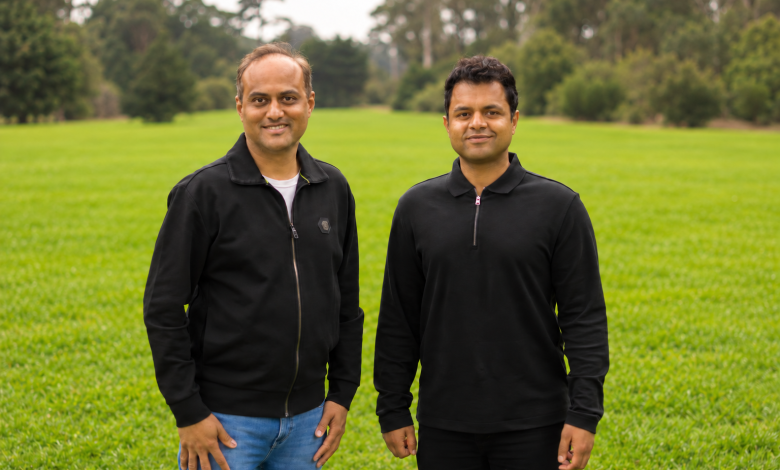
The drive to solve this operational friction comes directly from engineers who built the underlying machinery of modern social advertising. Notch was co-founded by brothers Vinay Jain and Aman Jain, who bring over two decades of combined infrastructure engineering experience across Meta, Twitter, Instagram, and WhatsApp.
Vinay spent eight years at Meta engineering its core mobile advertising engine, writing the foundational code for Meta Lead Ads and helping scale ad products from zero to over $1B in revenue. Aman served as a tech lead on Twitter’s Direct Response Ads team, building $1B+ products like Tailored Audiences, before working as the first backend engineer on Instagram Live and serving as the founding tech lead for the WhatsApp Business API team.
“At Meta, we saw firsthand that modern brands were drowning in manual ad ops and skyrocketing acquisition costs,” says Vinay Jain, Founder and CEO of Notch. “Max isn’t another AI co-pilot that gives you generic copywriting templates. It’s an autonomous marketer with a continuous feedback loop that learns what converts, refreshes dying creative automatically, and scales revenue on Earth, just like it proved it could do from space.”
Beyond the Co-Pilot: How Max Works
Unlike traditional AI assistants that require step-by-step prompts, Max operates as an always-on, fully autonomous team member. Given access to a brand’s Shopify store, ad accounts, and raw media folders, Max executes an end-to-end campaign lifecycle on a weekly rhythm:
- Autonomous Strategy: Analyzes real-time account data and category shifts to draft a comprehensive weekly media plan, posting actionable strategies directly into the brand’s Slack workspace.
- Automated Creative Production: Generates high-fidelity video and static assets designed around winning market hooks, staging them for human review.
- Live Sync & Fatigue Defense: Deploys approved creative via native APIs while continuously monitoring performance metrics. When click-through rates or ROAS begin to decay, Max automatically flags and rotates out fatigued creative.
- Competitor Trend Hijacking: Scours the web for viral competitor hooks and automatically drafts counter-angle campaigns before rival brands can saturate the market.
- Human-in-the-Loop Governance: Operates strictly within predefined guardrails, ensuring no ad spend adjustments or creative assets go live without explicit human sign-off or pre-set automation rules.
Tested in Space, Proven on Earth
To demonstrate the platform’s complete operational independence, Notch conducted a rigorous two-month experiment with direct-to-consumer brand Scentless. Armed with nothing more than raw B-roll footage and account permissions, Max managed the brand’s entire media operation without human direction.
The result? Notch generated over 85,000 live ad variations across hundreds of active campaigns, driving a 30% reduction in Customer Acquisition Costs (CAC) while simultaneously growing total sales volume.
To cap off the trial, the Notch team mounted the laptop running the live Max instance onto a high-altitude payload and launched it into space. As the device hovered above the atmosphere, Max continued to optimize real-time Meta and TikTok campaigns on Earth without a single human touch on the keyboard.
The Future of Algorithmic Growth
Backed by Wing Venture Capital, South Park Commons, Patron Fund, and prominent tech angels, Notch is entering a market ripe for structural change. As digital ad networks become increasingly automated on the backend via algorithms like Meta’s Advantage+ and TikTok’s Smart Performance Campaigns, the competitive moat for brands has shifted entirely to operational agility and creative velocity.
By turning campaign execution into an autonomous software loop, Notch isn’t just cutting software costs for e-commerce brands—it is redefining what it means to run a modern marketing department. For growth teams previously buried in spreadsheets and editing software, the arrival of autonomous agents like Max signals a shift away from manual campaign administration toward high-level strategy and vision.