From hybrid work setups to return-to-office mandates to AI sprawl, CIOs are navigating more complexity than ever before. Security now has to scale wherever work happens. That means devices and endpoints need to be secure, high-performing, and intuitive to use. Today, that experience has to feel as seamless as the apps employees use in their personal lives. At the center of this challenge is the endpoint.
From my view, endpoint management is where protection meets productivity. It’s the place where the employee experience becomes a strategic lever for trust and growth. When you manage endpoints holistically and tie them to identity, you unlock a better way to govern risk, enable AI, and keep teams moving.
Experience Before Security
If technology is clunky or confusing, people will work around it. That’s where risk creeps in. As CIOs, we have to protect the business without slowing it down. That requires a mindset shift. Instead of asking how to lock everything down, we need to ask how to help people do their best work, securely.
Our philosophy within my organization is to start with the employee experience and then layer in security controls around it. That lets us protect what matters while still giving people systems they want to use. When the experience leads, security follows naturally.
That balance is hard. Over-securing frustrates users and limits innovation. Under-securing opens the door to risk. But the goal is not to choose one or the other. It is to let experience dictate how people work and then secure it thoughtfully. That is a continuous feedback loop, not a one-time configuration.
In our organization, we actually have the rare advantage of being what we call “Customer Zero.” We are able to use the same security tools we build for our customers. That gives us a real-world lab where we find bugs early, test features before launch, and provide feedback that improves the experience for everyone. It makes the tools better, and it builds trust in what we deliver.
One of the best compliments we can get is when someone says they do not even notice the security. That means it is working. That means we have built protection that is seamless.
Shifting from Outside-In to Identity-First
Traditionally, security strategies started from the outside in. Build a stronger perimeter, add more layers, and keep the bad actors out. That model does not fit how we work today. Employees use cloud apps, AI tools, mobile devices, and they are often using them from remote locations.
The modern model starts from the inside out. Every employee’s first asset is their identity. That identity determines how they show up, what they access, and how they contribute. By managing identity from day one, you build a foundation of trust that scales with the business.
Too many CIOs still take a reactive approach. A breach happens, and controls get added. But by then, it is often too late. A better path is to start with visibility. Who has access to what, and why? When identity and data are managed together, CIOs can spot risks faster. AI-powered tools help flag anomalies, recommend remediations, and support security teams with insights that prevent issues before they escalate.
A global software company recently shared how modern endpoint tools helped shift their internal posture. In the past, when employees asked for new applications, the answer was often no. The tools were too risky or too hard to manage. Now, with smarter controls and policy enforcement, the team can say yes more often. They can give users what they need without compromising security. That change boosts both satisfaction and productivity.
Security as a Strategic Discipline
Effective endpoint management is more than a technical skill, it’s a strategic discipline. It protects people without getting in their way, using AI to flag risks, optimize performance, and automate routine tasks. Combined with a Zero Trust mindset, good endpoint management becomes proactive rather than reactive.
But this takes leadership. CIOs need to understand how users interact with systems, how those experiences impact trust, and how to translate performance into business outcomes. The best leaders listen not just to the data, but to the people using the technology. Data shows what is happening. People tell you how it feels. Together, those signals give you a full picture.
When I stepped into this role, I brought with me 25 years of experience in tech. But I had to reset a lot of assumptions. I had to think not just about systems, but about outcomes. Not just about controls, but about culture.
That reset changed the way I lead. It made me prioritize simplicity. Because when security becomes invisible, people trust it. They stop worrying and start focusing on what matters.
Over the next 12 to 18 months, I think CIOs will be judged less by traditional metrics such as uptime and more by trust. Can we support innovation without exposing the business? Can we deliver systems that are fast, flexible, and still secure?
As I mentioned earlier, employees now expect the same intuitive experience at work that they get in their personal apps. That means systems have to be simple. The tech must support, not hinder. Our job is to enable progress, not manage complexity for its own sake.
CIOs are not just tech leaders anymore. We are business enablers, risk stewards, and experience architects. The ones who succeed will be those who can simplify the complex, balance innovation with protection, and build systems people actually want to use.
Endpoint management may not sound flashy. But when done right, it gives companies a quiet advantage. It protects the business, empowers employees, and turns technology into a trusted partner and not a barrier.
That is the future we are building toward. One where security and experience work together. Where endpoints are not vulnerabilities, but value creators. Where the CIO’s leadership shapes how work gets done.
About the Author
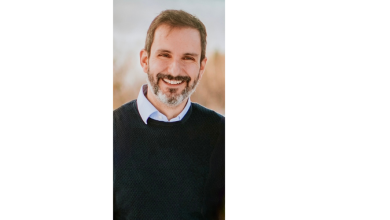
Michael Wetzel is the CIO of Netwrix. With 25 years in enterprise IT, he simplifies security operations and helps teams adopt AI and automation in ways that feel intuitive, productive, and secure through servant-led leadership.