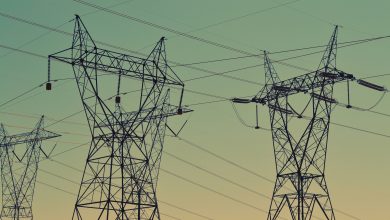
AI Is Crossing the Infrastructure Threshold
Artificial intelligence is no longer confined to digital experimentation or commercial optimization. It is beginning to influence systems that societies depend on daily, from energy distribution and transportation management to healthcare triage and digital identity. When AI reaches this level of operational influence, it ceases to be an application layer.
It becomes infrastructure.
And when infrastructure underpins essential services, it carries different design obligations. Continuity, jurisdictional control, and lifecycle durability begin to outweigh rapid elasticity. When AI systems shape critical decisions, sovereignty becomes less a political abstraction and more an engineering property.
Therefore, control over compute, control over data, and control over operational continuity must be architected deliberately.
Global capital flows reflect this transition. Industry analysts project sustained double-digit growth in AI infrastructure investment through the latter half of this decade, with accelerated spending on data center capacity and specialized compute. The magnitude of this expansion signals a structural shift: AI capability is being embedded into national operating systems rather than layered on top of them.
When technology becomes infrastructure, architectural control determines resilience.
The Failure Model Defines the Architecture
Engineering decisions follow assumptions about failure. Commercial AI platforms are designed around transient outages and automated rerouting across distributed regions. Elastic recovery is built into the operating model.
Sovereign AI systems must assume more severe conditions. Regional isolation, supply chain delays, grid instability, or extended connectivity loss are not hypothetical. They are planning parameters.
When infrastructure must continue operating through these conditions, autonomy becomes a design requirement rather than an optimization.
Designing for Isolation and Graceful Degradation
Edge-capable AI is central to this model. Processing must occur close to the point of data generation, whether in healthcare facilities, transportation hubs, or industrial sites. Core inference cannot depend entirely on uninterrupted connectivity to centralized clusters.
This does not eliminate national training facilities. Instead, it introduces layered architecture: localized inference nodes supported by periodic synchronization with higher-capacity training clusters. Data movement becomes policy-driven and intentional.
Systems designed this way degrade gracefully rather than failing catastrophically under partition.
The Physical Layer Is Strategic
AI infrastructure is ultimately physical. High-performance training and large-scale inference depend on dense accelerators, high-bandwidth interconnects, and sustained power delivery. The International Energy Agency notes that electricity demand from data centers and AI workloads is growing rapidly and could significantly expand through the mid-decade period.
Modern AI racks can draw tens of kilowatts per unit, and multi-cluster deployments frequently reach into the tens of megawatts. At this scale, facilities resemble industrial energy consumers more than traditional enterprise data centers. Power density, cooling topology, and physical layout become strategic variables.
Infrastructure sovereignty therefore begins at the hardware and facility level.
Cooling and Environmental Engineering
Thermal management is no longer a secondary consideration. As accelerator density increases, traditional air-cooled designs face physical limits. Liquid cooling and advanced heat rejection strategies are increasingly required to sustain performance envelopes.
Geography shapes these decisions. Tropical environments introduce different humidity and heat challenges than temperate climates. Water availability, redundancy planning, and environmental risk mitigation must align with local conditions.
Sovereign AI facilities must be engineered for their operating environment rather than assumed portable across regions.
Energy Sovereignty as a First-Order Constraint
AI clusters generate sustained, predictable industrial loads rather than intermittent bursts. Training runs can span days or weeks, and high-volume inference pipelines create continuous demand. In several regions, large data centers already represent a measurable share of local electricity consumption.
When AI becomes embedded in national systems, grid reliability becomes inseparable from AI reliability. Infrastructure planning must account for baseload capacity, transmission stability, and the feasibility of partial islanding or localized generation. Energy architecture becomes a continuity decision.
Compute sovereignty without energy sovereignty is incomplete.
Data Jurisdiction and Controlled Replication
Sovereign AI systems also require deliberate control over data locality. Regulatory frameworks in many jurisdictions now impose strict requirements on where certain classes of data may reside or be processed. Beyond compliance, jurisdictional clarity reinforces trust in public systems.
Architecturally, this implies regional data domains with structured replication policies. Techniques such as federated learning allow model improvements to be aggregated without transferring raw data across borders. Knowledge sharing can occur without eroding data sovereignty.
Data gravity is both technical and legal, and infrastructure must respect it.
Lifecycle Engineering Over Elastic Scaling
Commercial AI infrastructure often assumes rapid hardware refresh cycles. Accelerators evolve quickly, and deployment patterns adapt accordingly. National infrastructure, by contrast, must plan across decades.
Facilities should support modular expansion, power envelope flexibility, and cooling adaptability. Network spines and orchestration layers should abstract hardware dependencies sufficiently to accommodate generational shifts. Rebuilding entire facilities mid-lifecycle undermines continuity.
Lifecycle engineering prioritizes endurance over short-term optimization.
Interoperability and Avoiding Structural Lock-In
Architectural sovereignty is reinforced through interoperability. Open standards, portable workloads, and abstraction at orchestration and networking layers reduce systemic dependence on any single provider. This flexibility becomes critical when supply chains or geopolitical conditions shift.
Avoiding lock-in does not imply fragmentation. It requires disciplined interface design and adherence to widely adopted protocols. Over time, this discipline determines whether infrastructure evolves incrementally or requires disruptive overhauls.
Sovereignty is exercised through architectural foresight.
National Clusters Within a Distributed Fabric
Centralized national AI clusters remain essential. They provide concentrated compute for model training, validation, and research. However, they should not represent the sole operational dependency.
A layered topology that combines national clusters with distributed regional inference nodes balances efficiency and resilience. Central systems coordinate and train; regional systems execute and adapt locally. Synchronization becomes scheduled and policy-controlled rather than continuous and assumed.
This architecture treats continuity as a primary objective rather than a byproduct.
Transparency and Auditability as Structural Requirements
As AI systems influence public services, auditability becomes non-negotiable. Infrastructure must support traceability of model versions, data lineage, and decision pathways. Logging and securing model registries are structural components, not administrative afterthoughts.
National platforms must be capable of reconstructing decision chains under legal or policy review. That capability depends on disciplined infrastructure design from inception. Sovereign AI cannot operate as an opaque system.
Transparency is engineered, not appended.
Endurance as the Defining Metric
Much of AI discourse focuses on benchmark performance. Sovereign infrastructure must prioritize endurance. The ability to sustain operations underload, through hardware transitions and external stress, defines long-term capability.
Resilience is measured not only in uptime percentages but in architectural independence. Systems should tolerate component replacement, regional isolation, and incremental expansion without systemic instability. Durability becomes a more meaningful metric than peak performance alone.
Infrastructure is defined by how it behaves under strain.
Sovereignty as Architectural Control
Sovereign AI does not imply isolation from global innovation. Collaboration, shared research, and international standards remain essential. What changes is the locus of control.
When AI influences essential systems, reliance on external assumptions that cannot be guaranteed becomes a structural vulnerability. Architectural sovereignty ensures that continuity, jurisdiction, and operational authority remain within defined boundaries. This is not an ideological stance but a systems design principle.
In a post-cloud world, sovereignty is achieved not through rhetoric, but through engineering.