

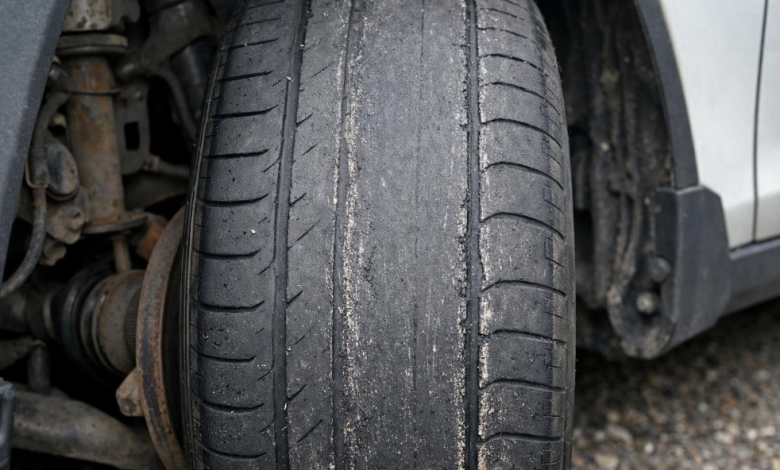
Certain tire wear patterns signal immediate danger. These patterns indicate structural weakness, loss of traction, and elevated blowout risk. Recognizing them early helps prevent crashes, breakdowns, and major repair costs.
Why Dangerous Tire Wear Patterns Matter
Uneven tire wear is not merely cosmetic. It reflects underlying mechanical issues or improper maintenance practices that compromise road contact and structural strength. Tires serve as the only physical connection between the vehicle and the road. When they degrade in unsafe ways, key safety systems—braking, steering, and stability—are directly affected.
Drivers often assume tires “wear out evenly,” but many of the most hazardous conditions develop locally, affecting only one shoulder, one section of tread, or one tire. These localized failures are the ones most often linked to sudden loss of control and highway blowouts.
What Makes a Tire Wear Pattern Dangerous?
A tire wear pattern becomes dangerous when it:
- reduces usable tread depth below legal or functional limits
- concentrates heat or stress in one area of the tire
- exposes internal structure such as cords or belts
- disrupts consistent contact with the road surface
- indicates structural sidewall or carcass damage
Once any of these conditions are present, the tire’s original performance and safety rating no longer apply.
Dangerous Tire Wear Patterns You Should Never Ignore
The following patterns require immediate attention. In many cases, continued driving is unsafe and potentially illegal.
- Exposed Steel Belts or Fabric Cords
Description:
Portions of the tread are completely worn through, revealing woven fabric or metallic strands.
Why it is dangerous:
The tire’s protective rubber layer has been lost. Structural reinforcement is no longer shielded from heat, moisture, or impact. At this stage, the tire can rupture without warning.
Typical causes:
- extreme neglect of worn tread
- chronic underinflation
- severe misalignment
Required action:
Immediate replacement. Driving further places the vehicle at imminent risk of blowout.
- Severe Inner or Outer Shoulder Wear
Description:
One edge of the tire is bald while the center still shows usable tread.
Why it is dangerous:
Shoulders carry significant load during cornering. When worn smooth, the vehicle loses lateral grip, particularly on wet roads. This pattern is strongly associated with loss of control during high-speed lane changes and highway curves.
Typical causes:
- incorrect camber settings
- worn suspension bushings
- aggressive cornering habits
Required action:
Replace tire and correct the alignment or suspension fault responsible.
- Deep Cupping or Scalloping
Description:
Alternating high and low patches appear around the circumference of the tire, often accompanied by vibration or noise.
Why it is dangerous:
Cupping indicates the tire is bouncing rather than maintaining uniform road contact. This causes rapid, localized heating and structural fatigue. Traction becomes unpredictable, especially on uneven or wet surfaces.
Typical causes:
- worn shocks or struts
- out-of-balance wheels
- loose suspension components
Required action:
Repair suspension issues immediately and replace affected tires.
- Center Tread Worn Nearly Smooth
Description:
The middle of the tread is worn down far more than both shoulders.
Why it is dangerous:
This pattern reflects chronic overinflation, which reduces tread-to-road contact area. The tire rides primarily on its center section, increasing stopping distance and reducing traction in rain.
Typical causes:
- consistent overinflation above recommended PSI
- improper load carrying assumptions
Required action:
Replace the tire once center tread approaches the legal minimum and maintain correct pressure going forward.
- Both Shoulders Worn More Than the Center
Description:
The inner and outer edges of the tread are worn while the center remains noticeably higher.
Why it is dangerous:
This condition occurs with prolonged underinflation. Undersupported sidewalls flex excessively, generating internal heat. Heat buildup is the leading mechanical factor in tire blowouts.
Typical causes:
- infrequent pressure checks
- slow punctures or faulty valves
Required action:
Correct inflation immediately and replace any tire driven extensively while underinflated.
- Large Flat Spots or Patch Wear
Description:
A single area of the tire shows dramatically lower tread depth than surrounding areas.
Why it is dangerous:
Flat spots create thin regions prone to overheating. At highway speed, centrifugal force magnifies stress on this weakened zone, increasing the likelihood of sudden failure.
Typical causes:
- emergency hard braking
- locked wheels
- improperly functioning ABS systems
Required action:
Replace the tire if vibration or structural thinning is present.
- Feathered or Sawtooth Tread Edges
Description:
Running a hand across the tread reveals sharp edges in one direction and smooth edges in the other.
Why it is dangerous:
Feathering signals misalignment related to incorrect toe settings. It is directly associated with poor directional control, wandering on the highway, and increased stopping distances.
Typical causes:
- toe misalignment
- worn steering components
Required action:
Alignment correction and timely tire replacement if wear is advanced.
- Sidewall Wear, Cracking, or Bulging
Description:
Visible sidewall abrasions, small cracks, or bulges protruding from the side of the tire.
Why it is dangerous:
The sidewall contains structural cords that cannot be repaired once damaged. Bulging indicates delamination or internal cord breakage. These failures are strongly linked to catastrophic blowouts.
Typical causes:
- curb strikes
- pothole impacts
- prolonged underinflation
Required action:
Immediate tire replacement. Sidewall damage is not repairable.
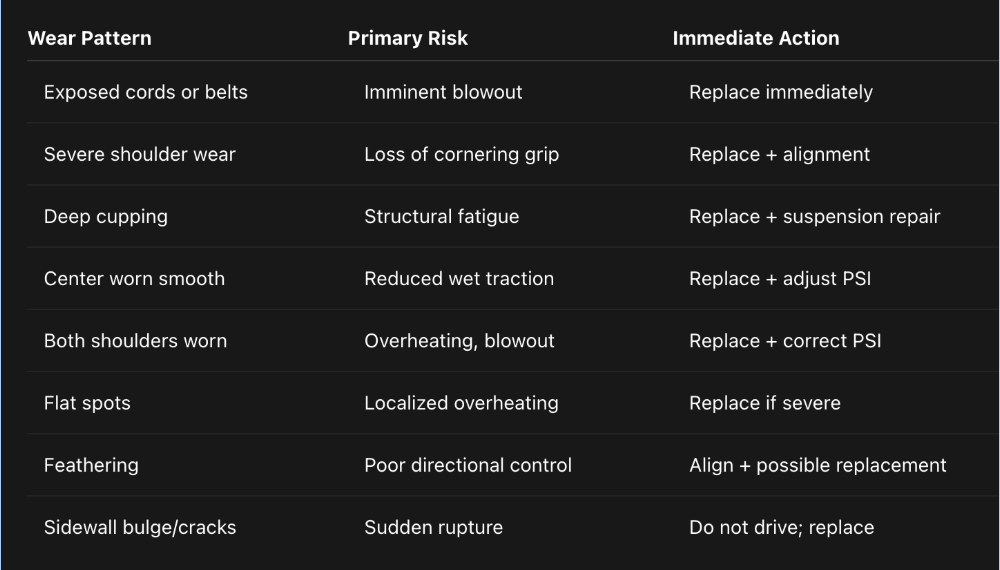
Table: Dangerous Tire Wear Patterns and Required Actions
Warning Signs Drivers Often Ignore
Many hazardous conditions present subtle symptoms before failure occurs. Early indications include:
- rhythmic vibration or drumming sounds
- steering wheel shake at certain speeds
- vehicle pulling to one side
- reduced fuel efficiency
- increased stopping distances
Each of these symptoms warrants inspection rather than continued operation.
The Link Between Dangerous Wear Patterns and Mechanical Problems
Uneven wear rarely occurs in isolation. It commonly indicates component wear elsewhere in the vehicle. Dangerous patterns are frequently linked to:
- worn suspension bushings
- degraded shocks or struts
- failing ball joints or tie rods
- incorrect wheel alignment
- insufficient tire rotation intervals
Addressing tires alone restores only temporary safety. Root-cause correction prevents the pattern from recurring.
When Tire Wear Becomes an Immediate Safety Hazard
Immediate removal from service is recommended when any of the following are present:
- visible cords or belt exposure
- deep or spreading sidewall cracks
- bulges of any size
- tread depth at or below 2/32 inch
- irregular wear producing strong vibration
Continuing to drive under these conditions exposes occupants and surrounding traffic to elevated risk of sudden failure.
How to Prevent Dangerous Tire Wear Patterns
Practical Prevention Framework
- Maintain manufacturer-recommended inflation pressure
- Inspect tread and sidewalls at least monthly
- Rotate tires at 5,000–8,000 mile intervals
- Schedule annual wheel alignment
- Replace worn shocks and suspension components
- Replace tires before minimum legal tread depth is reached
This framework significantly decreases the likelihood of encountering hazardous wear.
FAQ: Dangerous Tire Wear Patterns
Which tire wear pattern is most dangerous?
Exposed cords, deep sidewall damage, and severe inner shoulder wear are among the most dangerous because they indicate immediate structural weakness.
Can I drive short distances on unevenly worn tires?
Short trips do not eliminate risk. Structurally compromised tires can fail at any speed or distance.
Are cupped tires safe to drive on?
No. Cupping indicates suspension or balance issues and is associated with sudden failure at higher speeds.
Do dangerous tire wear patterns make a vehicle illegal to drive?
Yes. In many jurisdictions, patterns showing exposed cords, structural sidewall damage, or tread below legal minimums are illegal.
Key Takeaways
- Dangerous tire wear patterns signal structural weakness and loss of traction
- Blowout risk increases with underinflation, heat, and localized wear
- Patterns such as exposed cords and sidewall bulges require immediate replacement
- Addressing underlying mechanical issues prevents recurrence
Conclusion
Dangerous performance tire wear patterns should never be dismissed as routine aging. They are visible warnings of compromised safety. Early identification and decisive action prevent accidents, expensive repairs, and legal liability.
If your vehicle displays any of the dangerous wear patterns listed above, schedule inspection and replacement immediately. Tire safety is not optional.
