According to a recent report from KPMG, in the space of a single quarter this year, the share of large U.S. companies building multi-agent AI systems quadrupled, from 6% to 25%.
Ask those same companies how many of their agents are cleared to touch the general ledger or a customer record, and the answers get a lot shorter.
The holdup usually sits well downstream of the model. An agent can reconcile a month of transactions on test data in minutes, but getting it approved for the real books means telling a security team whose credentials it will use, what it is allowed to change and how anyone will reconstruct its decisions afterward.
The engineering firms that can answer those questions have become some of the most contested partners in enterprise AI, and on October 5th Anthropic added another name to the list it vouches for.
Agents are arriving faster than the controls
The latest surveys keep coming back to it. KPMG’s Q3 AI Pulse, based on U.S. leaders at companies with at least $1 billion in revenue, found 62% of organizations building, deploying or developing AI agents, up from 53% the quarter before.
Oversight is catching up as well: 74% now include cost reviews in AI approvals, and 49% have defined high-risk use cases in which AI is not allowed to act on its own.
Deloitte’s 2026 State of AI in the Enterprise, drawn from 3,235 business and IT leaders, found that 74% expect to use agents at least moderately by 2027, while only 21% say they have a mature governance model for agentic AI.
Anthropic’s answer has been to formalize the firms that do that redesign. The company committed $100 million to its Claude Partner Network in March, and this past quarter it added a Services Track with three tiers, saying more than 40,000 firms had applied since launch.
The entry tier, Select, asks for at least 10 certified practitioners who have used Claude in the past 90 days, at least two customers running Claude in production within the last 12 months, and one public customer story. Anthropic says every firm is held to the same requirements.
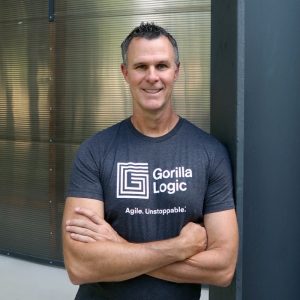
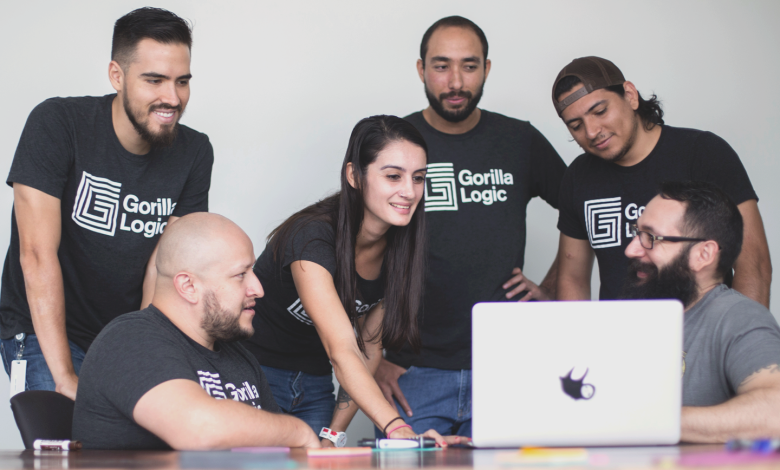
This week, Gorilla Logic, an engineering firm based in Broomfield, Colorado, announced it had been named a Select Services Partner. Its CEO, Drew Naukam, describes the demand he sees in plain terms. “A lot of the companies we talk to already pay for Claude. What they want is help getting it into the work their teams do every day, in a way their security and IT teams will sign off on.”
The firm will concentrate on two kinds of work. One uses Claude and Claude Code across the software development lifecycle to design, build, test and modernize products and platforms.
The other builds agents and automated workflows for finance, operations, compliance, HR and sales, connected to enterprise systems through integrations such as the Model Context Protocol.
Both run through Construct, Gorilla Logic’s collection of playbooks, reusable components, accelerators and tooling assembled over two decades of client delivery.
Why engineering standards are back in the conversation
Naukam’s view cuts against the way agentic AI is usually sold. “Anyone can build an agent. Which makes engineering standards matter more than ever,” he says. When a working prototype takes an afternoon, the scarce effort moves to the questions a security team asks before approving it: whose authority the agent acts under, which systems it can read and write, and what happens when it gets something wrong.
Gartner put a number on the cost of skipping those questions when it predicted that more than 40% of agentic AI projects would be canceled by the end of 2027, citing rising costs, unclear value and weak risk controls. The KPMG data suggests buyers have taken the warning seriously, with cost reviews and token budgets now a routine part of approving AI work.
The Model Context Protocol sits in the middle of this. Anthropic released it in late 2024 as an open standard for connecting models to tools and data, and it has since spread well beyond Claude. A common interface gives a security team one pattern to review in place of a pile of one-off connectors, though somebody still has to build and maintain each integration against real systems of record.
The CEO sees that work as continuous with what his firm already does. “We don’t treat AI as a standalone initiative,” he says. “We treat it as an extension of the product engineering, platform engineering, quality engineering, and cloud modernization work our clients already depend on us for.”
For enterprise buyers, the partner criteria may be the most useful part of this news. The above McKinsey findings point the same way: the companies earning real returns from AI are the ones that rebuilt how their work flows, and that rebuilding is slow, specific engineering done one system at a time.