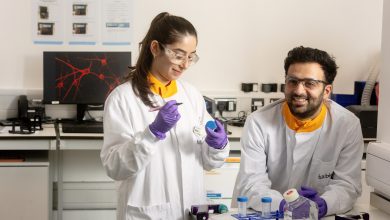
Cardiff Metropolitan University has secured £176,000 in funding to investigate how artificial intelligence (AI) can be used to improve food safety practices in workplaces and homes, helping to reduce the risk of foodborne illness and encourage safer hygiene behaviours.
The funding has been awarded to the University’s Smart Hygiene Intelligence project, led by Dr Issam Damaj from Cardiff School of Technologies. The project is one of a number of initiatives supported through Behavioural Research UK (BR-UK)’s Commissioning Fund, which forms part of a wider £1.3 million programme backed by the Economic and Social Research Council (ESRC) to strengthen behavioural research capabilities across the UK.
Bringing together expertise in artificial intelligence, behavioural science and food safety, the project will examine how emerging technologies can support people in adopting and maintaining better hygiene habits. Researchers hope the work will lead to the development of intelligent tools that can identify risks, encourage safer behaviours and provide practical support for individuals and organisations responsible for food handling.
Tackling a persistent public health challenge
Foodborne illness remains a significant public health issue in the UK and worldwide. Despite advances in food safety regulations, training programmes and inspection regimes, unsafe food handling practices continue to contribute to illnesses that affect millions of people each year.
Many food safety systems rely heavily on education, audits and periodic compliance checks. While these approaches play an important role, they often identify issues only after problems have occurred or depend on individuals consistently following procedures in busy and sometimes high-pressure environments.
The Cardiff Met project aims to explore whether AI can provide a more proactive solution by identifying potential risks as they emerge and supporting behaviour change in real time.
Researchers will investigate how AI-powered technologies could help users make better decisions, reinforce safe habits and create stronger food safety cultures across a range of settings, from professional kitchens and food manufacturing facilities to domestic environments.
Combining AI and behavioural science
A key aspect of the Smart Hygiene Intelligence project is its focus on the relationship between technology and human behaviour.
Research has consistently shown that knowledge alone does not always lead to changes in behaviour. Individuals may understand hygiene procedures and food safety requirements but still fail to follow them consistently due to time pressures, distractions, workplace culture or simple human error.
By combining behavioural science with AI technologies, the project aims to better understand why unsafe practices occur and how digital tools can influence positive behaviour change.
The research team will explore how AI systems could:
- Identify unsafe practices in real time
- Prompt corrective actions when risks are detected
- Improve compliance with established hygiene procedures
- Generate insights into behavioural patterns and trends
- Support stronger food safety cultures in workplaces and homes
Rather than replacing existing food safety measures, AI could act as an additional layer of support, helping individuals make safer choices and enabling organisations to detect issues before they become serious problems.
Exploring intelligent hygiene monitoring
One of the specific areas under investigation is AI-powered hand hygiene monitoring.
Effective handwashing is widely recognised as one of the most important ways to prevent contamination and the spread of harmful pathogens. However, monitoring compliance can be challenging, particularly in busy food production environments where staff may be handling food continuously throughout a shift.
Researchers will examine whether intelligent systems could help identify moments when hand hygiene procedures may have been overlooked and provide timely, non-intrusive prompts to encourage corrective action.
Such technology could potentially support staff by reducing reliance on manual monitoring while also generating valuable insights into patterns of behaviour. Understanding when and why procedures are missed could help organisations improve training, processes and workplace design.
The team will also consider the practical, ethical and human factors involved in introducing AI-based monitoring systems, ensuring any solutions developed are trusted, effective and acceptable to those using them.
A collaborative approach
An important feature of the project is its commitment to co-design.
Researchers will work closely with end users throughout the development process to ensure the technologies created address real-world challenges and meet the needs of those responsible for food safety.
By involving stakeholders from the beginning, the team hopes to develop tools that are both practical and user-friendly. This collaborative approach will help ensure that technological innovation is guided by the experiences and priorities of food industry professionals, rather than being driven solely by technical possibilities.
The project recognises that successful adoption of AI depends not only on technological performance but also on trust, transparency and usability. Understanding how people interact with intelligent systems will be central to shaping solutions that can be effectively implemented in practice.
Creating trusted AI solutions
Dr Issam Damaj, Head of Department of Computer Science at Cardiff Metropolitan University and lead investigator on the project, said:
“Food safety depends not only on knowledge and regulations, but also on everyday human behaviour. This project will explore how behavioural science and AI can work together to deliver practical solutions.
“By bringing together experts in technology, food safety and behavioural research, we aim to develop intelligent tools that are effective, trusted and capable of making a real difference across the food sector and beyond.”
His comments reflect the project’s broader ambition to demonstrate how AI can be applied in ways that support people rather than simply automate processes.
As industries increasingly explore the potential of artificial intelligence, there is growing interest in technologies that can promote wellbeing, improve decision-making and address social challenges. The Smart Hygiene Intelligence project represents an opportunity to apply those capabilities to an area with significant implications for public health.
Drawing on expertise across Cardiff Met
The project brings together specialists from across Cardiff Metropolitan University, combining expertise in intelligent technologies, food safety research and behavioural science.
Contributors include researchers from the University’s Centre for Engineering Research on Intelligent Sensors and Systems, alongside Professor Elizabeth Redmond and Dr Ellen Evans from the internationally recognised ZERO2FIVE Food Industry Centre. Dr Fiona Carroll from Cardiff School of Technologies is also part of the research team.
The project is further strengthened through collaboration with industry partner Forward NPD, helping to ensure that insights generated through the research remain grounded in real-world industry needs and challenges.
This multidisciplinary approach reflects the increasingly complex nature of food safety, which requires expertise from multiple fields to address effectively.
Looking to the future
As artificial intelligence continues to evolve, opportunities are emerging to apply the technology in ways that improve safety, efficiency and quality of life.
The Smart Hygiene Intelligence project will explore whether AI can help bridge the gap between hygiene knowledge and everyday practice, providing timely support that encourages safer behaviours and reduces food safety risks.
If successful, the research could inform the development of future AI-enabled tools for use across the food sector and potentially within households, contributing to healthier behaviours and safer food handling practices.
Through its innovative combination of behavioural science and advanced technology, Cardiff Metropolitan University’s latest funded project highlights the growing role that AI could play in addressing some of society’s most persistent challenges, demonstrating how intelligent systems can be designed to support people, improve outcomes and build safer environments for all.