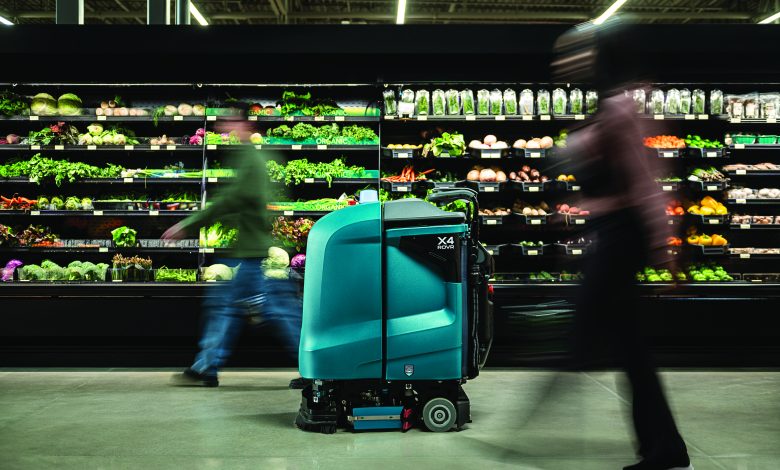
Autonomous robots have quietly become part of our everyday environment — mapping aisles, verifying tasks, and giving teams a clearer view of what’s really happening on the ground. As adoption accelerates, one question keeps coming up in my conversations with operations and data leaders: why do some robotics programs scale with confidence, while others stall?
In my experience, the answer usually isn’t technical. It’s emotional. It comes down to trust.
In today’s world, every AI system is judged not only by what it can do but by how responsibly it behaves. Privacy, security, and transparency aren’t just compliance boxes to check anymore — they’re how autonomy earns confidence. And in that sense, privacy has become its own form of ROI.
Designing Autonomy for Privacy
When machines operate in public or semi-public spaces, their data footprint deserves the same discipline as their safety systems. For me, privacy-by-design starts before the first robot leaves the warehouse. The foundations are straightforward:
- Data minimization by design. Capture only the information required for navigation and performance—maps, route logs, and operational outcomes—not personal details.
- Image anonymization. Any human imagery gathered during navigation is blurred automatically upon presentation, limiting the ability for personal data to become identifiable.
- Purpose limitation. Sensors are positioned for navigation, safety, and insight validation—not surveillance.
- Encryption and access control. Data is encrypted on the device, during transmission, and in storage. Role-based permissions define who can see what.
- Retention discipline. Operational data is held only for the period needed to deliver value, then overwritten or securely deleted.
These controls mirror GDPR’s core and align with long-established security practices. These are simple principles, but consistency matters more than complexity. You don’t need every certification under the sun — you need practices that are verifiable and repeatable.
Governance as a Competitive Edge
In large deployments, governance becomes the real differentiator. Many vendors promise advanced navigation or analytics; far fewer can show how data oversight actually works at scale day-to-day.
AI leaders building robotics at scale should focus on:
- Role-based access separating operational teams, customers, and technical support.
- Secure customer applications showing task outcomes, coverage maps, product insights, and exceptions without exposing unnecessary data.
- Centralized data privacy and compliance repositories providing access to documentation, such as a Trust Center, that includes diagrams, security controls, and other insights into product architecture.
- Flexible data residency options that help global customers meet regional requirements.
This kind of transparency turns invisible infrastructure into something verifiable, giving legal, IT, and operations teams confidence that systems behave as described. As governance matures, the next challenge is keeping pace with the shifting regulatory landscape.
The Regulatory Horizon
We are entering a period of rapid rule-making around AI and robotics. The EU’s AI Act introduces a risk-based framework that directly applies to autonomous systems, while state-level privacy laws in the U.S. continue to expand. Global standards bodies such as ISO and IEEE are also raising expectations for transparency, robustness, and human oversight.
For autonomy providers, readiness is not about predicting every regulatory twist. It means engineering systems around stable principles regulators already trust: minimization, explainability, strong encryption, and documented accountability. When those foundations are built into daily operations—through traceable decisions and clear documentation—compliance becomes routine rather than reactive.
Trust as Operational ROI
Every technology leader understands the operational benefits of automation: greater coverage, consistent execution, reduced rework. Yet the business value of trust is often underestimated.
When privacy and transparency are built in from the start:
- Procurement moves faster because due-diligence questions have straightforward answers.
- Security and legal reviews flow more smoothly with accessible evidence.
- Public acceptance grows, especially in customer-facing spaces.
- Incidents are managed with clarity rather than speculation.
Trust reduces friction across every department, from operations to legal, and that efficiency adds up. In many ways, earning trust costs less than repairing it.
Responsible Robotics at Scale
As the market matures, the systems that endure will be those built for accountability as much as performance. The next wave of success will come from teams that treat privacy, safety and governance as shared architecture—predictable behaviour supported by transparent data handling.
Features can be copied. Governance can’t. Companies that openly show what data they collect, where it lives, who can see it, and for how long build trust that travels from the facility floor all the way to the boardroom.
Trust as the New Growth Metric
We’ve entered the accountability era of robotics. Customers are no longer asking only what robots can do, they’re asking how responsibly they do it. Privacy and transparency have become measurable forms of return: accelerating adoption, reducing risk, and strengthening reputation.
If you want to build a robotics program at scale, it’s clear that privacy-by-design must be a cornerstone of the development process. The robotics programs that win will be those that treat privacy and governance not as constraints, but as the architecture of trust.