The competitive battlefield in consumer goods has irrevocably shifted. Victory is no longer solely won through mass media and shelf space, but through the intelligent, real-time orchestration of data at the most granular levels: the individual local outlet and the personalized consumer preference.
For industry leaders, this evolution demands a fundamental transformation from being data-informed to becoming AI-first enterprises. This journey is less about flashy algorithms and more about the unglamorous, critical work of building a new operational core: a scalable AI foundation that turns vast, disparate data into decisive action in hyper-local and hyper-personalized markets.
The Hyper-Local Data Challenge: Integrating Disparate Worlds
The strategic imperative to empower local economies is clear, but its execution is a monumental data challenge. Consider the goal of forming intelligent partnerships with a vast network of independent businesses. The relevant data is fragmented across incompatible silos: real-time transaction systems, complex distributor inventories, promotional performance on digital delivery platforms, and local economic indicators. Traditional analytics break down here.
The first pillar of the AI-first enterprise is constructing a unified data foundation. This involves creating an agile data platform capable of ingesting and normalizing these disparate streams to build a single, dynamic “digital twin” of the local commercial ecosystem. As highlighted in broader AI adoption trends, a significant portion of investment goes into preparing the infrastructure to support AI models, not just into the models themselves. This foundational step transforms intuition-driven outreach into a precise science. AI models can then identify optimal partnership opportunities, predict mutual growth potential, and suggest operational improvements that boost a partner’s profitability—creating a true symbiotic growth model powered by shared data intelligence.
Beyond LLMs: The Rise of the Domain-Specific Model
While public Large Language Models generate buzz, the real frontier is the development of Domain-Specific Models trained on proprietary, granular data. The explosive growth of customized consumer preferences, representing a market valued in the tens of billions, is a perfect case study. Winning here isn’t about a one-off viral product; it’s about institutionalizing the ability to predict and create the next market-leading innovation consistently.
This requires a DSM built on unique and proprietary training data: decades of R&D archives, real-time social sentiment analysis, granular pilot market data, and contextual environmental factors. This model moves beyond retrospective analysis to proactive scenario generation. It can simulate questions like: “Based on emerging taste trends in one region, what functional ingredient blend would resonate for a test in another demographic market next quarter?” This shift from generic LLMs to specialized DSMs, leveraging deep institutional knowledge, is where companies build unassailable competitive moats. The model itself becomes a core strategic asset.
AI Agents in the Field: Augmenting Human Genius
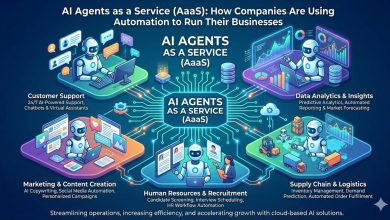
A brilliant model is of limited value if it doesn’t change behavior on the ground. The final pillar is deploying intelligence through AI agent frameworks that augment human teams, bridging the gap between strategic insight and frontline execution.
Two applications are critical:
Predictive Relationship Agents:
Rather than analyzing why a business customer was lost, AI models can predict which partners are at risk. These models analyze hundreds of signals—order patterns, support interactions, market dynamics—to generate a probabilistic risk score. This intelligence is then delivered to a frontline manager via intuitive dashboards with prescribed “next-best-action” recommendations, transforming commercial teams from historians into forecasters.
Frontline Enablement Tools:
For a representative visiting a partner, an AI agent can synthesize the unified data model into a hyper-personalized brief. This dynamic tool provides tailored suggestions—such as specific bundled promotions predicted to increase the partner’s traffic during key dayparts—turning every field interaction into a data-driven growth session.
This embodies the principle that “AI should be something everyone in the company can use.” The technology succeeds only when it is seamlessly woven into the workflow of the human experts who own the critical relationships.
Conclusion: The New Core Competency
The transition to an AI-first enterprise is a strategic metamorphosis. It recognizes that future market share is captured not by the biggest marketing budget alone, but by the organization with the most robust, integrated, and actionable AI data ecosystem. The winners will be those who master the trilogy: building the unified data foundation, investing in proprietary domain-specific models, and deploying intelligence through human-centric agent frameworks.
This is not just another tech project; it is the new core competency of leadership. The companies that will define the next decade are those that began the work to turn their vast operational data into a living, breathing engine for shared growth—one local partnership and one personalized experience at a time.