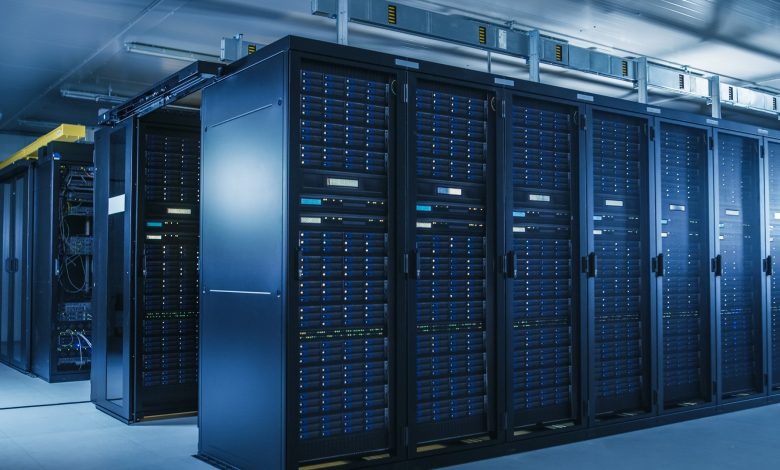
AI has moved from experimentation to enterprise-scale deployment. Across industries, organisations are investing heavily in models, use cases, and talent. Yet, a growing realisation is emerging: building the “brain” of AI is only half the journey. The real challenge lies in building the “body” that can power it at scale.
This is not just a theoretical constraint; it is already playing out across leading enterprises. Financial institutions such as JPMorgan Chase, which are among the largest investors in AI globally, have publicly acknowledged that scaling AI initiatives is increasingly constrained by infrastructure readiness, governance, and integration complexity. Similarly, hyperscalers and technology leaders, from Microsoft to Meta, are racing to secure power capacity and expand data centre footprints to keep pace with escalating AI demand. Yet even the most advanced organisations are discovering that access to compute, energy, and deployable infrastructure is becoming a bottleneck.
This shift is also happening against a backdrop of unprecedented infrastructure demand. Global AI data centre spending is accelerating rapidly, with estimates suggesting that data centre power demand could reach 106 GW by 2035, driven largely by AI workloads. At the same time, AI infrastructure markets, from AI data centers to Edge AI, are projected to scale into hundreds of billions over the next decade, signalling a structural transformation in enterprise IT.
Overcoming these bottlenecks, especially around scalable infrastructure, security, and sustainable power, will be crucial in unlocking the true value of AI.
The Industrialisation Constraint: From Experiments to AI Factories
Most enterprises today have advanced significantly in building AI models. However, many remain constrained by the absence of a robust, scalable infrastructure layer. This bottleneck has been driven by several factors including scarcity of hardware, high costs associated with building and operating infrastructure, and siloed, fragmented legacy data storage and systems.
Therefore, in simple terms, organisations have the intelligence, but not the infrastructure to operationalise it.
Traditional data centre models were designed for enterprise applications, not AI workloads. AI introduces new requirements including, exponentially higher compute density, specialised GPU infrastructure, real-time data processing, and continuous model lifecycle management. AI racks, for example, can draw 10–20x more power than traditional enterprise racks, fundamentally reshaping infrastructure design assumptions.
The result is a structural mismatch between what enterprises have and what AI truly demands.
Overcoming this requires a fundamental shift, from treating infrastructure as a project to treating it as a platform. The concept of AI Factory is critical in supporting this transformation.
AI Factory is more than a mere data centre upgrade; it is a reimagined operating backbone that industrialises AI. It brings the discipline, standardisation, and repeatability of manufacturing into the world of intelligence creation.
AI Factories allows organisations to move beyond bespoke environments for each use case by standardising infrastructure, tools, and workflows. It enables predictable performance and cost structures, accelerating deployment from pilot to production, and integrating data, models, and compute into a unified system.
This shift is particularly essential as, while over half of enterprises are already piloting or deploying AI, only a small fraction have scaled it meaningfully across the organisation.
The potential of AI Factories is being recognised by organisations, with large enterprises partnering, designing and deploying theses beyond experimentation. These environments are engineered to scale, transforming AI from isolated initiatives into enterprise-wide capability. The gap is not in ambition but in infrastructure readiness and AI Factories can help overcome this.
The Sovereignty & Security Constraint: Control Becomes Strategic
As AI adoption accelerates, a second constraint emerging, which is one that is both technological and geopolitical, is data sovereignty and security.
AI systems are fuelled by proprietary data, customer behaviour, intellectual property, operational signals. At the same time, trained models themselves represent significant competitive advantage. This makes AI environments a critical frontier for risk.
Industry studies, such as Gartner’s AI Trust, Risk, and Security 2024 survey and recent IBM AI analyses from 2025 and2026, indicate that data privacy concerns and regulatory compliance are among the top barriers to enterprise AI scaling, particularly in regulated sectors such as financial services, healthcare, and manufacturing.
Enterprises are also increasingly questioning the viability of standard public cloud models when it comes to sensitive AI workloads. Their concerns often center around data residency and regulatory compliance, the risk of model leakage and intellectual property exposure, a lack of visibility and control over infrastructure, and the growing cyber threats specifically targeting AI systems.
As a result, organisations are moving toward custom-built hybrid cloud environments and on-premises AI data centers that offer absolute control over data, models, and operations. For companies, the benefit of this transition is clear: secure intellectual property and model security, predictable cost control through eliminating unpredictable API costs, improved regulatory compliance and enhanced performance. Industry trends also show a clear rise in hybrid and sovereign cloud adoption, with enterprises seeking to balance scalability and AI workloads, with control.
This trend affirms that the integration of custom-built hybrid cloud and sovereign environments is not a retreat from the cloud, but an evolution toward sovereign AI architectures, redefining how and where enterprise AI capabilities are processed.
The Sustainability Constraint: Rethinking the Cost of Intelligence
The rapid expansion of AI data centers is also triggering a third and increasingly visible constraint: sustainability.
AI workloads are energy-intensive by design. High-density compute clusters generate significant heat, driving up both electricity and cooling requirements. Analysts and research from the International Energy Agency (IEA) estimates that global data centre energy consumption could more than double in the coming decade, driven primarily by AI training and inference workloads. Indeed, Goldman Sachs also estimates a 160% surge in data centre power demand by 2030 to support the AI boom.
In many regions, local communities and regulators are pushing back, citing concerns over water consumption for cooling systems, energy demand and grid stress and environmental impact of large-scale data centre deployments. For instance, in 2024, a court in Chile blocked a major Google data centre project citing concerns over the project’s water usage and its potential impact on local aquifers. Similarly, in Ireland where data centres now consume 21% of all metred electricity in the country, Ireland’s state grid operator, EirGrid, has now placed a de facto moratorium on new data centres connecting to the grid in the Dublin region.
This tension is forcing a rethink of how AI infrastructure is designed and operated. In response to this strategic challenge, one of the most significant innovations being advanced in the sector is direct-to-chip liquid cooling. Unlike traditional air-cooling systems, this approach delivers cooling directly to high-performance chips, thereby reducing water consumption by up to 90%, dramatically improving energy efficiency, and enabling higher compute density without proportional increases in environmental impact.
The result is a step-change in power usage effectiveness (PUE), enabling organisations to run high-density AI workloads more efficiently and sustainably. This is critical because Power Usage Effectiveness, once a secondary metric, is now a board-level KPI for AI infrastructure investments. Sustainability, in this context is not a constraint; it is a design principle that shapes the future of AI infrastructure and therefore, an organisation’s operations and capabilities moving forward.
The Path Forward
As we look ahead, one thing is clear: the future of AI will not be defined solely by algorithms or models. It will be defined by the infrastructure that powers them. Organisations that treat AI infrastructure as strategic, rather than operational, will be the ones that unlock real value at scale.
The shift from data centers to AI Factories represents more than a technology upgrade. It is a transformation in how enterprises think about capability, scale, and control. In a world defined by the triple constraint of power, speed, and sustainability, the winners will be those who can industrialise intelligence securely, efficiently, and responsibly.