Online communities have become central to how people connect, share information, and build audiences, but keeping those communities active over time is a far more complex challenge than simply attracting members.
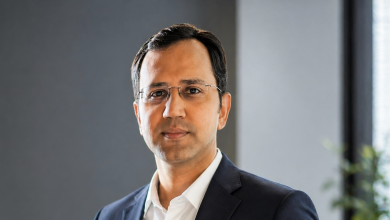
Few founders have had a larger window into that challenge than Anis Belkacem, Co-Founder and Co-CEO of MEE6, the most widely used Discord bot in the world. Built without outside funding, MEE6 now supports more than 20 million Discord communities and serves over 300 million users globally.
Belkacem began building and experimenting with digital products as a teenager, launching and shutting down numerous projects while developing an early understanding of what makes users adopt, return to, and rely on a product. That experience ultimately helped shape MEE6 into a profitable global platform focused on community management, engagement, and automation.
In this interview with AI Journal, Belkacem discusses what MEE6 has learned from observing user behavior at enormous scale, why strong communities depend more on active management than sheer size, how experimentation influences product strategy, and where artificial intelligence could have the greatest impact on online engagement. He also shares his perspective on building products people return to consistently and why AI may fundamentally expand what software platforms can offer their users.
1. MEE6 has helped power more than 20 million Discord communities and serves over 300 million users. How has observing such a massive and diverse user base changed your understanding of what actually drives long-term engagement?
One thing that I learned was that community size doesn’t equal engagement. Some large communities can feel much less alive and active than smaller ones. Long-term engagement correlates much more on the effort the community owners put in than the total number of members a community has. Great community builders have a tendency to be quite active in how they manage their communities. They make sure to create events and opportunities for members to engage while also making sure to keep the overall member experience of the community clean. What that means is keeping the community spamless, well moderated, and well organized around few meaningful discussion channels. At the end of the day, a community is just a product with the goal of providing new and existing members with meaningful information and interactions around a particular topic. The best community managers understand that and act accordingly to make sure their community delivers on that promise.
2. You’ve built MEE6 into a profitable global platform without raising outside funding. Looking back, what product decisions had the biggest impact on user adoption, and what lessons did you learn from features that failed to gain traction?
We understood early on that Discord communities have very different needs that we couldn’t just serve through a lean product. We were never hesitant to pack more features in MEE6 and it paid off. The more we added features and the more usage grew. The flip side of that is the inherent complexity we were adding. The risk was that new users would just get lost when landing on our dashboard. This is why we made sure to focus on building the best UX to avoid those situations. One of the early product decisions that saved us from complexity hell was to design the product around “plugins”. On MEE6, everything is a plugin. A set of features that serve a specific purpose are bundled together into a coherent single plugin. Users can enable the plugins they want and customize them as they wish. It made the discovery easier and the product more user friendly overall.
3. You’ve often said that building products requires constant experimentation. How do you distinguish between feedback that reflects a temporary trend and feedback that signals a lasting shift in user behavior?
You never really know for sure. Adoption of a new experimental feature only tells you part of the story. If it gets a lot of usage, you can assume there is something valuable there, but it still doesn’t tell you how it will look like in six months, one year, two years. We’re trying to take as many shots as possible, and then be intellectually honest to stop or discontinue something that doesn’t work anymore. We live in a world that changes constantly. Something that is valid one year may not be valid the next. Especially in a prosumer market like ours. You have to adapt fast to stay relevant, while of course making sure to stay disciplined about what you keep building.
4. AI is increasingly being integrated into community management and online platforms. Where do you see AI creating the greatest value for community builders, and where do you believe human moderation and judgment will continue to play an essential role?
The greatest value will come from AI-based engagement, way more than moderation. Automated moderation of course saves the community owner and moderators a lot of time. But AI-based engagement is multiple orders of magnitude more leverageable for a community builder. We created a feature called AI characters exactly for that. Community builders create AI characters, give them a name, profile picture, backstory, personality and tone of voice and then the characters join your Discord community and participate in the conversations. Our users love this feature, it makes their community fun and always engaged. Of course humans will still be in the loop. AI is just a tool, it is a very strong and impressive tool, but it needs to be directed, orchestrated, and course-corrected by humans.
5. Managing millions of online communities provides an extraordinary amount of behavioral insight. How has analyzing user behavior at this scale influenced the way MEE6 prioritizes new features and product development?
It is quite humbling to be frank. At this scale, it is all about the user. You can think you have the best idea in the world, the moment you release it, you’ll get real world feedback almost instantly. It forces you to be more customer-focused and to always go back to what really interests people instead of what you personally think could be good for them. Scale forces you to go back to the essentials: the things you are building have to make sense for the user and solve a real problem they actually care about.
6. Many startups struggle to build products that users return to consistently. Based on your experience, what separates products that become part of a user’s daily workflow from those that generate initial excitement but quickly lose engagement?
It really depends on the nature of the problem you are solving. Is it a big problem or a small problem? Do a lot of people encounter this problem, or is it very niche? Is it something users need to solve every day, every week, or only once in a lifetime? If you want strong, recurring engagement, the best case you can be in is to solve a very important problem that happens often, and to solve it very well for a lot of people. But if the problem is not important, happens rarely, and/or is not solved correctly, you will stand zero chance. To build something massively successful, you don’t necessarily need to be working on a very important problem or to be working on something that people encounter daily, but you still need to be strong on at least one of those dimensions.
7. As generative AI becomes more capable of automating content creation, moderation, and personalization, how do you see AI changing the relationship between online communities and the tools that support them over the next five years?
It is a great opportunity to provide even more value to our users. Before the recent AI breakthroughs, people were just building somewhat static, efficient, deterministic software. With the latest AI improvements, we can pack things into our software that were too costly, too slow, too expensive and low margin to even consider before. Let’s say we’re adding a feature that helps you get a logo for your community. If we did that back in the day, it would cost at least a few hundred bucks to pay for the design work, and the user would have to wait probably a few days before getting their logo order delivered. Today, it only takes a few seconds to generate tens of different variations, and costs only a few cents per generation. When you are serious about providing as much value as possible to your users, that is very interesting! Now, it is just a matter of making this happen and to make sure we, as tech professionals, manage to pack all those capabilities into our products for the whole world to enjoy through the best user experience.
8. You’ve spent years building products used by hundreds of millions of people around the world. If you could offer one piece of advice to founders trying to build products that people genuinely rely on, what would it be?
The most important thing is to stay curious and hungry to learn. The best way to learn new things is by doing the work, getting into the details, constantly building things, wanting to be the best at your craft. Occasionally you’ll have to take a step back, reflect and course-correct. During those moments, do not overcomplicate things, stay focused, straight to the point, and try to figure out what is the signal in all this noise. What actually worked, what didn’t work, what did you learn about your problem, how can you produce better. If you do that consistently and long enough, success will follow.