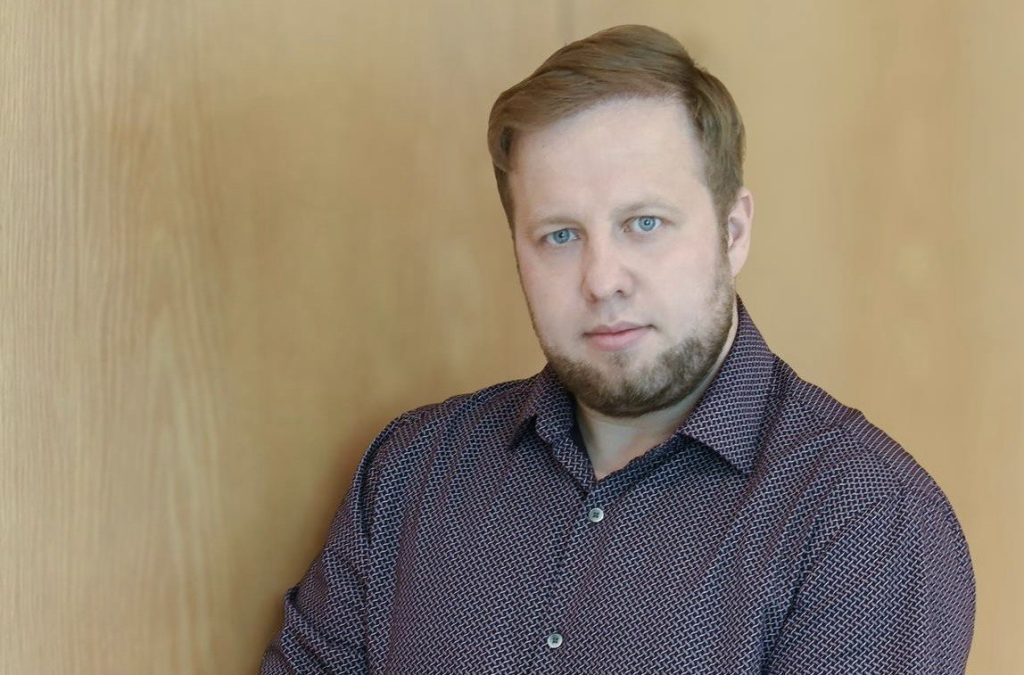
In mergers and acquisitions (M&A), financial and legal due diligence have traditionally been regarded as the principal stages of asset verification. Yet in an era shaped by the dominance of digital products, technical audit, or Technical Due Diligence, has moved into a central position. This process enables a buyer to understand the real value of software, assess security risks, and determine the scaling potential of a technological platform. The professional activity of Artem Golovachev offers a clear example of how a structured approach to IT asset assessment can influence the success of major investment transactions.
Technical audit does not begin with the analysis of software code. Rather, it starts with evaluating whether the technologies used by a company correspond to its business objectives. Artem Golovachev began developing expertise in this area during his work at Luxoft, where he was involved in auditing systems for large financial holdings. One notable case involved an assessment of the systems used by PCM, an international investment holding company headquartered in the United Kingdom, but whose responsibilities included working with both its Russian subsidiary and its global business unit. During this audit, the ability of existing software to support compliance control in accordance with local regulatory requirements was analyzed, and this directly affected the valuation of the asset.
An important component of any audit is the examination of architectural integrity. While working within the Innotech Group, Artem Golovachev took the position of Chief Technology Officer of a venture studio, where he built the Technical Due Diligence process from the ground up for assessing startups and software companies before acquisition deals. The main objective was to identify hidden problems: the presence of “spaghetti code,” the absence of documentation, or dependence on rare technologies that would be difficult to support in the future.
Practice shows that buyers frequently encounter the problem of high technical debt. In audits supervised by Golovachev, the amount of investment required for system refactoring after acquisition was assessed. When a product architecture does not allow new functions to be added quickly, the company’s value for an investor decreases. Artem’s use of risk assessment methodologies made the decision-making process more transparent for the holding’s management.
Data security is another essential aspect of Technical Due Diligence. Artem, with his qualifications in DevSecOps, introduced checks of secure development cycles into the audit process. The assessment focused not only on vulnerabilities in the current code but also on the extent to which the target company’s processes could prevent such vulnerabilities from appearing in the future. This is particularly important when acquiring fintech startups, where a data leak may result in license revocation or substantial fines.
After moving to the position of Director of Software Architecture, Artem expanded the scope of audit application. He headed a technical expertise group that supported IT service sales through in-depth technical analysis of external retail clients. In this context, audit helped not only to identify problems but also to form a product development roadmap, making the company’s proposal more substantiated and strategically grounded.
International experience in the United Arab Emirates at Andersen Lab added new dimensions to Golovachev’s audit practice. One of his tasks involved conducting a comprehensive audit of back-office systems for one of the largest stock brokers in the UAE, operating with the DFM, ADX, NASDAQ, and NYSE exchanges. As part of this assessment, non-functional requirements (NFRs), such as fault tolerance and performance under high loads, were analyzed. For exchange trading, these requirements are not secondary details; they are critical operating conditions.
Infrastructure assessment is also included in the mandatory set of procedures. Artem Golovachev, as a certified AWS architect, audits cloud solutions for cost optimization and security. Companies often overpay for unused resources or use cloud environments in an insecure manner. Technical audit reveals these inefficiencies, allowing the buyer to reduce IT operating costs immediately after the transaction.
Experts note that analysis of the team and internal processes is an important element of the assessment. In his work, Artem evaluates not only hardware and code but also employee qualifications, the development methodologies used, including Agile and Scrum, and the level of CI/CD process automation. If a product’s success depends on one or two key developers without properly established processes, this is recorded as a high risk for the investor.
The introduction of a systematic approach to audit enabled companies under Golovachev’s leadership to successfully launch more than five new IT products from scratch, avoiding typical mistakes of early-stage development. This became possible because quality standards were embedded at the stage of preliminary assessment of concepts and minimum viable products (MVPs).
Specialists in M&A emphasize that high-quality technical audit helps avoid the acquisition of a “black box.” Artem’s experience in conducting audits for fintech, the industrial sector, and banking corporations across the MENA region, the European Union, and the United States confirms the universality of IT architecture assessment methods. An objective evaluation of the technology stack allows the parties to a transaction to reach a fair agreement on price.
As a result, Technical Due Diligence conducted under the leadership of experts such as Artem Golovachev transforms the acquisition of IT companies from a risky undertaking into a controlled investment. Understanding what is “under the hood” of a startup gives the buyer confidence in the long-term viability of the technologies being acquired.
Artem Golovachev has established himself as a leading expert in technical audit and Due Diligence, having developed and implemented systematic processes for evaluating IT assets within major M&A transactions. His deep knowledge of software architecture, cloud technologies, and information security enables companies to accurately assess technical risks and the scaling potential of acquired products, ensuring technological transparency and reliability of investments in the digital sector.