The global maritime digitization market is projected to reach $423.4 billion by 2031, as shipping and cruise operators modernize workforce, compliance and payroll systems. According to maritime technology executive Yurii Biriukov, the sector is entering a new phase of AI-driven operational transformation.
With more than 80% of global trade moving by sea, digital infrastructure that manages maritime workforce operations is becoming an increasingly critical component of the global supply chain.
For more than a decade, Yurii Biriukov has led the development and delivery of workforce and payroll systems for global cruise and shipping operators, helping them manage complex multinational crews and regulatory compliance.
In an interview with AI Journal, he discussed how regulatory complexity, labor shortages and AI are reshaping one of the world’s most conservative industries.
Q: Where is the biggest market opportunity today?
Biriukov: Workforce operations. Every vessel must track working hours, rest periods, certifications and payroll in accordance with international and local regulations. If a crew member exceeds legal work limits, that’s not just an HR issue, it’s a safety risk.
Historically, much of this was done in spreadsheets or even on paper. Now regulators expect instant digital reporting. Software that automates compliance, generates audit-ready reports and synchronizes ship-to-shore data is becoming foundational infrastructure.
Payroll is another major opportunity. Crew members are multinational, paid under different tax regimes and labor agreements. Automating that complexity saves companies significant administrative cost and reduces legal risk.
Q: Maritime suffered heavily during COVID-19. How did technology providers respond?
Biriukov: The cruise segment was effectively shut down. Some companies didn’t survive. Others renegotiated contracts and delayed payments.
From a product perspective, we helped develop passenger and crew health-tracking capabilities, integrating health questionnaires, temperature screening and reporting systems so operators could reopen safely. Even when ships weren’t sailing, companies were preparing for a regulated restart. That accelerated digital adoption.
Q: What are the industry’s top challenges now?
Biriukov: Connectivity used to be a major technical barrier. Ships at sea had limited bandwidth, so systems had to synchronize only when connections were available. Satellite internet has improved, but reliable data replication between ship and headquarters remains complex.
Another challenge is workforce planning. Crew changes are logistical operations involving flights, visas and port schedules. Software must integrate applicant tracking, certification management and travel planning into one ecosystem.
Companies want fewer disconnected systems. Integration via APIs, especially with training and certification providers, is becoming a priority.
Q: How is AI entering maritime digitization?
Biriukov: We’re in the early stages, but the opportunity is significant. Crew managers still make many staffing decisions manually, matching skills, availability and compliance requirements.
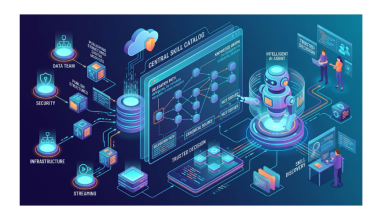
AI can analyze historical roster data and build predictive models to recommend optimal crew assignments, minimize overtime violations and improve scheduling efficiency. In the future, these systems could function as intelligent operational assistants for fleet managers, continuously evaluating regulatory compliance, crew fatigue risk, and scheduling efficiency in real time. They can also forecast workforce gaps based on certification expiry or contract cycles.
Long term, AI-driven configuration could reduce dependence on developers. Instead of coding changes, operators could describe business requirements and generate system configurations automatically. Maritime is conservative, but it will follow broader IT trends.
Q: What should maritime companies look for when choosing software providers?
Biriukov: Reputation matters. This is a tightly connected industry. Reliability and support responsiveness are critical because these systems underpin regulatory compliance and safety.
Second, integration capability. Maritime operators often run five to ten specialized systems. A platform that consolidates processes — or at least integrates seamlessly — reduces cost and training overhead.
Finally, scalability. Regulations change constantly. A vendor must actively monitor legal updates across jurisdictions and reflect them quickly in payroll and compliance modules.
Q: In your recent articles on maritime digital transformation and enterprise software architecture, you’ve discussed the growing role of AI and automation in shipping operations. Where do you see maritime software heading next?
Biriukov: Greater automation and intelligent workforce optimization. There is still a surprising amount of manual planning. In my recent articles and industry discussions, I’ve been emphasizing how AI-driven workforce platforms can transform how global fleets manage crew operations and compliance. AI will help optimize schedules, improve safety compliance and reduce administrative burden.
Maritime may be conservative, but its operational complexity makes it one of the most promising frontiers for enterprise-grade digital transformation. As investment flows into the sector, workforce technology, not just vessel hardware, will define the next phase of growth.
As the maritime industry digitizes its workforce and compliance infrastructure, Biriukov believes the next generation of enterprise platforms will combine AI-driven automation, predictive workforce analytics, and real-time regulatory intelligence, transforming how global shipping companies manage one of their most critical assets: people.