
When McKinsey closed the fieldwork for its 2026 State of AI survey, nearly nine in ten organizations said they used AI regularly, and 44% said they were scaling it across the business, up from 38% a year earlier. Only 37% could point to any effect on EBIT, the same share as the year before, even as 80% of respondents said AI had made them personally more productive.
Agents make that gap harder to ignore. Gartner’s 2026 CIO and Technology Executive Survey put deployed AI agents at 17% of organizations, with more than 60% expecting to get there within two years.
Use is uneven by geography too: Stanford HAI’s 2026 AI Index ranked the United States in 24th place for GenAI adoption, behind Singapore and the UAE, despite leading the world in AI investment by a wide margin.
That leaves 2027 carrying a deadline, with public markets are about to apply their own scrutiny. Anthropic publicly filed a Form S-1 with the SEC this past month, with plans to list shares on Nasdaq under the ticker ANT. The filing leaves the price range and share count blank, and reports put trading in the second half of November.
Speculation is that it could seek around $100 billion at a $2 trillion valuation, which would surpass the reported $86 billion raised through SpaceX’s IPO.
The listing is more than a financing event. It opens a frontier lab’s books to everyone, starting with $16.29 billion in revenue for the first half of 2026. Axios has called it a likely referendum on the business of AI, and every quarterly report that follows will be read as a verdict on the same question McKinsey’s numbers raise: whether all this use is turning into profit.
The leaders below work in that gap between using AI and earning from it, whether they are rebuilding a bank’s core systems or answering a plumber’s phone at 2 a.m.

Several stepped into their current roles this year.
Others have been at it long enough to remember when an AI coach or an AI receptionist was a product few had heard off, with demand today off the charts. As we had into mid Q4, here are 20 of the AI leaders to watch in 2027.
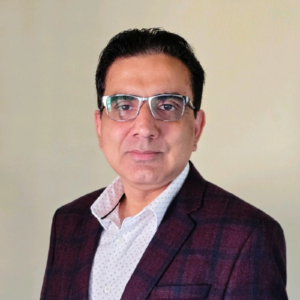
Manu Swami became Sonata Software’s CTO in 2026 after three-plus years as head of technology shaping its cloud, data and AI strategy. His mandate is an AI-first, platform-led engineering organization.
Earlier this year Sonata added a Chief AI Officer, Hariprasad Rebala, so Swami now owns the engineering that has to turn that strategy into shipped work. This past month the company received its sixth Microsoft Inner Circle recognition for its work.

At Colombia’s 360 Health Data, Manu Gutierrez works on a gap that rarely makes AI headlines: most clinical research is published in English, while clinicians across Latin America practice in Spanish.
The company’s Coralia Health platform uses AI to translate studies and medical resources, and an embedded assistant, Salus, surfaces real-world evidence on diseases and drugs. Specialty modules and local regulatory data are next.

Ankor Rai came to Straive as CEO in 2023 from EXL, where he was chief digital officer, and now runs a firm of more than 20,000 specialists. Straive’s message at this year’s Shared Services and BPO Week in Manila put the weight on execution, aimed squarely at clients whose pilots have stalled.
Rai’s test next year is whether human-in-the-loop operations will continue to develop as a margin advantage.

Lalit Mahapatra became CFO of Prezent Vivo on August 18, 2026, bringing more than 25 years of global finance, M&A and life sciences experience to the life sciences arm Prezent launched in April. The model pairs AI drafting with human experts, and Mahapatra helping to oversee financial strategy, capital planning, business intelligence and financial operations.
On joining, he said he was excited to help establish Prezent Vivo as “a leader in Life Sciences communication. The appointment was announced in August of this year, citing his 25+ years in global finance, M&A, and life sciences.

Steve Daly was named CTO of Broomfield, Colorado-based Gorilla Logic this past month, as the firm expands AI product and platform engineering from teams in the US, Costa Rica, Colombia and Central America.
CEO Drew Naukam framed the hire around a lesson many buyers learned the expensive way: enterprise adoption takes much more than access to a model. Daly inherits Gorilla Logic Construct, the delivery system the firm now runs with Claude embedded.

Luis Guillermo Pardo Fonseca, CEO of Kognia Labs, is betting customer service can run AI-first, with people supervising the system and handling exceptions. Kognia’s agents, sold under names such as Voxi for voice and Charli for text, reason through a case and execute it across back-end systems.
Its advisory board includes NASA’s Chief AI Officer, Omar Hatamleh, and Pilar Manchón of Google’s AI research strategy team. Kognia claims up to 40% higher first-contact resolution, which is exactly the kind of number McKinsey’s respondents are still waiting to see reach EBIT.

Kirsten Moorefield co-founded Cloverleaf in Cincinnati and launched its AI coach in 2018, when the company still called it “automated coaching” and few buyers were asking for one. Cloverleaf now pushes coaching into Slack, Teams and calendars, grounded in assessments such as DISC and Enneagram, and plugs into Claude and ChatGPT through MCP.
Her bar for an AI coach is that it must know a person “deeply and intimately” and meet them in the flow of work.

Shimmy Messing co-founded Altorney with his brother Rachi in late 2021, after both had spent two decades in eDiscovery. Its GenAI review engine, MARC, runs first-pass document review inside a client’s own firewall, so legal teams stop paying to host millions of documents they will later cull.
The product is named for their late father, Marc Messing, an attorney, rabbi and educator.

ADvendio, founded by Bernd Bube, runs a Salesforce-built revenue system for publishers, broadcasters and retail media networks. In June 2026 it launched a team of specialized AI agents for ad operations, and it has joined AgenticAdvertising.org, the industry group working on standards for agent-to-agent ad buying. The company’s CTO is Julian Ahrends.
In a July ExchangeWire column, Ahrends argued that ad sales are heading past AI assistance toward fully agentic workflows. His position is that those agents need an execution layer that understands the maths of media: inventory, pricing and delivery.

André Gagné has led GFT Canada since January of 2022, with a team of hundreds across Quebec City, Toronto and Montreal whose clients includes banks and insurers, the buyers least forgiving of an agent that improvises.
GFT’s bet is Wynxx, its agentic software-engineering platform, which the group kept scaling through the first half of 2026 while logging more than 3,500 staff training completions on third-party AI coding tools.

Ruslan Okhrimovych leads effie.ai from Chicago, where the platform plans store visits, guides field reps and checks shelf execution, then verifies the fix. In POI’s 2026 vendor panorama for consumer goods retail execution, effie took five of 13 best-in-class distinctions.
The company reports up to 56% faster field execution, a figure CPG buyers will want to see hold across more markets in 2027.

Gene Sigalov is the CEO of Upfirst AI, which he started after struggling to cover his own firm’s phones, having earlier bootstrapped SimpleTexting to $20 million in ARR and a nine-figure exit.
Upfirst’s AI receptionist passed 1,000 clients in its first year with no ad spend, selling to electricians, vet clinics and law offices from about $25 a month.

Nate MacLeitch founded QuickBlox in 2009 as a chat and video toolkit for developers, and has spent the AI years steering it toward regulated industries, healthcare first.
QuickBlox launched a HIPAA-compliant chatbot in 2024 and last year surveyed 101 healthcare professionals on moving AI from pilots into daily practice. The company is increasingly looked to as a leader for its white-labelled telehealth platform.

Vic Pellicano is a serial founder who has spent the past decade turning AI and automation into real businesses. He built software company Verenia, which Oracle acquired in 2022, then founded AI drone company Avianna, which sold in 2024.
Now he’s backing his third venture, SkyPSI, with $5 million of his own money, applying what he learned about AI-guided drones to commercial work at height, such as cleaning building facades.
What sets Pellicano apart is his view of what AI is for. Rather than replacing workers, SkyPSI splits the job: the AI-powered drone does the dangerous physical work at height, while the human operates it, certifies the job and bills for it. SkyPSI supplies the equipment, plus training and certification, so independent operators can run their own businesses. For Pellicano, the son of a truck driver and the first in his family to attend college, the goal is to put robotics in the hands of blue-collar workers and small business owners instead of trading their bodies for a paycheck.

Anjli Jain is the Managing Partners ElevenX Capital in 2014 and runs it as a fund paired with venture studios in Miami and Gurgaon, so the firm builds companies as well as backing them.
Its focus is AI-first businesses in workforce tech, cybersecurity, health and food, and it took one studio company to exit when OculusIT, a managed security provider for universities, was sold in April 2025.

Shashank Agrawal, Founder and CEO of StarApps Studio, is a bootstrapped company that today brings in more than $6 million in ARR, bought AppMaker in July of this year.
StarApps’ merchandising apps already run in more than 30,000 Shopify stores, over 2,500 of them on Shopify Plus, and AppMaker brings native mobile apps for some 200 enterprise brands. Increasingly AI is playing an important role in ecommerce, which Shashank and his companies are staying ahead of.

Beatriz Gomez is the Bogotá-based CMO of Ontop, a global payroll platform that has processed more than $1 billion in cross-border payments. Its OntopAI layer drafts contracts, checks local compliance and picks the cheapest route for each transfer.
What makes Gomez an AI leader is how she’s positioning that technology. A former eight-year BNP Paribas veteran, she’s an important leader in Colombia’s growing tech ecosystem.

Benji Markoff co-founded Founder Shield in New York in 2012 as an insurance brokerage built for startups, and AI has handed him a new kind of client risk. As some carriers add blanket AI exclusions to standard policies, Founder Shield now writes “AI malfunction and hallucination” scenarios into professional services coverage for the losses a model can cause a customer.
Deloitte’s Center for Financial Services projects global AI insurance premiums could reach $4.8 billion by 2032, and Markoff’s firm is positioned where startups first feel that gap.