The excitement, the scepticism, the fear, the FOMO, everyone’s arguing about whether AI changes everything or nothing, while underneath it all something much bigger is quietly taking shape.
I’ve seen this before. Last time, it was called social media.
I loved that era. It changed my life.
As soon as I saw what social media could become, I wanted everyone to understand it. Most businesses didn’t. The people who really got it were creators building audiences from their bedrooms, completely rewriting the rules while established companies were still trying to catch up.
I built businesses around that shift, travelled the world and met incredible people. It felt like the internet had become a place where anyone with talent and consistency could create opportunities that simply didn’t exist before.
But looking back, I think we focused on the wrong thing.
We celebrated the creativity, the communities and the new ways people could build careers. What we missed was that the platforms owned almost everything that mattered: the audience, the data, the distribution and ultimately the economics.
Creators built the value, but the platforms captured it.
I watched people spend years building audiences of millions only to realise they didn’t own those relationships. They owned access, and access could disappear with a single algorithm change. Meanwhile, the platforms became some of the most valuable businesses in history.
That experience is why AI feels so familiar.
The technology is extraordinary, but the more important question isn’t what AI can do. It’s who becomes more powerful because of it.
If we’re not careful, we’ll repeat the same pattern, using incredible tools while concentrating the value in a handful of platforms.
I’d rather this era turned out differently.
AI shouldn’t make platforms more powerful. It should make people more powerful.
The pattern Is already emerging
I can feel the same structure quietly assembling itself – but the clues to the problems around the corner are hidden in plain sight – and right now we have the power to steer things in a better way.
People can use AI to do so many things – but the easiest way to see what’s happening is to look in any social media feed right now… it’s full of slop, and honestly, I don’t blame a single person making it.
When nothing you make truly belongs to you… when it exists for an algorithm and is forgotten by the weekend… the system quietly teaches you to hold something back.
People haven’t lost their ingenuity, taste, or judgement. I see more of both than ever. Slop is just what any system produces when the makers have no share in what they create.
You can see the same things happening in the business world – people throwing stuff at the wall to see what sticks.
Every room I’m in splits into two camps about all this. One asks what AI is going to take… the jobs, the crafts, eventually our reason for being. The other has already moved on to what they can now make. I understand the first camp completely… in my experience they’re often the people who care most about the work itself, and the fear is rational. I won’t pretend otherwise.
But honestly? I think the jobs question is the wrong question.
Here’s what I’ve noticed from working with amazing people every day: AI doesn’t democratise genius. The judgement… knowing what’s worth making, and maybe more importantly what isn’t… stays stubbornly human.
And judgement, ingenuity, taste, whatever you want to call it, is scattered far more evenly through the population than opportunity ever was.
Which is why I’ve (until now) quietly stopped using the word “creator”. Creators, as the last decade defined them, made content for platforms, shaped by an algorithm, paid in reach.
What I see emerging now feels closer to “makers”… people building products, tools, businesses, whole bodies of work that exist beyond any feed.
Creators rented – Makers can own… their work, their data, the value of what they know. The intelligence economy… (not the frontier AI labs economy) – the real economy supercharged with lots more intelligence can work for everyone. If we make sure they get their rewards, people will rush to pour their craft into tools that other people can use – so everyone will benefit.
Britain is the perfect place to bring this vision to life.
Almost everyone I meet assumes this AI race was decided years ago, somewhere between San Francisco and Shenzhen. And if the race is “who builds the biggest model”, they’re probably right… in the UK, we have unique advantages and we should play to our strengths.
The models are commoditising – sure there are a few firms which will do incredibly well – but I’m increasingly convinced the interesting layer sits above them… where actual people turn a thousand different AI models into things worth owning.
That layer doesn’t reward huge amounts of capital and datacentre build-outs. It rewards ingenuity, creativity, and judgement. It’s not a rush for technical talent, it’s a rush for people with taste, craft and gumption. That’s why it makes sense to build it here.
Look around the world at the impact of this country’s cultural contributions, its science and technology, its business leadership. When it comes to human ingenuity, pound for pound the UK can stand toe to toe with any country on earth.
The company I co-founded ten months ago lists on the public markets in London.
I keep rewriting that sentence….I’ve done things in the past ten months I couldn’t have done at any other moment in my career, at a pace that would’ve been fantasy even five years ago.
It’s possible because the tools changed, and a small team with conviction can now move like a giant. That isn’t my advantage. It’s everyone’s… which is partly why we chose to do this here, in public, in London. Away from the clamour for energy, compute, chips – here, where the talent is rich and the craft is in our bones.
Ten years ago, the most interesting people I knew were those on their phones, building empires on someone else’s land… and handing the value back to the landlord without ever quite noticing.
Today those people are the experts and craftspeople in their chosen field, creating and needing to protect their distinctiveness.
By harnessing the power of AI, they can now turn their passion and knowledge into tools that far more people can benefit from – except this time, they can control what they own and gain from the value created.
Several years ago I built a really big company on the social media boom. We did lots right, but I’m not sure we saw the longer term effects. I’d like us to make sure we don’t make the same mistakes again.
If we structure this thoughtfully, the intelligent economy can become an age of ingenuity and plenty – and it can be so much fun.
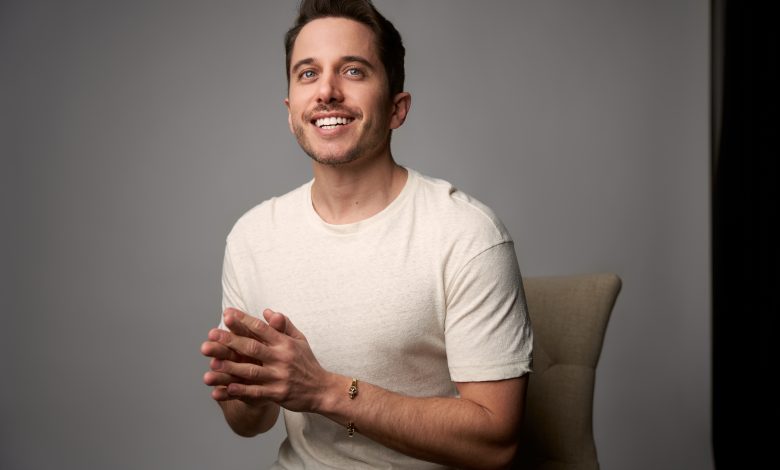
Oliver Yonchev is co-founder of Potentially AI, which listed on the London Stock Exchange. He previously co-founded Flight Story with Steven Bartlett and was part of the leadership team that grew Social Chain to a public market valuation of more than €500 million.