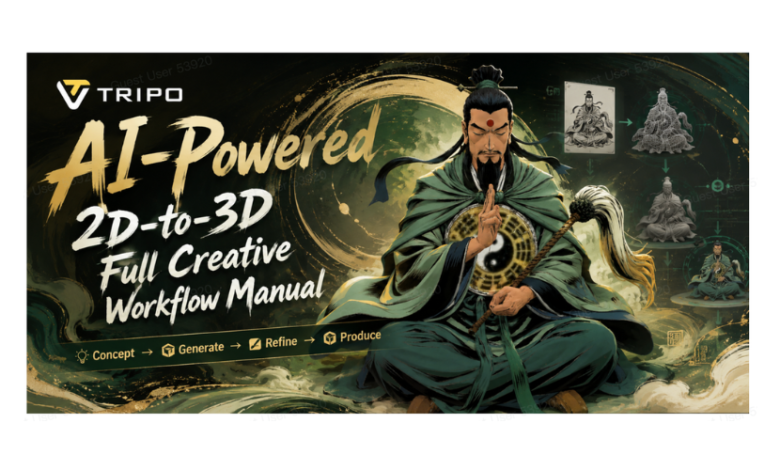
Workflow Overview
2D-to-3D asset conversion is a fundamental pipeline for game development, animation, product visualization, AR/VR, and virtual world construction. The traditional workflow relies on collaborative work among multiple roles, including concept artists, modelers, texture artists, and technical artists. It suffers from prominent pain points: long production cycles, high iteration costs, and limited creative experimentation. A single prop, character, or vehicle asset often takes days or weeks to complete, greatly restricting production efficiency and creative exploration.
Centered on AI draft generation + manual refinement, this workflow reconstructs the traditional pipeline with AI 3D tools (represented by Tripo AI). It eliminates repetitive manual modeling in early stages while retaining human-led creative control, forming a modern production model that supports rapid prototyping, high-frequency iteration, and high-quality final delivery. It serves professional studios, independent developers, and design practitioners of all levels.
Core Bottlenecks of Traditional 2D-to-3D Workflow
The traditional manual modeling process is a linear and one-way pipeline with inherent limitations. The five key pain points targeted and optimized by the AI workflow are listed below:
- Missing visual information: A single 2D reference cannot display the back, side, or hidden structures of an object, requiring subjective manual deduction and easily causing design deviations.
- Poor 3D adaptability: Concept art usually contains stylized exaggerations and artistic distortions that cannot be directly reproduced in standard 3D models.
- High trial-and-error cost: Hours of manual modeling work may be discarded if the early concept scheme is rejected, resulting in severe waste of time and manpower.
- High technical threshold: Small teams and individual creators without dedicated 3D artists struggle to convert finished 2D concepts into usable 3D assets.
- Low iteration efficiency: All adjustments to style, proportion, and details require full manual remodeling, leading to lengthy and costly version updates.
Standard AI-Assisted 2D-to-3D Workflow (4-Step Closed Loop)
This workflow turns the traditional 3D production process into a faster, more flexible creative loop powered by Tripo AI. From concept input to polished asset delivery, creators can move from idea to usable 3D much more efficiently, while keeping full control over style, quality, and iteration.
Step 1: Generate a Strong 3D Base with a Text or an Image
Core Goal: Confirm a clear visual direction, provide accurate input for AI generation, and reduce rework from the source. Two optional input modes are available:
Text to 3D Model
Creators can describe their desired asset through a prompt.
Example:
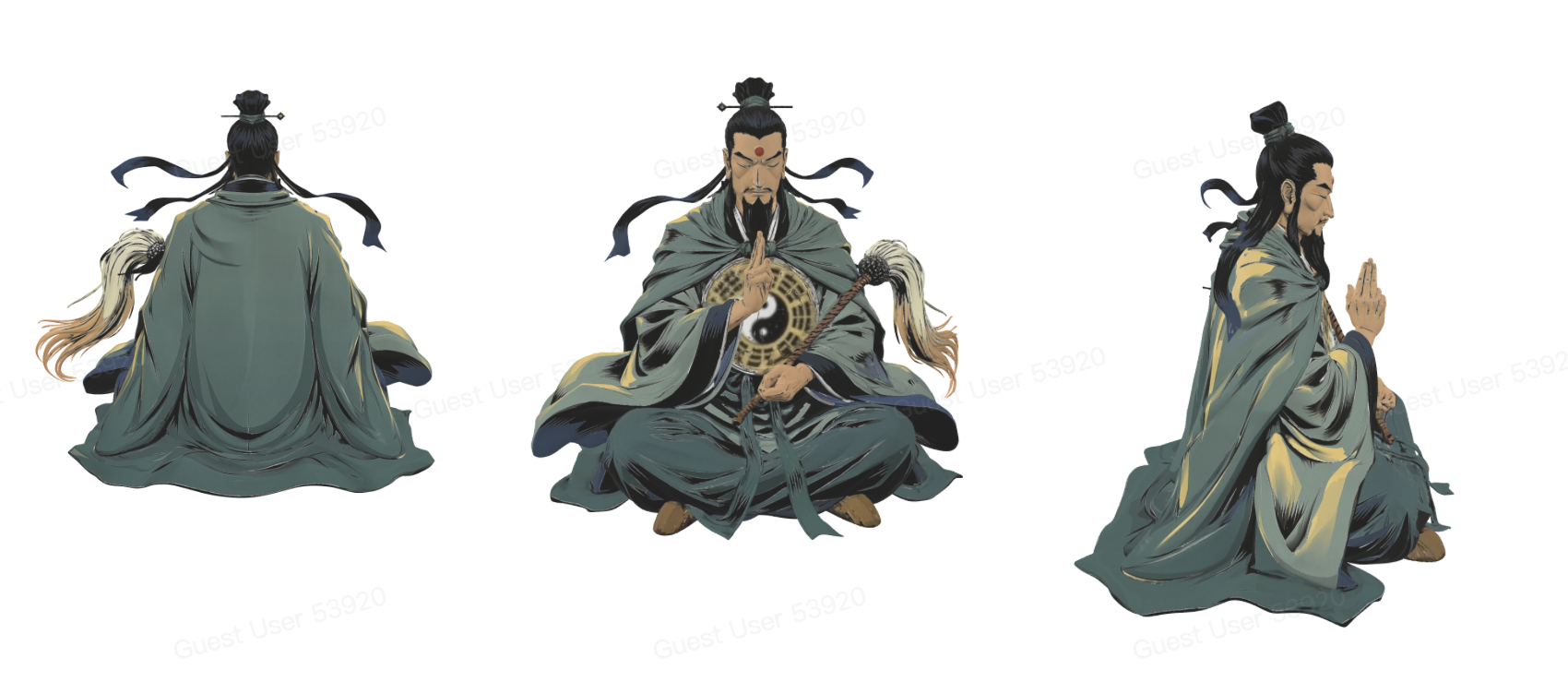
“A retro comic art Taoist priest meditating cross-legged, clad in green traditional robes, holding a horsehair whisk, with a large Yin-Yang Bagua talisman on his chest, closed eyes in serene spiritual contemplation, clean white isolated background.”
Tripo transforms the description into a three-dimensional model that can be reviewed and refined.
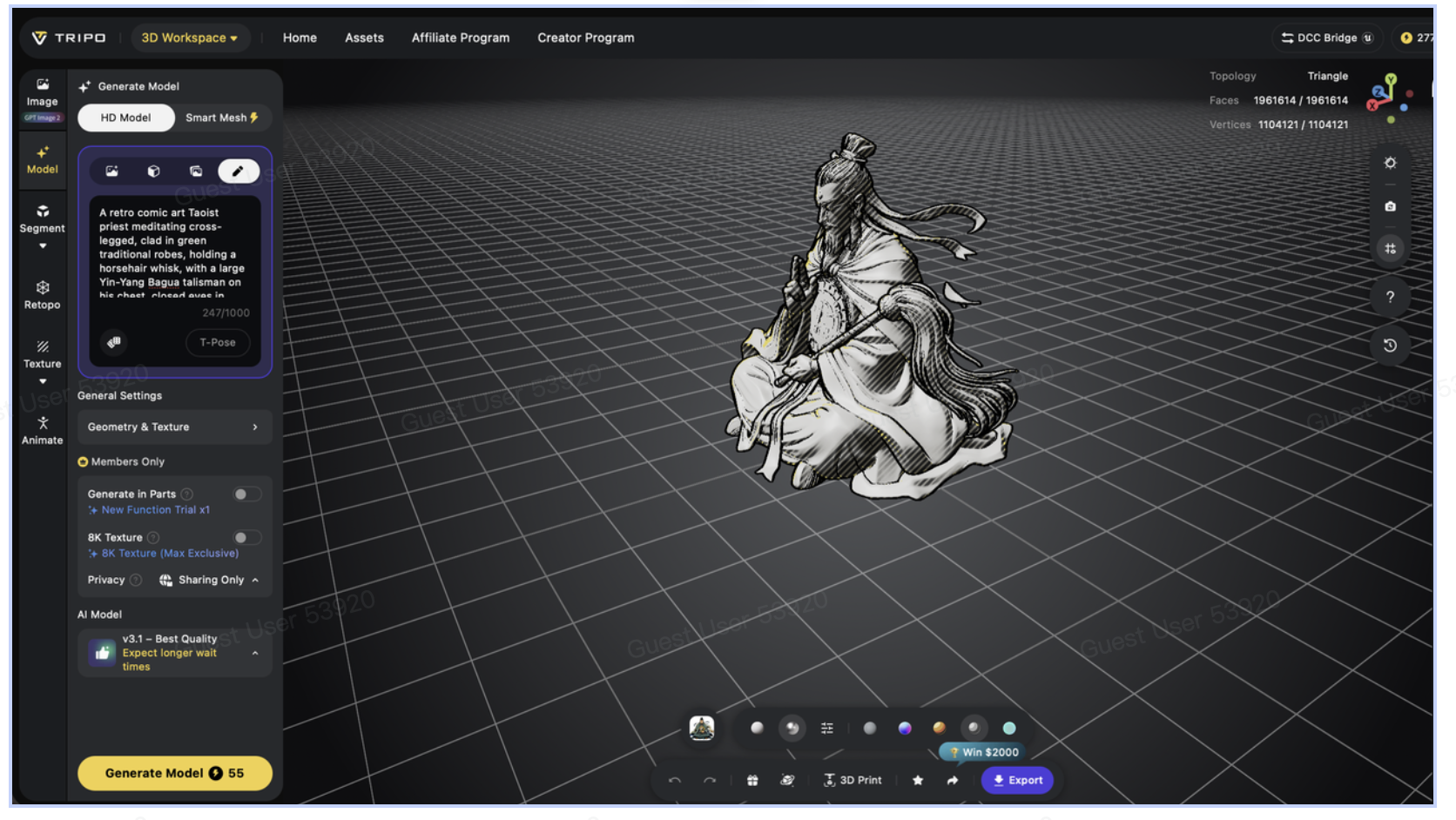
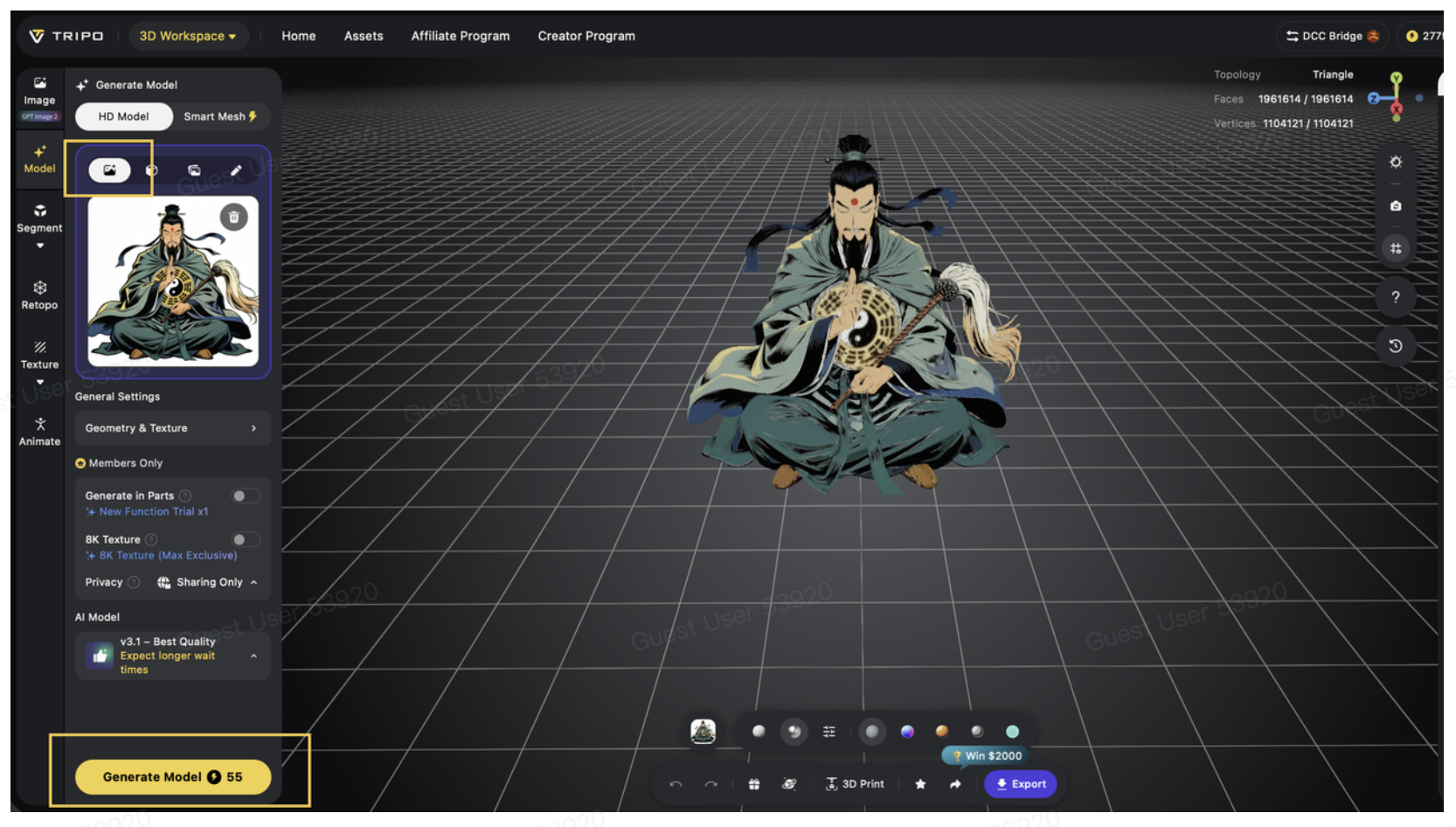
Image to 3D Model
-
Character concept art
-
Product images
-
Design sketches
-
Existing visual references
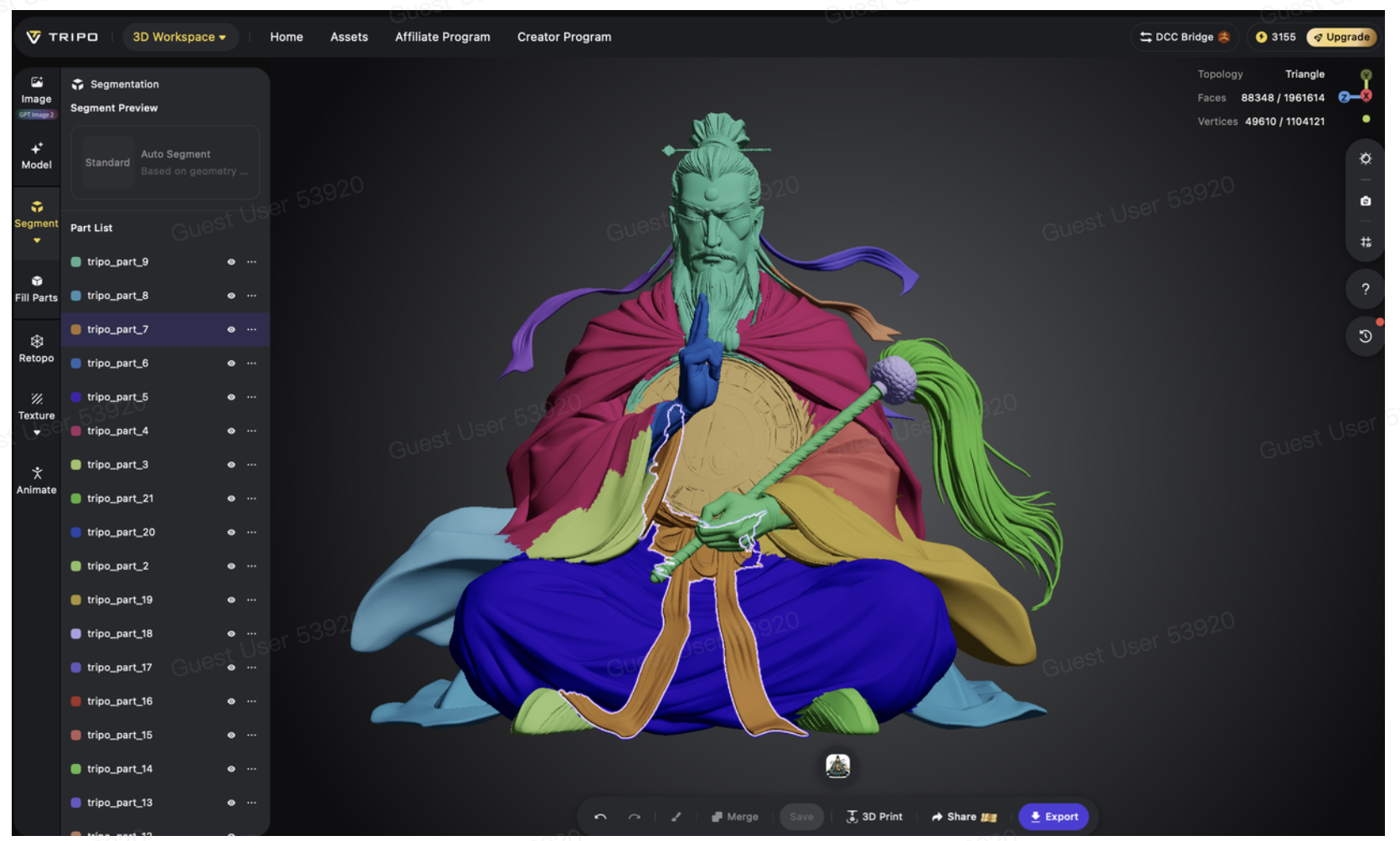
Step 2: Refine Structure and Surface
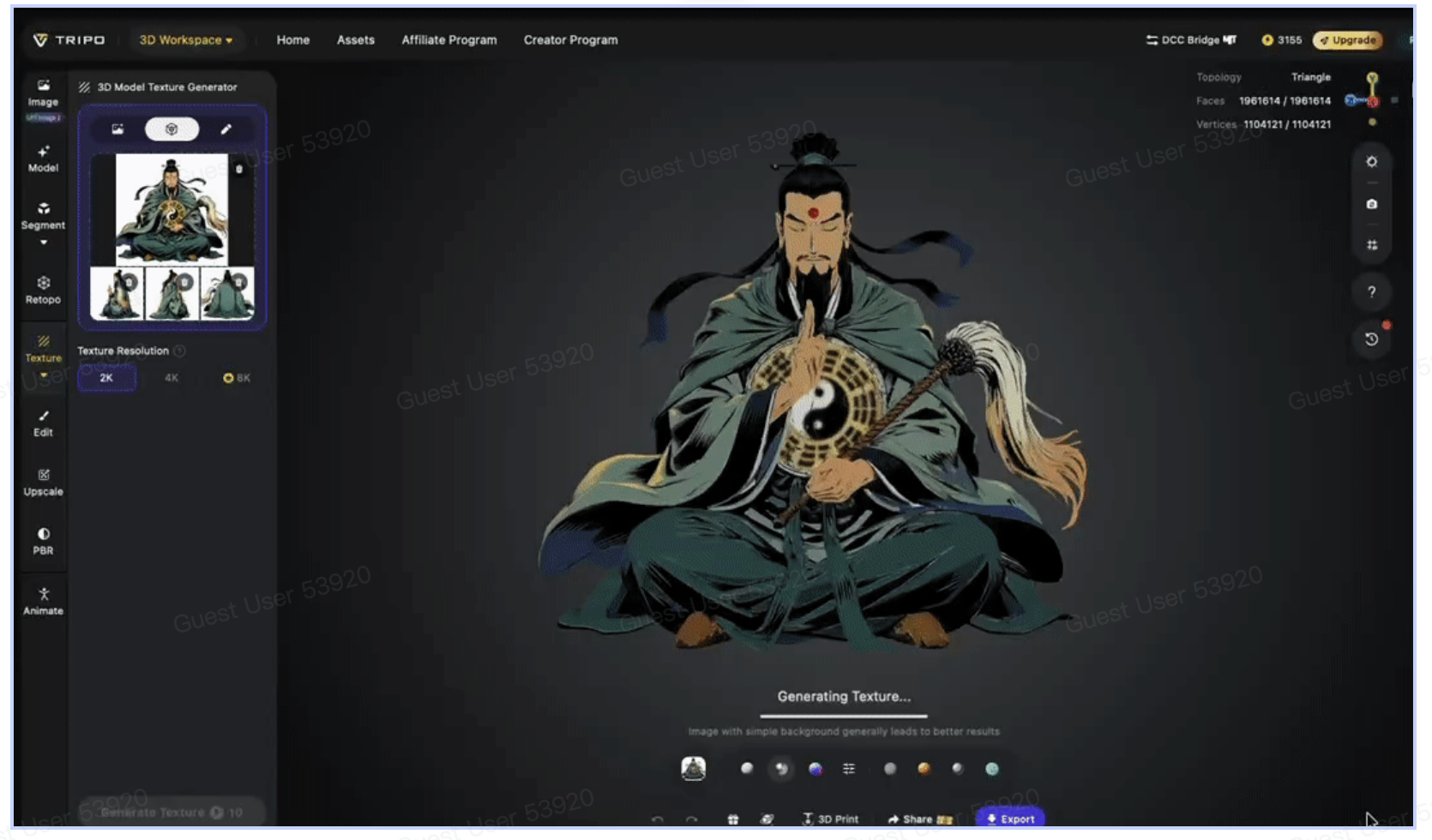
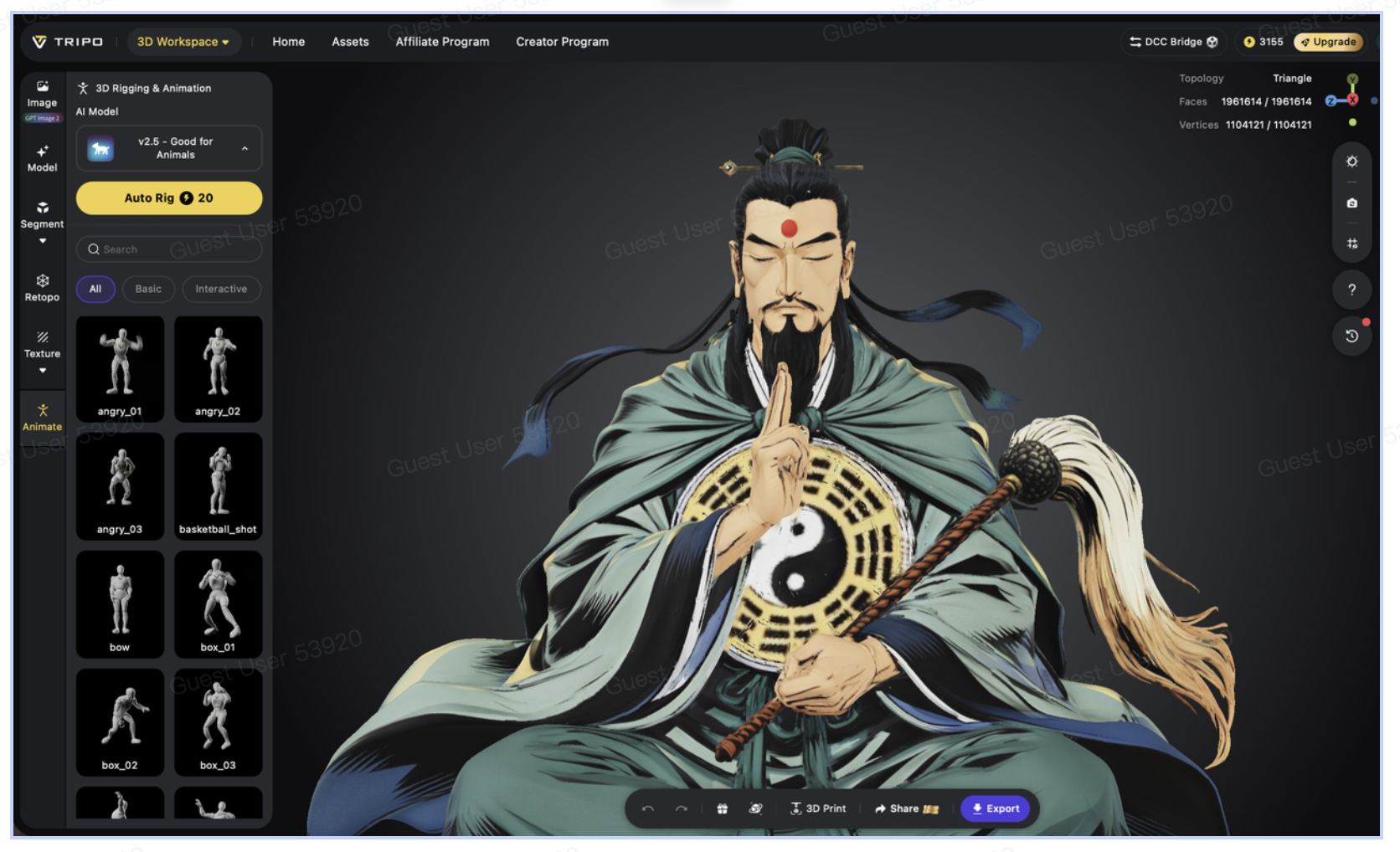
Step 3: Shape the Look and Style
Step 4: Ready for Production
Core Workflow Application Scenarios
This AI 2D-to-3D workflow is highly suitable for fields requiring frequent visual experimentation, rapid prototyping, and low-cost iteration:
- Game Development: Rapidly prototype props, weapons, creatures, and environmental assets to confirm unified art style and scale standards.
- Animation & Film Production: Early visual development verification to confirm the 3D feasibility of 2D concepts and avoid late-stage production risks.
- E-Commerce & Product Design: Quickly generate 3D visuals for products, packaging, and promotion to shorten new product visualization cycles.
- AR/VR Spatial Computing: Batch-produce immersive scene assets efficiently to solve the low-efficiency bottleneck of traditional 3D content production.
- Education & Personal Creation: Lower 3D creation thresholds, enabling inexperienced creators to convert personal ideas into complete 3D models.
Optimal Implementation Specifications
The following standardized specifications significantly improve AI generation accuracy and final asset quality for formal industrial production:
- Reference Standardization: Use clean, unobstructed references with even lighting; avoid complex backgrounds and extreme shadow contrast.
- Silhouette-First Design: Prioritize complete and recognizable object silhouettes. Neater and simpler shapes deliver more accurate 3D conversion results.
- Simplify First, Complexify Later: Generate a clean basic model first, then superimpose details, materials, and effects progressively.
- Multi-Version Iteration: Generate multiple versions for comparison; never rely on a single AI output, and select the optimal solution.
- Full-Angle Review: Inspect models from all perspectives to fix structural defects on sides or rears that are invisible from the front view.
- Scenario-Based Polishing: Adjust refinement standards according to usage; differentiate precision for prototypes, game assets, product renders, and AR objects.
- Human Art Direction Intervention: AI mass-produces alternative schemes, while human creators screen, optimize, and finalize all outputs.
Conclusion
Driven by the professional AI 3D Model Generator, this closed-loop 2D-to-3D workflow thoroughly addresses the core pain points of traditional 3D production, including long production cycles, high trial-and-error costs, and rigid technical thresholds. Built around a standardized pipeline of Reference Preparation → AI Draft Generation → Iterative Optimization → Manual Refinement, the solution perfectly balances efficient creative output, flexible iterative adjustment and high-quality asset delivery. Leveraging the powerful capabilities of the AI 3D Model Generator, the entire creation process eliminates cumbersome manual reconstruction and technical barriers.
Amid the booming demand for 3D digital content, this AI-driven workflow has evolved into a mainstream standard production solution for games, virtual environments, product design, AR/VR and other digital industries. It breaks traditional technical limitations for creators, enabling efficient, seamless transformation from creative concepts to high-quality, production-ready standard 3D assets.