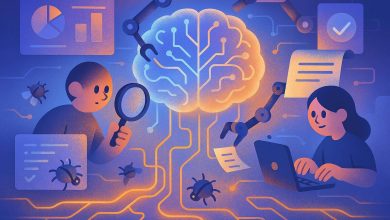
For years, organizations have relied on traditional security awareness programs to protect their employees from making costly mistakes.The premise was simple: teach people to recognize threats—phishing emails, suspicious links, insider risks—and the organization would be safer.
Yet, the results tell a different story. Despite more training than ever before, human-related risk still accounts for the vast majority of breaches. The core issue isn’t that employees don’t care about security, it’s that the system around them is reactive, not predictive.
With today’s distributed workforces and AI-driven operations, this reactive posture is no longer sufficient. A new era of Human Risk Management (HRM) is emerging to close the gap, shifting security from awareness and detection toward prediction and prevention.
Why Reactive Security Falls Short
Legacy security awareness programs were built for a different time, one where years ago employees worked in centralized offices and threats evolved more slowly. Today, risks arise not just from human error, but from complex interactions across systems, cloud environments, contractors, and increasingly, AI agents.
Traditional tools detect and alert after a risk has already surfaced. They depend on humans recognizing danger and acting correctly in the moment, which assumes a level of constant vigilance that few employees can actively maintain. The result? Security teams overloaded with alerts, short on context, and forced to react after an incident occurs. Awareness has become a compliance checkbox, not a measurable defense mechanism.
Meanwhile, security teams are burdened with excessive data and too few insights. Each incident triggers another round of detection, triage, and response – an endless cycle that fails to address the root cause: human behavior.
Predicting and Preventing Risk Before It Strikes
AI-native HRM introduces a fundamental shift in approach that needs to happen to address today’s threat landscape. Rather than training employees to react to threats, HRM systems identify and prevent risky behaviors before they turn into incidents.
By analyzing signals across identity, access patterns, communications, and contextual risk, HRM builds dynamic risk profiles for humans and AI agents alike. The goal isn’t surveillance—it’s actionable intelligence that empowers security teams.
Modern AI-native HRM solutions take a more nuanced, measurable approach by:
- Predicting risk trajectories using behavioral, identity, and contextual data to anticipate where vulnerabilities are emerging.
- Guiding response through explainable AI that recommends interventions (such as targeted coaching or access adjustments) supported by clear reasoning and confidence scores.
- Acting autonomously on routine remediation tasks, with human oversight, to reduce response time and maintain consistency across distributed environments.
The result is a system that learns, adapts, and strengthens over time, creating a measurable, proactive security posture that moves beyond awareness toward prevention.
Expanding HRM for the AI Era
The rise of AI agents adds another new layer of complexity to workforce security. These agents now perform tasks once reserved for humans, and they can introduce novel forms of risk: unauthorized data access, prompt injection attacks, or exposure through misconfigured integrations.
Traditional HRM solutions were never designed to manage these risks, simply because they didn’t exist. AI-native HRM platforms, on the other hand, can extend human risk management principles to both people and AI agents.
By monitoring behavior across human and digital identities, AI-native HRM platforms deliver continuous visibility into who (or what) is taking action across the enterprise. They can detect anomalous behavior from an AI model just as easily as from a human insider and take preventative steps automatically.
This unified approach is redefining workforce security as “workforce risk management,” where human and AI agents are managed together through predictive intelligence, explainable decisioning, and autonomous action.
Measuring Outcomes that Matter
CISOs have long struggled to prove the ROI of awareness programs to their boards. Completion rates and phishing test scores don’t reflect real risk reduction.
In contrast, AI-native HRM solutions enable organizations to quantify their progress with metrics that matter, such as:
- Reduction in risky users as measured by behavioral trend analysis
- Faster remediation times thanks to AI-guided prioritization
- Lower data loss exposure among high-risk cohorts
- Higher workforce engagement with security initiatives
These measurable outcomes demonstrate how prevention-focused systems can drive both security performance and organizational trust. The investment in the system is proven by the metrics that it measures, making it a win-win for the C-suite.
2026 and Beyond – Autonomous, Explainable, Preventative Security
In the coming year and beyond as enterprises evolve into complex ecosystems of humans and machines, the security paradigm must evolve with them. The future belongs to systems that can explain their reasoning, predict emerging risks, and act autonomously when the stakes are high.
AI-native HRM platforms exemplify this evolution. They are built from the ground up for intelligence, scalability, and transparency, rather than bolted onto legacy architectures. By combining behavioral science, explainable AI, and autonomous action, they enable organizations to move from detect and respond to predict and prevent.
In doing so, they not only protect data and assets but also strengthen trust, proving that with the right intelligence, both people and AI agents can be an organization’s greatest defense, not its greatest risk.