If you’re a SaaS founder, you’ve felt the shift.
Customers are asking about AI features.
Competitors shipping “AI-powered” releases overnight.
Public multiples compressing.
Noise suggesting SaaS is finished.
SaaS is not dead. But weak SaaS is being exposed.
AI is not eliminating software businesses. It is stress-testing them.
The Real Divide: Operational Software vs. Convenience Software
There are two types of SaaS companies emerging.
The first sits inside a mission-critical workflow. It runs billing, compliance, logistics, healthcare processes, payroll, infrastructure, embedded finance, or regulatory systems. If the software disappears, the customer’s business breaks.
The second improves productivity. It enhances communication. It summarizes data. It generates content. It adds visibility. Useful — but not structurally embedded.
AI disproportionately threatens the second group.
Large language models dramatically reduce the cost of building features. What once required a standalone SaaS company can now be replicated through APIs layered into existing platforms.
That dynamic is reshaping how operators — and buyers — evaluate software businesses. I explored this in more depth in AI threat to SaaS valuations and how underwriting standards are shifting in the lower middle market.
The key shift is simple:
Recurring revenue alone is no longer enough.
A Durability Test for Founders
Here’s the harder question you should ask:
If your primary interface is providing access to someone else’s intelligence engine, what exactly do you own?
Many newer SaaS products are essentially:
- A UI layered on top of a third-party LLM
- Prompt logic packaged as a workflow
- AI-generated outputs wrapped in dashboards
- API calls resold at a markup
If that is your core value proposition, your differentiation may be thinner than you think.
You are vulnerable to:
- Model commoditization as intelligence becomes cheaper
- API pricing changes that compress margins
- Platform bundling from incumbents like Microsoft, Salesforce, or HubSpot
- Customers building similar functionality internally
- Competitors accessing the same underlying models
When your product’s primary value is access to someone else’s intelligence engine, you don’t control the intelligence. You don’t control pricing. You don’t control the roadmap. And you don’t control long-term defensibility.
That is structural risk.
Buyers understand this.
In diligence today, they ask:
- What percentage of product functionality depends on third-party AI APIs?
- Could this be replicated with the same models?
- Does the company control proprietary data that improves outputs?
- Is AI additive — or foundational?
If the intelligence layer is foundational and rented, perceived risk rises. That often translates into lower multiples, heavier earnouts, or slower deal velocity.
AI Is Also an Opportunity — If Used Correctly
This is not an argument against AI.
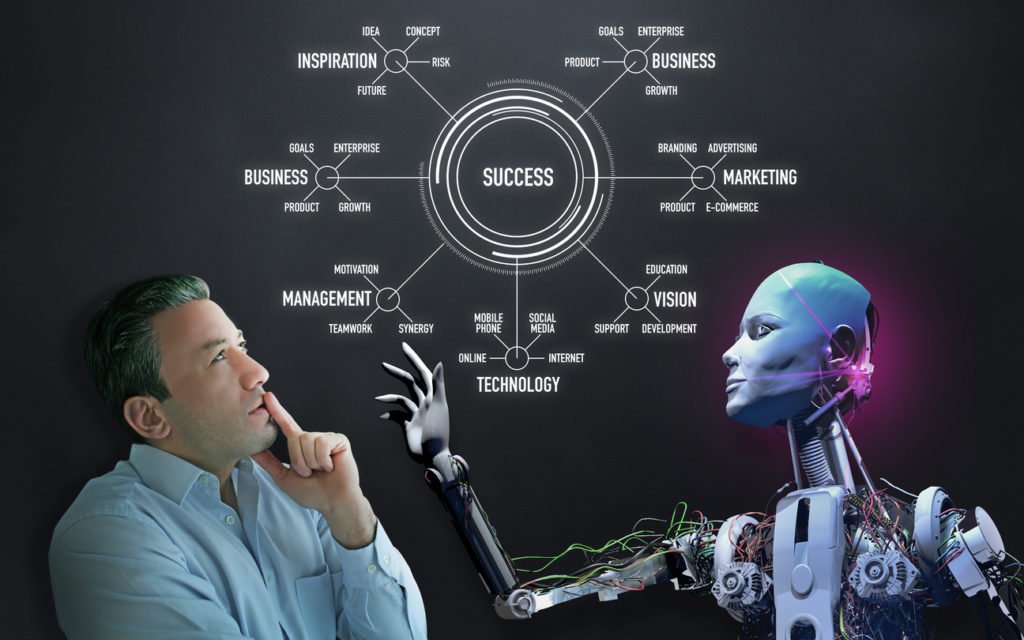
The strongest SaaS companies are using AI to deepen their position in the workflow.
They are:
- Reducing internal operating costs
- Improving onboarding speed
- Automating support
- Enhancing predictive decision-making
- Increasing switching costs
In these cases, AI strengthens the moat.
The distinction is critical.
If AI enhances a product that already controls operational workflow, it increases durability.
If AI is the product, and that intelligence is rented, defensibility shrinks.
There is a broader discussion about the impact of AI on SaaS and how it is separating durable platforms from feature-driven tools. The separation is accelerating.
What This Means for Operators
If you’re building toward a potential exit in the next 12–24 months, this shift matters.
The companies attracting competitive buyer interest today tend to have:
- Clear niche focus
- High retention
- Embedded operational workflows
- Strong margins
- Proprietary data advantages
Growth still matters. But durability matters more.
AI is compressing abstraction layers. The easy SaaS arbitrage is gone. The market is rewarding software that is deeply integrated, operationally necessary, and difficult to replace.
The future of SaaS companies belongs to those who:
- Control workflow
- Own meaningful data
- Solve regulatory, financial, or revenue-critical problems
- Use AI to strengthen their embedded position
The short-term losers will be products whose value proposition can be replicated with a prompt and an API.
That is not the end of SaaS.
It is the maturation of it.
AI is not killing SaaS.
It is killing weak SaaS.