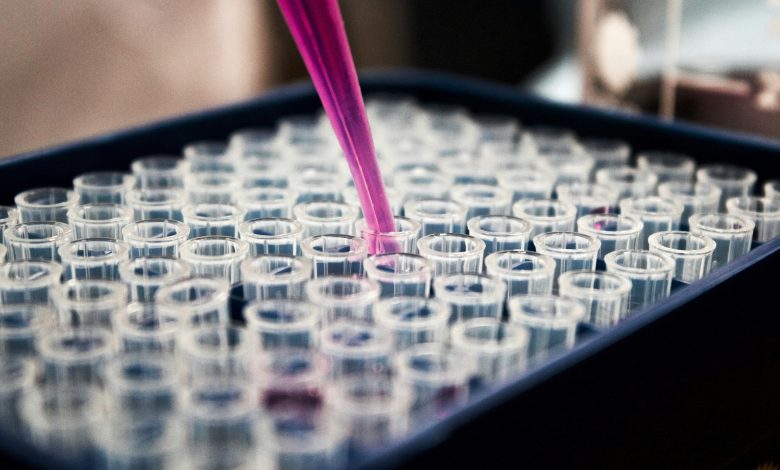
GPCRs: An Uncharted Frontier
Some scientific challenges are so complex that they shape entire fields, and G-protein coupled receptors (GPCRs) are one of them. These membrane-bound receptors influence everything from immune function to neurological health, yet astonishingly, more than half have never advanced into clinical development[1]. If drug discovery has its own form of “dark matter,” then this is it, a vast, mysterious, and largely unexplored frontier that holds the key to understanding the drug discovery universe.
The limits of small molecules and traditional discovery
GPCRs regulate critical physiological pathways and are implicated in a wide range of diseases, from cancer to neurodegeneration[2]. For years, researchers have known that unlocking GPCRs could transform medicine, but biological challenges have put the brakes on progress. Traditional drug discovery has struggled with developing targeted treatments for GPCRs because their structural flexibility, concealed binding pockets, and membrane-embedded nature make GPCRs notoriously difficult to target[1]. However, this is now starting to change.
Small molecules remain dominant in early drug discovery due to established development pathways and easier synthesis. However, for GPCRs, their small binding surface and chemical constraints mean that they fail to achieve the necessary specificity, limiting effective engagement and often resulting in off-target effects and low success rates.
Antibodies offer an attractive alternative by stabilising receptor conformations and interacting with complex epitopes. Yet, designing antibodies for GPCRs has traditionally been slow, unpredictable, and resource-intensive. This is largely because GPCRs are constantly shifting shape, sit awkwardly within the cell membrane, and expose only limited regions for antibodies to latch onto. In practice, researchers have often been unsure which parts of the receptor are actually targetable and have had to rely on lengthy, trial-and-error screening to find antibodies that recognise the right conformation. It’s a costly, uncertain business, and progress has typically been more a matter of persistence than precision, until now[3].
Accelerating discovery with generative AI
Generative AI is changing that by giving scientists the ability to engage directly with messy, real biology and model potential outcomes – identifying those that are likely to fail without wasting time, money and resources. When models learn from engineered cell systems designed to bring faint receptor signals to the surface, they begin to uncover patterns that were invisible to traditional methods.
At Antiverse, we harness generative AI to develop antibodies against highly challenging targets, including GPCRs once deemed “undruggable.” Our machine‑learning design engine builds target‑specific libraries tailored to the structural and sequence features of each receptor, enabling prediction of antibody sequences with very high binding probabilities even in the absence of pre‑existing data[4].
We then test these in silico designs in our state‑of‑the‑art labs, using stable cell lines engineered to over-express millions of the target receptors at high membrane density. By biopanning and screening our custom libraries against these high‑expression cell lines, we uncover binders with strong efficacy and affinity and deliberately bias selection toward meaningful interactions. The receptor is presented abundantly and in a native cellular context, giving functional binders repeated opportunities to engage, while non-specific interactions are rapidly lost during successive selection rounds. The result is sharper enrichment kinetics, cleaner signal, and earlier emergence of high-confidence GPCR binders.
By collapsing the effective search space and reducing experimental dead-ends, this integrated AI-and-wet-lab approach allows us to iterate far more quickly than traditional discovery methods. While conventional antibody programmes can take up to two years, Antiverse can advance from design to validated antibodies in as little as four to six months, reshaping what is feasible in antibody drug discovery.
The practical consequence is not just speed for its own sake, but faster progression of promising therapies toward the clinic, expanding the therapeutic potential of GPCR targets and bringing new options closer to patients with unmet clinical needs.
What This Means for the Future of Medicines
Much of the buzz around AI in drug discovery centres on accelerating existing processes. That’s valuable, but it overlooks a more profound advantage generative AI brings, unlocking doors that were previously bolted shut. Generative AI is like a new telescope that enables us to see beyond our previously limited vision. Entire disease pathways that were considered out of reach start to come into view. For patients, that means therapeutic options that address the real drivers of disease instead of generic options that merely work around them. For the industry, it signals a shift toward a braver, more ambitious kind of science.
The field is approaching a tipping point. Generative AI is maturing, the need for fresh biological insights has never been greater, and the scientific community is ready to rethink what’s possible. Those who engage now, whether as partners, collaborators, or future innovators, will help define how we solve some of the toughest challenges in medicine. Among these, unlocking the GPCR landscape that has constrained therapeutic progress for decades stands as one of the most critical.
Wales as a Rising Biotech Hub
Headquartered in Cardiff, Antiverse thrives within Wales’ distinctive biotech ecosystem. The combination of integrated NHS datasets, lower operational costs, and close links with academia and industry creates fertile ground for innovation. We work hand-in‑hand with universities, the NHS, and funding bodies like the Development Bank of Wales, leveraging coordinated networks to move discoveries efficiently from concept to patient care. Life Sciences Hub Wales is a prime example of how collaboration across sectors can accelerate translation from lab to clinic.
Unlocking Global Opportunities
Starting from our Welsh roots, Antiverse has expanded internationally, with offices in Boston and Canada, and collaborations with multiple top‑20 pharmaceutical companies. By applying generative AI to GPCRs and other complex targets, we are tackling diseases that were once considered untreatable. As AI platforms evolve alongside experimental biology, discovery timelines are shrinking, failure rates are falling, and the boundaries of what is scientifically possible continue to expand.
For patients who have waited decades for effective therapies, this approach provides tangible hope, and for industry partners and prospective team members, it offers a unique opportunity to collaborate at the cutting edge of antibody discovery and AI‑enabled drug development.