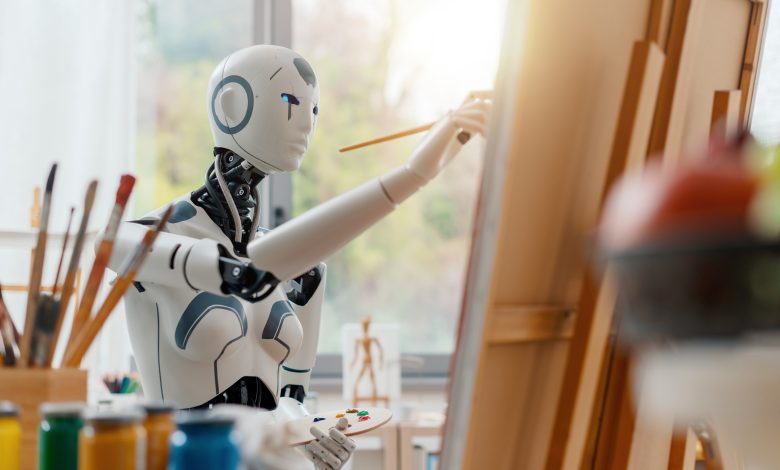
Visual arts, music, and storytelling have always been playgrounds for creativity, relying on human imagination, lived experience, and emotional depth, and driving innovation and cultural development. Historically, creative work required time-intensive manual processes and specialized skills. Today, we witness how artificial intelligence is transforming creative workflows at nearly every level.
Creative professionals are often the pilots of trends and novelty, so it’s no surprise that the creative sector has become the front stage for advancing generative AI technology. According to a recent research, 86% of creative pros are now actively using AI tools in their work. Rather than replacing human creativity, AI acts as a collaborator, enhancing ideation, accelerating production, expanding artistic possibilities, and presenting new forms of creative expression.
Drivers of AI Integration in Creative Workflows
Generative AI has significantly democratized creativity, lowering traditional barriers to entry in fields like writing, illustration, design, video making, and music composition. Individuals without formal education or training and with limited access to institutional networks can now produce professional-level work. This inclusivity expands who gets to participate in the creative economy, introducing a broader diversity of voices.
Across creative industries, generative AI is increasingly viewed as a catalyst for creative potential. Not only can it create art from prompts and mechanize routine tasks like editing or formatting, but it also helps brainstorm ideas and explore perspectives that humans may not have considered on their own.
Ultimately, AI helps bridge the gap between ideas and the resources needed to bring them to life. Automating execution and reducing costs and production times make creative outputs more scalable for different players, empowering small teams and independent creators to compete at levels previously reserved for larger studios.
Moreover, AI enables creative professionals to produce greater works more consistently, helping sustain high-quality standards across larger workloads and promoting a wider variety of deliverables, which expands market reach.
66% of creative professionals report producing higher-quality content with generative AI tools, and 62% indicate their task completion time was reduced by about 20% through AI-powered workflows. As AI handles the technical aspects, creators gain more time for deeper concept exploration and more thorough refinement of final work.
In this changing creative ecosystem, the art director and copywriter roles become amplified. Practice shows that the most compelling works arise from synergy, where AI augments capability but human discernment and intuition ensure authenticity, cultural value, and emotional resonance.
AI in Visual Arts and Design
Diffusion models like Midjourney, DALL-E, and Stable Diffusion have expanded the frontiers of artistry in multiple ways, opening nearly limitless creative opportunities for both amateurs and professionals alike. Beyond the game-changing ability to generate high-quality images from simple text prompts, they empowered creators to explore ideas that might have been previously challenging to visualize.
In the visual arts, experimentation with AI helps discover new styles, techniques, and mediums. Using AI, artists can effortlessly blend various techniques, styles, and cultural influences or reimagine classic forms of art through a technological lens. It enables the creation of distinctive hybrid artworks and helps bring to life pieces that would be too time-intensive, expensive, or even impossible to produce using traditional methods.
AI tools are now widely used in digital art, photography, and design to create standalone works or provide elements for more complex projects, such as objects, color palettes, textures, patterns, compositions, and conceptual frameworks.
One of the most prominent recent examples of professional AI-powered artwork is Refik Anadol’s installation at the United Nations headquarters named “Large Nature Model: Coral,” which draws attention to the urgency of climate change. The artist used AI to gather millions of photos of coral reefs to create a massive, dynamic model that highlights nature’s authentic beauty.
AI in Music Composition and Production
The production of studio-quality audio, made accessible even to those without a professional musical background, is probably one of the most exciting opportunities AI has brought to the creative table.
Overall, there is a wide range of tools available, from songwriting assistants to AI-generated music video platforms, allowing for experimentation across genres and styles. Among the notable recent developments for producing realistic, commercial-ready pop songs is Suno. This digital audio workstation enables the generation of rich instrumental pieces from scratch or the creation of complete tracks combining vocals and instrumentation.
AI can analyze vast music libraries and suggest original melodies, harmonies, and rhythms, serving as a source of inspiration and paving the path to new creative directions. It can also help identify musical patterns in existing hits, further setting the foundation for new, unique compositions that are more likely to resonate with broad audiences.
Another common AI application in the music industry stems from its ability to produce professional-quality, mood- and theme-specific soundtracks, background scores, and jingles at lower cost and with faster turnaround, encouraging its growing use in films, games, and ads. Additionally, AI automates tasks such as mixing, sound design, and mastering, streamlining the production process.
Artificial intelligence has also entered the music performance scene. AI-driven real-time improvisation tools can accompany live performers by generating complementary music on the spot. Examples include tools like Google’s NSynth and AI-powered MIDI controllers.
A high-profile case of AI use in music production is The Beatles’ 2023 release of “Now and Then” single, featuring John Lennon’s original vocals isolated and revived from decades-old demo tapes.
AI in Storytelling and Content Creation
Generative AI tools now assist with virtually any form of written content, from articles, newsletters, and case studies to humanlike stories and poetry, simply by responding to prompts.
AI automates many aspects of content creation for media and marketing platforms, covering repetitive and time-consuming tasks like drafting, editing, and generating captions or transcripts, as well as producing blog and social media posts, and other types of marketing copy. It helps increase consistency and scalability in content production, especially for businesses with high content demands, accelerating time-to-market and expanding reach.
AI also serves as a fiction-writing advisor, helping to overcome creative blocks, brainstorm plot ideas, or explore character traits. In screenwriting, it helps develop dialogue and plot points, and analyze script drafts for pacing, tone, and predicted audience reaction. Use cases of AI in journalism include the analysis of massive datasets for investigative reporting and real-time news generation, with The Washington Post’s Heliograf and Reuters’s Lynx Insight as examples.
Furthermore, generative AI is rapidly becoming an integral part of the visual content creation process, promoting experimentation and optimizing production. Marketing teams, advertisers, and social media creators are among the most frequent adopters, using AI to produce video clips, animation, motion and static graphics, and voiceovers with speed and flexibility, and handle technical tasks like editing, captioning, and localization, which enables faster turnaround and consistent output at scale.
Major media platforms have incorporated AI technology to streamline the creative experience for their users. For example, YouTube added automatic dubbing to different languages, enabling content to reach global audiences. TikTok has introduced its Symphony Creative Studio, an AI video-generation tool that leverages TikTok trends and insights to create high-performing content for the platform.
Challenges and Regulations
Alongside the advantages, AI brings up complex challenges, some of which affect society at large, requiring a holistic approach to solve them. The biggest concerns revolve around intellectual property infringement, the commodification of creativity, and the ethical and societal implications, including the potential for job displacement and the negative impact on the information ecosystem.
Since models are trained on large volumes of data that may include third-party artists’ original works, the derivative nature of AI outputs and potential plagiarism are the subjects of ongoing debate. Copyright, authorship, attribution, and fair use questions significantly complicate the AI-driven creative landscape, underscoring the need to foster a balanced industry conversation centered on human and social values and develop shared principles and viable legal frameworks that protect artists’ rights without restricting the progress for AI creators.
Critics also worry that widespread AI adoption can lead to the loss of artistic authenticity and the commodification of creativity, eroding the value of craftsmanship and turning artwork into something mass-produced and standardized. While technically proficient and aesthetically pleasing, AI-generated art may feel hollow without human experience and emotional intent behind it. In addition, making creative endeavors accessible to a broad audience, generative AI can lead to a homogenization of aesthetics, making works appear repetitive and uniform.
Potential job losses across the creative industries are another widely discussed concern, as AI can automate many creative tasks traditionally handled by human talent. Research by the World Economic Forum, however, shows that not only can AI augment existing jobs, but it’s expected to create multiple new roles.
Ultimately, rather than erasing human talent from the creative process, AI tools can be used to facilitate the workflows and elevate the quality of creative products. A good old example of technology adoption in entertainment arts is “Toy Story,” where Pixar pioneered the use of computer-generated imagery to animate an entire movie, which revolutionized both the production process and the quality of animated films. AI takes on a similar supporting role with human creativity as the lead.
Last but not least, the call for responsible AI use now stands front and center. With the growing sophistication and photorealism of generations, producing convincing synthetic media is easy as pie, making misinformation a quickly emerging issue. Deepfakes and fabricated news pose the risks of a destabilized sense of reality and a distorted public perception of truth, with the consequences of information manipulations especially far-reaching in areas like politics. Society now increasingly demands transparent disclosure of AI use in public discourse and media content, and regulatory responses are being introduced, such as the US Deepfakes Accountability Act or the EU’s AI Act.
Future Horizons
In the coming years, AI will keep transforming the way people work in the creative industries, with the human part evolving towards more strategic and conceptual roles. It primarily means less time will be spent on technical execution and more on managing ideas, conceptualization, and strategic thinking.
In an AI-driven creative environment, proficiency with AI tools will likely become even more relevant than mastering traditional artistic skills, because these technologies don’t just expand a professional toolkit but reshape the very process of creative production.
A data-first mindset will be another key factor to set creative endeavors up for success. Building custom datasets that the model can easily access and learn from will become a crucial condition for producing distinctive and meaningful artwork with AI.
As generative AI technology matures, its impact on creativity will grow more intricate and engaging. For instance, AI may not only be able to generate a visually striking digital painting but also interpret an artist’s emotional style, or create a melody that reflects cultural themes. It may also inspire the creation of interactive artworks that evolve in real time, adapting to audience responses, such as dynamic art installations, personalized narratives, or mood music.
Overall, the years ahead hold the promise of a richer and more energetic creative landscape shaped by collaboration between humans and intelligent systems. The tandem of human imagination and computational capability will keep opening new and unprecedented avenues for creative exploration and expression. At the same time, balancing the momentum for innovation with thoughtful attention to the ethical, social, and cultural challenges involved will remain crucial to ensuring a sustainable future for all stakeholders.