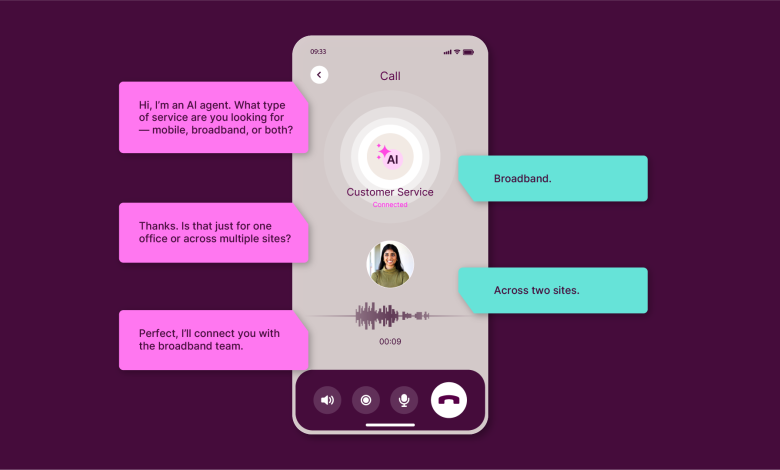
Businesses are investing heavily in AI, yet many are still struggling to realise the benefits they expected. The assumption is often that the challenge is technical: the model is not sophisticated enough, the data is not mature enough, or the implementation has not gone far enough. But ironically, the greatest barrier to AI success may be far more humanthan businesses have realised.
Over the last three years, questions have been raised about whether AI can do the work businesses want it to do. But those businesses may have neglected to ask the more important question: do people trust it enough?
This challenge is becoming increasingly important at a time when trust in digital interactions is under pressure. Customers are questioning whether communications are genuine, employees are uncertain about how AI is being used within their organisations, and many people are becoming more cautious about sharing information or engaging with automated systems. As businesses continue to digitise customer and employee experiences, confidence in those interactions cannot be taken for granted. An organisation can build the most sophisticated AI solution in the world, but if customers do not trust it, employees do not understand it, or stakeholders cannot see how decisions are being made, the project will struggle to deliver its intended value.
For AI project strategies to succeed, there needs to be a clear rationale for how organisations will build confidence among customers, employees, and other stakeholdersthroughout the AI journey.
An AI project should only be deemed a success when all users (internal and external) are willing to use, accept and trust the technology.
But how can organisations build that trust effectively?
It comes down to five distinct stages that must be embedded throughout the AI journey, from planning and design through to implementation and ongoing governance. Each stage builds on the one before it, ensuring that trust becomes a strategic priority rather than an afterthought.
The five stages of trust that are needed for a successful AI implementation
-
Can you trust the data that feeds the system?
AI can only ever be as good as the information feeding it. Organisations need clear governance and oversight to ensure AI systems are trained on the right data.
AI will deliver poor outcomes if it’s working from flawed information. A combination of inaccurate customer records, incomplete interaction histories and disconnected systems will make it much harder for businesses to implement AI effectively.
This first stage requires clear processes to ensure the data is sufficiently robust for use. This means checking that information is being drawn from the right sources, minimising the potential for any conflicting information, and ensuring clear ownership of that data.
Trust in AI starts long before the customer or employee interacts with the technology itself. It begins with the confidence that the underlying data behind every recommendation, prediction or decision is accurate, reliable and follows appropriate governance. Without that first step, it will struggle to deliver relevant responses and can ultimately harm user trust.
-
Can you trust the processes in which AI is being used?
A growing trust gap is emerging between customers and businesses due to the way AI is being used. Most customers are not concerned about the use of AI, but they are concerned that it’s being used in customer-facing interactions without a clear disclosure or explanation.
This trust gap is what needs to be addressed at the earliest possible stage. With 88% of UK consumers saying it’s important for companies to clearly disclose when AI is being used, and one in five confirming they discovered retrospectively that AI had been used without their knowledge, transparency remains a significant challenge.
Any strategic plan should include a mechanism to explain how and why AI is being used. Customers want to know what role AI plays in their overall experience, what happens to their data, and what alternatives are available if they opt out of having their data used.
The same principle applies in internal settings. Employees should be given detailed explanations for how AI will be used, for what purpose, and whether they are expected to change how they have traditionally worked to use a system that they fear could replace them.
Getting these processes right means businesses can build internal and external trust by removing uncertainty. Through transparent AI policies, they’ll make it easier for customers and employees to embrace the benefits of AI and automation.
-
Can you trust the outcome
As AI becomes increasingly embedded within everyday customer experiences, attitudes towards AI and automation are beginning to shift. When it comes to customer experiences, most customers are less concerned about whether an interaction is with a human or an AI agent and more about whether their issue is resolved quickly and fairly.
That’s why it’s so important to build those underlying data foundations and processes because they are responsible for the final output. If the data or processes are flawed, the output will be incorrect, further damaging customer trust.
Metrics for monitoring AI success should focus less on how much faster automation has made routine tasks and more on whether it has achieved the customer’s initial goal and needs. Before a customer decides whether to return to a business, they need to know their problems were resolved and they were treated fairly.
An AI solution may reduce costs and save time, but if it also creates frustration or fails to resolve customer issues, it will ultimately undermine the trust a business is trying to build.
This is also why organisations need to rethink how they measure success. Traditional metrics only tell part of the story. Of course, efficiency, productivity gains, and automation rates are important, but they do not tell the story of whether a customer feels the experience was reliable and genuine, nor do they explain whether a customer has received the outcome they wanted or expected.
The contact centre sector provides a useful example of how this works in practice. There are significant advancements in customer experience platforms that integrate AI solutions to automate customer service and outreach. Traditional metrics may have focused on how many outbound calls were made and answered, but that only solves part of the problem. Research has confirmed that customers are increasingly screening calls from numbers they do not recognise and are less willing to respond to outbound enquiries if they are unsure who is calling or why.
This means that automating high volumes of calls will not deliver any meaningful value if the customers they are trying to reach are ignoring them because their trust is so low that they are not willing to engage in the first place.
It confirms that long-term value from AI investments can only deliver a positive ROI if they align technical performance metrics with customer trust and engagement outcomes.
-
Can users trust the escalation path if they are concerned by the AI output?
One of the biggest mistakes organisations make is forcing customers through complex automated journeys with no obvious path to human-led support. There are many scenarios in which automation is genuinely beneficial, particularly when a customer needs help completing a simple task quickly. But an effective customer experience is about recognising that not everyone is happy, willing, or able to use tech-only solutions. If the customer is struggling with a complex, sensitive or urgent issue, there needs to be a clear escalation policy in place that brings in a human contact.
These escalation pathways are essential for two reasons.
Firstly, organisations need human oversight behind the scenes. AI should never be used entirely unchecked. There are many highly regulated sectors where decisions must comply with regulatory, legal, or ethical requirements, and human oversight enables businesses to verify how data is used and how AI models are trained. Not only does this verify the accuracy of the underlying data, but it also enables those escalation pathways to monitor outputs for errors or bias and ensure that automated decisions align with internal governance standards. If users know that AI recommendations are being reviewed, monitored, and challenged where necessary, it becomes much easier to trust the outcome.
Secondly, customers need to know that they can reach a human if they need help and support. There’s no doubt that automation is highly effective for routine enquiries. But for complex, sensitive, or urgent enquiries, customers need a clear and accessible route to human support rather than feeling trapped in an automated process.
Trusting the escalation path is about recognising that people do not all have the same needs, preferences or levels of confidence when interacting with AI.
Customer engagement platforms have had huge success with automating first-step interactions. But if a customer is having a problem, they want ways to speak to a human agent quickly and easily, with minimal frustration. If a customer has already explained their issue to an AI tool, they should not have to start the process again when they are transferred to a human advisor. If frustration, confusion, or vulnerability becomes apparent, the escalation pathway should automatically route the customer to the most appropriate person.
That handover process is imperative because any disconnect between the system and the people can undermine trust in the overall process, even if the customer has their issue addressed appropriately. Effective escalation pathways provide reassurance at every stage of the AI journey. They ensure that organisations retain appropriate human oversight behind the scenes while giving customers confidence that human support remains available whenever it is needed.
-
Beyond the technology, do customers and users trust the business?
A business’ reputation is multifaceted, and every single interaction a customer has with a brand will shape how they feel about it. This explains why customers may trust some businesses’ use of AI more than others.
If a business already struggles with credibility, clear communications, or transparency, AI will not automatically solve those challenges. There is a risk that adding AI to an untrustworthy business can amplify any existing reputational problems.
Organisational trust is more important than ever. The prevalence of malicious digital communications means that customers are already cautious of whom they share their data with. Thanks to scam activity, misinformation, and growing uncertainty over AI-generated content, it’s easy to see why customers are sceptical about who they interact with and what they are told. That’s why it’s important to remember that long-term trust and reassurance should always take precedence over short-term efficiency gains and cost savings.
AI cannot compensate for a lack of organisational trust.
Customers and employees will judge AI initiatives through the lens of their existing experiences with a business. They want to know that it’s been implemented thoughtfully, transparently and with their needs in mind. If people feel that AI has been introduced to reduce costs or remove human involvement, trust can quickly erode.
However, when organisations demonstrate that every automated decision and interaction improves experiences, supports better outcomes, and maintains appropriate levels of human oversight, it becomes much easier for people to embrace the technology. Customers and employees do not judge AI in isolation. They judge it based on their experience of the organisation that uses it. When people trust the business, they are far more likely to trust the technology.
Conclusion
AI is now naturally embedded across customer service, sales, financial services, healthcare, and countless other sectors. The technology will continue to improve, but it will be meaningless unless substantial work is done to build trust among users and customers.
Customers will always bring their existing perceptions, concerns, and experiences into every interaction, whether they know it or not. They need to be confident that AI is being used responsibly, transparently and with their interests in mind. They need to know that every interaction is trustworthy and genuine. They need to understand how data is used, how decisions are made, what safeguards are in place and where human oversight and escalation pathways exist.
AI should no longer be seen as a technological challenge but as a human one.
Ultimately, people don’t need to trust AI.
But they do need to trust the businesses using it.
Biography: Ben is the CEO and co-founder of MaxContact. As CEO, Ben sets the strategic direction for the business, leads the senior leadership team and champions MaxContact’s distinctive culture of distributed leadership and transparency. He oversees all aspects of the company’s growth, from product innovation and AI technology advancement to team development and market positioning.