Contrary to recent popular belief, Artificial Intelligence did not ruin the traditional job interview process, it simply revealed how unreliable the process already was. As AI tools flood hiring pipelines and candidate workflows, the core assumption underpinning modern recruitment, that interviews identify the best workers, is collapsing in real time.
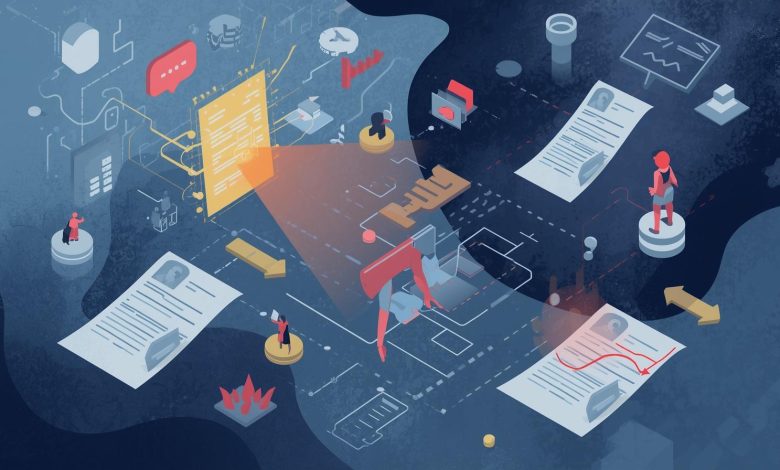
Today’s hiring landscape has become an arms race, with companies deploying AI-powered applicant tracking systems to screen resumes at scale, while candidates use generative AI to optimize applications, rehearse behavioral answers, and polish portfolios. Each side escalates, and neither side wins. The result is a performative hiring theater where credibility erodes, signal quality degrades, and trust disappears. That is the real crisis AI has surfaced, and it is one the labor market can no longer ignore.
The Interview Arms Race No One Is Winning
For years, interviews rewarded performance over competence. Mastery of the STAR method, confidence signaling, and narrative coherence often mattered more than actual output. AI did not invent this flaw, it simply democratized access to it. When anyone can generate a flawless behavioral response or tailor a resume to match any job description, those signals cease to differentiate talent. The hiring system now optimizes for who can best simulate employability, not who can do the work.
This breakdown is already visible across tech and crypto hiring. Despite layoffs dominating headlines and hiring slowing across Web3 firms, recruiters still report overwhelming applicant volume paired with declining confidence in candidate quality. AI has accelerated that paradox. More applicants look “qualified” on paper, yet fewer can be verified as capable. In response, companies are shifting their real focus away from skills claims and toward authenticity detection, which can only be construed as an implicit admission that resumes and interviews can no longer be trusted.
From Skills Signaling to Proof of Work
That shift explains why the most important interview question in 2026 will not be “How do you use AI?” but “Did you actually do this?” Employers increasingly assume candidates rely on AI tools, but what they really want to know is whether the work presented reflects real contribution, judgment, and accountability. Portfolios without provenance, metrics without witnesses, and achievements without traceability are losing value fast.
This is also why trying to beat hiring bots is a losing strategy. Optimizing keywords, rehearsing AI-assisted answers, and gaming ATS filters only deepens the problem. There is always someone with better tools, better prompts, or more time. More importantly, the most desirable roles are increasingly bypassing automated screening altogether. They are filled through referrals, reputation, and demonstrated impact, channels that bots cannot fully mediate.
The Consequences of a Widening Trust Deficit
What is emerging instead is a quiet reversion to trust-based hiring, albeit under new constraints. Candidates who stand out are not those who appear most polished, but those whose work can be independently verified. Public contributions, open-source commits, documented outcomes, and credible references matter more than ever. Ironically, the more automated hiring becomes, the more valuable human validation grows.
This dynamic has profound implications for labor markets in crypto and beyond. Platforms and protocols that can credibly verify work history, contribution, and reputation stand to capture significant value. Conversely, companies that continue to rely on opaque AI screening without downstream human judgment risk adverse selection, hiring those best at simulation rather than execution. Over time, that misallocation compounds, weakening teams, slowing innovation, and increasing turnover costs.
Some readers may object that this critique underestimates AI’s ability to improve fairness and reduce bias in hiring. Others may argue that abandoning standardized interviews risks privileging insiders and informal networks. Those concerns are valid, but they do not negate the reality that the current system already fails on both fairness and accuracy.
The uncomfortable truth is that AI has made credential inflation cheap and authenticity scarce. That scarcity will increasingly define opportunity. Candidates who invest in visible, attributable work will compound advantage, while those stuck applying into automated funnels will face diminishing returns. Markets will respond accordingly. Capital, talent, and innovation will cluster around ecosystems that prioritize proof over performance.
AI did not break hiring. It stripped away the illusion that hiring ever worked the way we claimed. What comes next is not a better interview script or smarter screening model, but a redefinition of how trust is established in a digital labor market. The winners will be those who stop trying to impress machines — and start proving themselves to people again.