The Unseen Constraint on AI’s Future
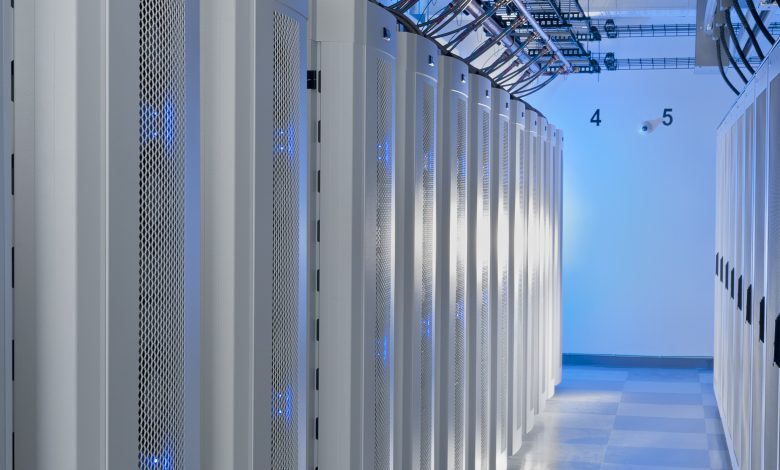
Mainstream discussions around Artificial Intelligence (AI) tend to focus on model breakthroughs, new software and faster processors. But behind the scenes, the physical infrastructure powering these models—the data centers—are quickly reaching their limits.
One of the core issues is heat density. The intense heat generated by modern AI and High-Performance Computing (HPC) systems gear is rising faster than old cooling systems can handle. These compute-intensive racks create far more heat than legacy cooling designs were built to remove. Once the heat load in a single rack crosses the 30 kW mark, traditional air cooling becomes highly inefficient, leading to overheating and energy waste.
Many data centers now run out of cooling capacity before they fill up their space or use all their available power. If we don’t adopt better thermal management, the growth of AI could be slowed down by simple physics, not by a lack of chips or new ideas.
Why Traditional Air Cooling Fails High-Density Data Center Servers
Traditional air-based cooling systems rely on mechanically forcing large volumes of air through a data center to transfer heat. Air’s low heat capacity limits its effectiveness as rack power density increases. High airflow requirements also raise power use, often creating hotspots that affect performance.
Chilled-water systems are more effective at transferring heat, but they bring new complications. Water conducts electricity, making leaks a serious risk for server hardware. They require either very high water flow rates or significantly more physical space to deliver the same cooling as other technologies. Routing the piping is another concern: many operators won’t place water lines above their racks due to leak risks, so the default is to run them under the floor. But with more data centers moving to slab floors instead of raised floors, water-based cooling becomes even harder to implement, adding complexity at a time when AI racks are only getting hotter.
Liquid Cooling Solutions: Maximizing Rack Density and Data Center Efficiency
To overcome these constraints, advanced cooling solutions must remove heat directly at the source.
The rear door heat exchanger (RDHx) is one solution to increasing AI head loads. It’s a scalable solution for modernizing data centers challenged by high-density workloads. These systems integrate heat exchangers into the rear doors of server racks, but traditional single-phase water-based RDHx designs do not extract heat; they inject cold air into the space rather than removing heat through phase change.
RDHx technology can be integrated into existing data centers and expanded as cooling needs increase, though most RDHx systems are fixed-capacity units and cannot scale modularly as loads grow, whereas two-phase approaches use a modular architecture that lets each rack scale its cooling capacity independently as densities rise.These systems are also among the more energy-efficient liquid cooling approaches because they use less energy, handle higher workloads more effectively, and remove heat rather than injecting chilled air into the rack.
Two-phase heat extraction builds on this approach and is gaining significant traction. These systems circulate a specialized cooling fluid that absorbs heat by turning from a liquid into a vapor inside the system. This process allows it to move heat up to 10 times more efficiently than water. Its primary advantages are lower energy use, the ability to support much higher-density workloads, and true heat removal at the source rather than injecting cold air into the rack.
Strategic Benefits: Efficiency, Scalability, and Sustainability for Data Centers
Data center cooling strategies are now a business decision as much as a technical one. Data center operators who switch to liquid cooling significantly increase efficiency and reduce long-term maintenance needs.
Adopting these systems allows operators to unlock scalability and future-proofing. The modular architecture ensures that data centers can easily expand cooling capacity incrementally to match evolving IT load demands. This approach is vital for supporting rapid technological advancements without requiring extensive physical overhauls, which can be costly and time consuming.
High-efficiency cooling is also key to sustainability goals. Removing heat right at the source can reduce the entire facility’s cooling power use by up to 90% in certain optimized designs. This dramatically improves a site’s Power Usage Effectiveness (PUE), supporting both regulatory needs and internal ESG (Environmental, Social, and Governance) commitments.
As demand for AI continues its rapid growth, data center cooling determines the ultimate limits of hardware deployment. The industry’s ability to keep expanding AI infrastructure now depends heavily on choosing thermal technologies that are truly built for high-density compute, not systems carried over from a past generation.