New markets are unlocked in a wave of new liquidity, when research Is cost-less and instantaneous.
What do sugar cane and private equity have in common?
On July 16th, Donald Trump announced that Coca-Cola would replace corn syrup with US-produced cane sugar. A number of traders asked themselves, how would this impact sugar demand and prices?
As a former analyst at a major consulting firm, I’ve done countless similar exercises – especially during the frenetic weeks of a private equity acquisition. You had to figure out how many cans of Coke are sold in the US each year, how much sugar is required to replace the corn syrup, how many tons of sugar cane yield a ton of refined sugar, and what kind of sugar Coke specifically needs. Then you’dcheck current US sugar supply – and demand too, because inevitably your manager would ask.
It was a few hours of meticulous work to make sure your analysis was bulletproof: no calculation errors, double-checked sources, triple-checked assumptions. Almost invariably, you would do this between 11 PM and 3 AM. The work would end somewhere between slides 30 and 50 of the deck – if not in the attachments!
That was PE due diligence… back in the day.
On July 16th, we asked our own reasoning LLM for financial analysis – called Reflexivity – to tackle the same question. Within five minutes, it produced a complete write-up, accompanied by a neat, well-commented Excel sheet of calculations.
Needless to say, we did not believe it right away.
Instead, we ran the report through another instance of Reflexivity, asking it to double-check sources and triple-check assumptions. Another five minutes later, we had a 10/10 report: accurate data, correct assumptions, error-free calculations. All properly documented and cross-referenced.
What used to take hours of tedious work was completed to the highest standards in 10 minutes. If you’re curious, the result estimated a 35% increase in sugar cane demand.
Sometimes, it feels ludicrous
This example captures the first promise of AI in asset management: productivity.
If you code, you might remember how it felt the first time you ‘vibe-coded’. It is like the Ludicrous Mode of Tesla. You expected to spend a full day on a task, but half an hour later you were already done. Absolutely incredible.
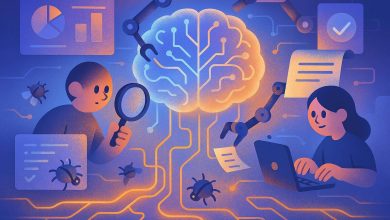
AI is evolving beyond simple chatbots into full workflow engines. Managers are building analytical machinery that automates essential, repetitive tasks and flags only when human attention is required. It’s like having a full team of analysts on call, without the overtime.
What happens when the cost of curiosity goes to zero?
The implications go far beyond productivity. When exploring markets costs virtually nothing, new opportunities emerge. Small-cap stocks, illiquid securities, and secondary transactions in alternative funds (like infrastructure or PE) become more transparent and liquid.
AI’s strength lies in its ability to aggregate fragmented information and ask the right follow-up questions. Markets that were once opaque, traded over-the-counter among specialized desks, are suddenly more accessible. Transparency, attractiveness, and liquidity – all increase simultaneously.
Will we eventually get AI Asset Managers?
You can drop the “eventually” part.
AI asset managers are already here. Managers are embedding their expertise into AI frameworks that replicate human strategies with increasing precision. Across asset allocation, commodity trading, and fundamental investing, the AI manager is already taking form. On Reflexivity, some users run prompts three to four pages long for each step of their analysis.
This is especially relevant for quant investing. Some of the oldest trading houses are feeding decades of proprietary code repositories to their in-house AIs in search of the next idea.
The human role is shifting from doing repetitive calculations to guiding, validating, and innovating. Like many other sectors, asset management has been transformed by AI – and we’re just at the beginning.
In conclusion?
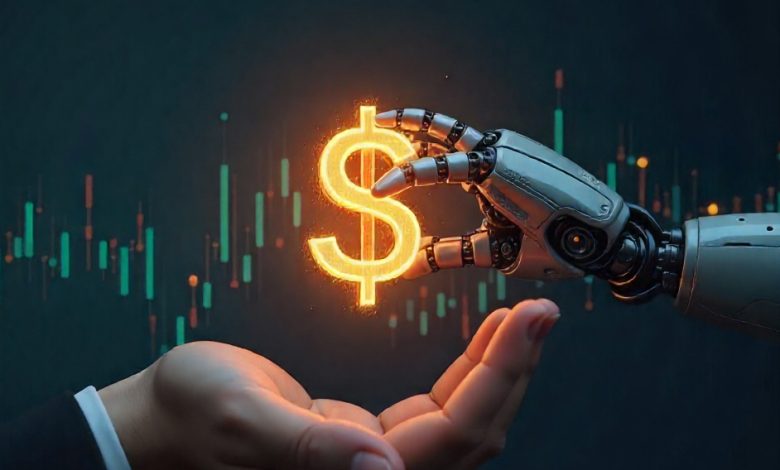
AI isn’t just a productivity tool. It lowers barriers to information, unlocks liquidity in previously illiquid markets, and accelerates strategy deployment. The future of asset management isn’t human or AI – it’s human plus AI, working together to navigate a rapidly evolving financial landscape.
But there’s a catch…
Like in a Marvel movie, we might be ending this article too soon … there’s a post-credits scene.
AI gives us hope for unprecedented productivity and – much like fracking did for the oil industry – dreams of untapped alpha. Yet we can’t forget that asset management is a heavily regulated world, and it’s regulation that will likely slow the tide before AI sweeps managers off their Bloomberg terminals.
How regulators will cope with AI is a fascinating question.
An initial phase of strict human oversight seems inevitable, likely starting with products aimed at institutional investors. As evidence mounts that AI systems can follow compliance rules even better than their human counterparts, regulators will grow more comfortable with AI-driven investment products. Eventually, we’ll see offerings for retail investors and, one day, the wheels will come off entirely.
One thing seems clear. If we can trust AI to drive our cars, we can learn to trust it to manage our money.