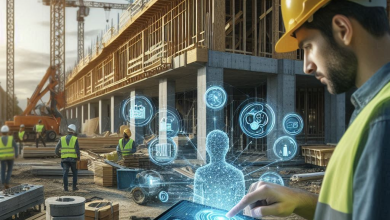
The decisions made before construction begins often determine a project’s cost, quality and risk profile. AI and 3D visualisation tools help teams make these decisions with greater clarity by converting drawings, assumptions, and technical data into reviewable, testable, and comparable models.
These tools are not intended to replace architects, engineers, consultants or contractors. Instead, they help these professionals to identify potential issues earlier, explain trade-offs more clearly and align stakeholders before changes become costly.
Instead of asking clients, investors and delivery teams to interpret various drawings, spreadsheets, schedules and specifications, pre-construction teams can use visual models and AI-assisted analysis to explore what the project might look like, how it might perform and how it might be built. This makes the decision-making process more collaborative and less dependent on guesswork.
Why Pre-Construction Needs Better Visual Clarity
The pre-construction phase is when teams make decisions regarding layout, massing, materials, facades, budgets, schedules, procurement and construction strategy. These decisions are often made under pressure and with incomplete information, with multiple stakeholders involved.
The problem with traditional project information is that it can be difficult to interpret consistently. For example, a developer may prioritise marketability, an architect may prioritise design intent, an engineer may prioritise performance, and a contractor may prioritise buildability. They may all be reviewing the same project, but they will not necessarily see the same risks.
3D visualization reduces this gap. It gives stakeholders a shared visual reference for scale, proportion, atmosphere, context, and technical relationships. Resources from studios such as Maverick Frame Studio show how architectural ideas can be presented before construction, helping teams discuss spaces and design options with more confidence.
Using visual models from the outset makes meetings less abstract. Teams can progress from asking “What does this drawing mean?” to “Does this solution work?”
How AI Supports Earlier Decisions
AI adds value by helping teams process more information, compare alternatives, and identify patterns that might be missed in manual reviews. During the pre-construction phase, for example, AI can support design analysis, clash prioritisation, cost comparisons, scheduling reviews and risk assessment.
AI-assisted workflows can, for example, evaluate whether design options meet requirements relating to daylight, energy, cost or space. They can also highlight discrepancies between drawings, model data, specifications and schedules.
However, this does not mean that AI should make decisions independently. The quality of the output depends on the quality of the data, the project context and the assumptions built into the tools being used. A technically competent team is still required to verify the results and apply professional judgement.
When used effectively, AI can help teams ask better questions earlier on. It can highlight where information is incomplete, where options differ, and where risks may be emerging before they reach the site.

Comparing Design Options Before Costs Are Locked In
One of the most powerful applications of AI and 3D visualisation is comparing options. Pre-construction teams often need to choose between several viable solutions, each of which has different consequences.
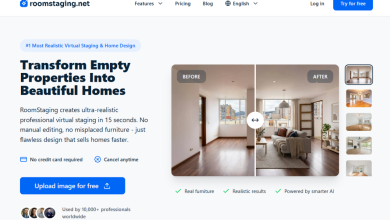
For example, a facade option may improve visual impact, but increase cost or lead time. A lobby design may enhance the arrival experience, but reduce the amount of usable space. In these cases, 3D interior rendering services can help teams assess layout, lighting, materials, furniture, and atmosphere before committing to a direction. A construction sequence may appear efficient on paper, yet create access conflicts. Similarly, a material choice may support the design concept, but complicate maintenance.
3D visualisation can help to make these options easier to understand. AI-supported analysis can provide an additional layer of insight by helping to compare performance, programme, cost and risk implications.
This is especially useful for exterior design decisions, where appearance, context, approval, budget, and constructability are closely connected. Using 3D exterior rendering services can help teams assess massing, materials, lighting, and surrounding context before committing to a final direction.
The goal is not to generate countless alternatives. Rather, the aim is to compare a focused set of realistic options using clearer visual and analytical evidence.
Improving Stakeholder Alignment
Many project delays occur because stakeholders agree too early without fully understanding the terms of the agreement. While a static drawing or technical schedule may be accurate, it may not effectively convey the intended experience, constraints, or trade-offs to all participants.
3D visualisation enables clients, investors, planners, consultants and contractors to discuss the same proposal in a more accessible format. It can demonstrate how a building fits into its surroundings, how key spaces are connected and the impact of design choices on perception and usage.
AI can support this process by summarising data, identifying inconsistencies, and helping teams focus on the most important decisions. Rather than spending meetings searching for problems, teams can use clearer evidence to resolve them.
This is particularly useful when non-technical stakeholders are involved. A visual model can help non-technical stakeholders to understand complex decisions without oversimplifying the project.
Reducing Risk Before Construction Begins
Unresolved coordination issues can often mask pre-construction risks. For instance, a ceiling void might not provide sufficient space for services. A facade detail may be difficult to install. A plant area may be technically compliant yet difficult to maintain. A site logistics plan may appear acceptable until the construction sequence is visualised.
AI and 3D visualisation can help highlight these issues. A model can reveal spatial conflicts, sequencing issues, access constraints, and visual inconsistencies. AI-assisted checks can identify instances where project information does not align.
It is important to identify these issues early on, as the cost of changes increases as a project progresses. During construction, changes can affect procurement, labour, the programme, claims and client confidence. During the pre-construction phase, many issues can be resolved through coordination and design adjustments.
However, better visibility does not eliminate all uncertainty. Nevertheless, it reduces avoidable uncertainty and gives teams more time to respond.
Avoiding False Confidence
If not used with clear controls, AI and 3D visualisation can also pose risks. For example, a photorealistic image may give the impression that a project is complete when technical decisions are still unresolved. Similarly, an AI-generated recommendation may seem objective even if it is based on incomplete or outdated information.
Therefore, teams should define the purpose of each model, render or analysis. Is it for concept approval, planning, investor communication, technical coordination, or construction sequencing? Each use requires a different level of detail and reliability.
It is also important to explain what a visualisation does not show. For example, a visualisation may communicate design intent, but not confirm buildability. Similarly, a model may show the geometry of a design but not include final procurement or maintenance data.
The most effective workflows maintain a connection between visual communication and technical validation.

What Good Implementation Looks Like
A robust pre-construction workflow starts with the decision-making process rather than the tools used. First, teams should identify areas where more evidence is required, such as for design approval, facade selection, cost planning, sequencing, logistics, stakeholder communication or risk review.
Once this is clear, AI and 3D visualisation can be applied more effectively. Early-stage visuals can facilitate discussions about massing and concepts. More developed models can support coordination and pricing. Simulations can support sequencing, access and construction planning.
The process should remain practical. The most visually impressive outputs are not necessarily the best. Instead, the best ones are those that help teams make clearer decisions at the right moment.
The Future of Pre-Construction Decisions
The pre-construction process is becoming more visual, data-driven and collaborative. AI can help teams analyse information more quickly, and 3D visualisation can help them to understand and communicate its meaning.
These tools make it easier to compare options, identify risks, and develop a shared understanding of the project before significant costs are incurred. While this does not eliminate the need for professional judgement, it provides better support for it.
The result is a more transparent decision-making process. Teams can see more clearly what is being proposed, what trade-offs are involved, and what issues need to be resolved before construction begins. In a project environment where late changes are costly, this clarity is becoming an essential part of responsible pre-construction planning.