Abstract
Enterprises today operate within increasingly interconnected digital environments where incidents, workflow tasks, operational signals, and user interactions continuously circulate across multiple business domains. Yet most organizations still depend on fragmented tools, manually coordinated workflows, and static rule engines that cannot adapt to changing operational realities. This article introduces a vendor-neutral, multi-layer Autonomous Enterprise Brain (AEB) — an intelligent decision-orchestration architecture designed to unify enterprise cognition, anticipate issues, and autonomously recommend or execute next-best actions across workflows.
1. Problem Statement
1.1 Fragmented Workflows
Most enterprise processes span multiple business domains, creating operational silos. A single event may trigger engineering, operations, finance, and user-facing support activities that lack synchronized context.
1.2 Static Rule Engines
Traditional rule-based prioritization cannot adapt to evolving behavior, seasonal trends, or unknown scenarios, resulting in decision degradation as systems scale.
1.3 Human Decision Fatigue
Analysts experience exponential growth in incidents, alerts, and user requests. Cognitive overload leads to slower responses and inconsistent prioritization.
1.4 Absence of Enterprise Memory
Organizations rarely maintain a unified understanding of decisions, actions, and outcomes. Without structural memory, systems cannot learn or optimize.
2. Architecture Overview: The Autonomous Enterprise Brain (AEB)
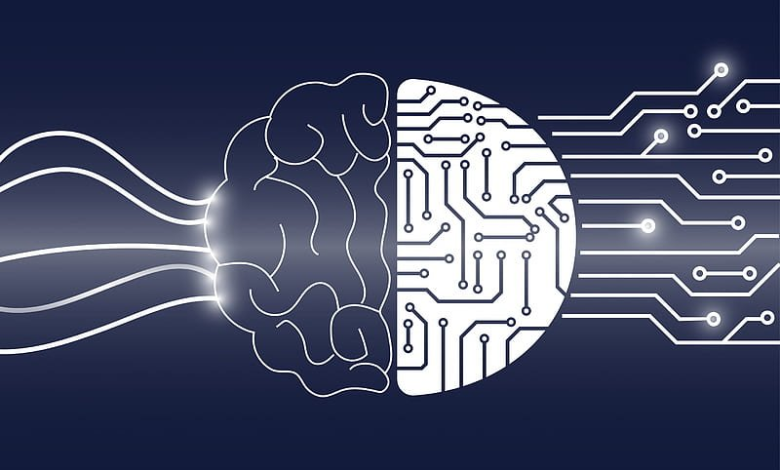
The AEB is a cognitive, closed-loop enterprise intelligence system modeled after biological cognition. It consists of five core layers:
- Signal Layer (Perception)
• Interpretation Layer (Understanding)
• Decision Layer (Reasoning)
• Action Layer (Execution)
• Memory & Learning Layer (Evolution)
3. Layer-by-Layer Technical Breakdown
3.1 Signal Layer (Perception System)
This layer captures incidents, alerts, logs, telemetry, workflow deviations, and user queries. It normalizes and contextualizes raw inputs for downstream processing.
3.2 Interpretation Layer (Semantic & Contextual Understanding)
This layer applies semantic categorization, clustering, and pattern detection to derive contextual meaning from enterprise signals.
3.3 Decision Layer (Next-Best Action Reasoning)
This core reasoning layer prioritizes events, predicts impact, and recommends action paths using probabilistic and reinforcement models.
3.4 Action Layer (Autonomous Execution)
This layer handles secure and governed execution — updating tasks, initiating workflows, notifying stakeholders, or escalating critical items.
3.5 Memory & Learning Layer (Enterprise Knowledge Cortex)
This layer stores enterprise history, identifies long-term patterns, and enables continuous system improvement through feedback and retraining.
4. Core Components of the Autonomous Enterprise Brain
4.1 Knowledge Graph Backbone
Represents relationships across users, events, decisions, dependencies, and workflows.
4.2 Decision Models Repository
Contains modular reasoning models for priority scoring, classification, impact estimation, and action selection.
4.3 Action Policy Engine
Determines safe boundaries for autonomous actions, human approval points, and escalation paths.
4.4 Enterprise State Synchronizer (Digital Twin Concept)
Maintains a real-time representation of enterprise health and workflow status.
4.5 Observability Layer
Ensures transparency through logs, reasoning chains, explanation dashboards, and confidence scoring.
5. Benefits of an Autonomous Enterprise Brain
5.1 Faster and Consistent Decisions
AI-driven reasoning reduces delay and ensures uniform decision quality.
5.2 Improved Prioritization Accuracy
Context-aware models generate more accurate evaluations than static logic.
5.3 Reduced Cognitive Load on Teams
Teams focus on strategic problem-solving instead of repetitive triage.
5.4 Predictive Insight
Models identify emerging patterns and risks earlier than traditional monitoring.
5.5 End-to-End Coordination
Breaks silos by integrating context, reasoning, and execution across domains.
5.6 Continuous Evolution
Feedback loops ensure that the system learns and adapts over time.
6. Governance and Responsible AI
6.1 Explainability
Decisions must be transparent and interpretable.
6.2 Human Control
High-risk actions should require human review.
6.3 Fair and Unbiased Models
Data must reflect fairness and avoid reinforcing historical biases.
6.4 Privacy Controls
Sensitive signals must be managed with strict protections.
6.5 Ethical Autonomy Boundaries
Define clear scope for what the system may execute independently.
7. Conclusion
The Autonomous Enterprise Brain represents the future of scalable enterprise intelligence. By integrating layered signal processing, contextual reasoning, autonomous execution, and continuous learning, organizations can shift from reactive operations to predictive, adaptive, and resilient ecosystems.
References
- Russell, S., & Norvig, P. (2021). Artificial Intelligence: A Modern Approach.
- IEEE Global Initiative on Ethics of Autonomous Systems. Ethically Aligned Design.
- European Commission. Ethics Guidelines for Trustworthy AI.
- Journal of Artificial Intelligence Research. Hybrid Predictive–Generative Decision Models.
- ACM Research. Cognitive AI Architecture Studies.
- Nature Machine Intelligence. Context-Aware Reasoning Models.