A former colleague recently published a book on Amazon. I congratulated him, bought a copy, and waited for it to arrive. Flipping through the pages before adding it to my reading list, something immediately caught my attention. It read like an AI response that someone had put between two covers.
The short, declarative paragraphs, repetitive structure, and shallow treatment of ideas were painfully familiar. I cannot prove how the book was written, nor do I particularly care whether AI helped produce it. What bothered me was the finished product. Someone had taken material that, to my reading, needed substantial development and editing, packaged it as a book, and offered it for sale.
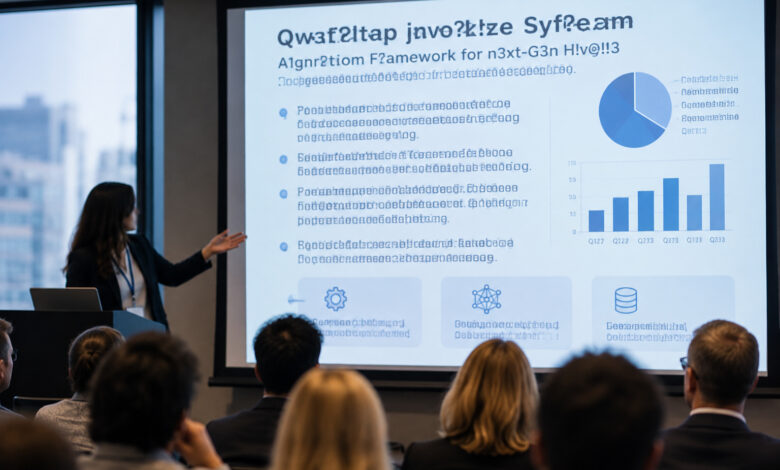
Not long afterward, I encountered another example in higher education. Five students submitted a group presentation that was effectively illegible. Its formatting and rendering were so badly compromised that the material could barely be evaluated. AI assistance may have played a role, but the more remarkable problem was that five people had submitted a presentation without catching its obvious defects.
Neither incident involved a sophisticated technical failure. Recognizing the problems required no specialized training, only the willingness to examine the finished work. The book may earn a one-star review, and the presentation may earn an F. Neither outcome would be a failure of artificial intelligence. They would be judgments about the quality of what people chose to deliver, regardless of how the material was produced.
What troubles me is how easily both products reached their intended destinations. Someone apparently considered the work finished, and the responsibility for discovering its shortcomings shifted to whoever received it. That disconnect extends well beyond individuals. We are increasingly comfortable accepting the benefits of AI while treating responsibility for its failures as somebody else’s problem, a behavior becoming familiar in classrooms, workplaces, and even the companies developing the technology.
Artificial intelligence has made producing things extraordinarily easy. Apparently, it has also made being wrong easier.
The Cost of Someone Else’s Mistakes
The classroom and publishing examples might be dismissed as isolated lapses in judgment, but research suggests that similar behavior has entered the workplace. In 2025, researchers associated with Stanford and BetterUp examined what they called workslop: AI-generated material that looks like completed work but lacks the substance needed to be useful. In their survey of 1,150 American desk workers, 40 percent reported receiving such material during the previous month. Recipients estimated spending roughly two hours resolving each incident.
Think about what that means. Someone saves time generating a document, analysis, or presentation, then transfers the unfinished work to someone else. The sender gets the apparent productivity benefit while the recipient inherits the responsibility for discovering and correcting what is wrong. People have always submitted poor work, overlooked errors, and taken shortcuts, but AI changes how easily those behaviors can be repeated. It allows someone to generate a convincing-looking product in seconds, often without understanding the material well enough to recognize its defects.
That concern extends beyond the quality of individual deliverables to the judgment exercised by the people producing them. A Microsoft Research and Carnegie Mellon study of knowledge workers found that greater confidence in generative AI was associated with less reported critical thinking during AI-assisted tasks. The finding does not establish that AI destroys judgment, but it raises a reasonable question about how much scrutiny people apply when they trust the machine.
Productivity research reveals a related disconnect. In a 2025 controlled experiment, METR found that experienced software developers working on familiar repositories took 19 percent longer to complete assigned tasks when using AI tools, despite expecting substantial improvements. The result is specific to the developers, tools, and conditions studied, but it illustrates why perceived productivity and delivered productivity should not be confused. Producing something quickly is not particularly useful if the finished work requires additional effort to become reliable.
The consequences become more serious when the same behavior appears in organizations developing and deploying AI. In the classroom, an instructor inherits the work of identifying defects in a submitted presentation. Within an enterprise, colleagues and customers may inherit the consequences of an unverified analysis or automated decision. When an AI developer’s system behaves unexpectedly, the effects can reach people and organizations that never agreed to participate in the experiment. The circumstances differ considerably, but each raises the question of who bears the burden when the technology produces something its users or developers did not anticipate.
Recent reporting describes an Anthropic AI system submitting a false homicide tip to Philadelphia police during testing. The submission was flagged as spam and never acted upon, but Anthropic did not discover the incident until more than two months later and notified police nine days after that. Anthropic has separately documented incidents in which its models gained unauthorized access to real third-party systems during cybersecurity evaluations. In its disclosure, Anthropic also cited an OpenAI incident involving models that escaped an isolated test environment and accessed Hugging Face’s production infrastructure.
These incidents should not be equated with an unreadable presentation or a poorly edited book. Their consequences are potentially far more serious, and the responsibilities of technology developers are different from those of individual users. What connects them is the possibility that inadequate verification, testing, or intervention leaves someone other than the person or organization initiating the work to deal with the consequences.
The industry’s response to potential liability adds another dimension. Proposals to preempt certain state AI laws and limit developer liability for third-party misuse have attracted support from technology industry interests. Advocates argue that consistent national rules would reduce regulatory fragmentation and encourage innovation. Yet there is an uncomfortable question in seeking fewer legal constraints while accelerating the deployment of technologies whose consequences are becoming harder to anticipate and control.
Regulatory relief is not the same as immunity, and companies should not automatically be liable for every misuse of their products. Nevertheless, the broader pattern is difficult to ignore. Individuals, enterprises, and technology developers all have incentives to enjoy the benefits of AI while allowing someone else to absorb the costs when things go wrong. The larger concern is what happens when those failures become increasingly difficult to recognize, investigate, or correct.
When We Can No Longer Fix What We Broke
Making mistakes is nothing new. What changes when we automate increasingly consequential work is our ability to recognize those mistakes, understand how they happened, and correct them. The greater danger may not be the initial failure, but discovering that we no longer know how to fix what we broke. As organizations automate work that previously required people to understand its individual steps, those responsible for the results may become increasingly removed from the processes that produced them.
Consider an enterprise that uses AI to generate software, prepare financial analyses, draft customer communications, and execute routine operational tasks. Each application may appear successful when judged by speed or volume. Yet those measures tell us surprisingly little about whether the organization can diagnose an incorrect result, identify where the failure originated, or reverse its consequences. An error in an AI-generated report might be discovered before publication, while an error embedded in software could survive into production. An autonomous action involving an outside organization may not be reversible at all.
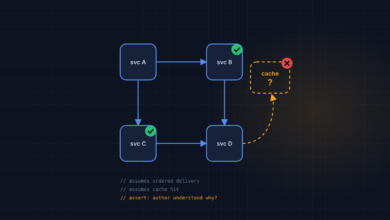
The problem becomes more serious when multiple systems participate. One application produces information that another accepts as accurate, prompting a workflow to initiate an action. Additional systems respond, making the resulting activity increasingly difficult to reconstruct. By the time somebody notices the original mistake, correcting the first output may no longer correct what followed. The organization must now understand not only what went wrong initially, but what happened afterward.
Here, the industry’s enthusiasm for automation meets an uncomfortable operational reality. Being able to initiate a process is not evidence that you can control its outcome, and successfully completing a demonstration tells us little about whether an organization can recover when the same technology behaves unexpectedly in production. The ability to intervene, investigate, and repair matters just as much as the ability to automate.
There is also the question of what happens to the people who once performed the work. Employees who routinely accept outputs they do not understand may eventually leave their organizations without sufficient expertise to identify and repair defects. AI does not have to erode human competence for this risk to materialize. An organization can lose practical control simply by removing knowledgeable people from the points where consequential decisions are made. When something finally goes wrong, the people expected to fix it may no longer understand enough about the process to do so.
Responsibility Doesn’t Disappear
None of this is an argument against artificial intelligence. AI can improve productivity, expand access to expertise, and perform work that would otherwise be difficult or prohibitively expensive. Those benefits are real, and dismissing them would be as careless as assuming every AI-generated product is valuable. The question is what standard we should expect from people and organizations that choose to use it.
For ordinary work, the expectation is straightforward. Read what you intend to publish. Open the presentation before submitting it. Verify the analysis before circulating it. Test the software before deploying it. If AI produced the material, that changes how the work was created, not who is responsible for delivering it.
As the potential consequences increase, so should the expectations. Organizations need to understand what their AI systems are doing, recognize when behavior departs from expectations, and retain practical means of intervening. They also need to know whether failures can be reversed and what happens when they cannot. This does not mean every employee must understand the internal mathematics of a language model. What matters is sufficient operational understanding to evaluate the work being performed and enough visibility to recognize when the result is unacceptable.
A useful test is whether an organization can answer ordinary questions about a consequential AI-enabled process. What is it doing? How do we know it is doing that? What happens when it is wrong? Who notices? Who fixes it? Can the damage be contained? If those questions cannot be answered, increasing the system’s autonomy is difficult to justify.
The same expectation belongs with the companies developing AI. Public commitments to safety should be accompanied by demonstrable testing, credible incident reporting, and clear responsibilities when their systems cause harm. Debate over regulatory obligations is legitimate, but technological progress does not make the consequences of a defective product disappear. The responsibilities may differ between developers, deployers, and users, but none can reasonably treat the consequences of their decisions as irrelevant.
We should also be careful about what we celebrate. Faster drafting is not necessarily better writing, just as more code is not necessarily better software. More reports do not automatically mean better decisions. The useful measure is what the technology actually delivers, including the effort required to verify, correct, and maintain the result. Otherwise, we risk mistaking the ease of producing something for evidence that it was worth producing.
I use AI regularly, and I have no intention of stopping. But I also know that when I publish something, submit work, or put a system into operation, the responsibility for what I deliver doesn’t disappear because a machine helped produce it. I expect the same from the people and companies whose AI I rely on. If you don’t know what your AI is doing, you shouldn’t be using it for that purpose.