The generative AI boom is hiding a massive, rapidly compounding tax: the exorbitant cost and scarce supply of the memory hardware required to actually run the models.
As enterprise AI applications shift from basic chatbots to autonomous agents executing complex, multi-step tasks in real time, the inference phase of AI is threatening to break IT budgets. Now, a new partnership backed by over a billion dollars in recent financing is looking to rewrite the economics of AI infrastructure.
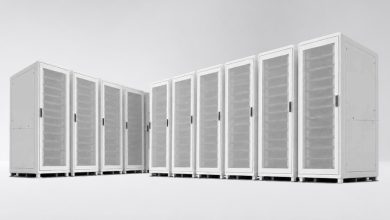
Positron AI, an AI chip startup that recently banked a massive $875 million Series C, has announced a sweeping strategic agreement with General Compute, a neocloud provider. Under the terms of the deal, General Compute will purchase and deploy Positron’s current-generation Atlas inference systems by Q1 2027, while making a firm commitment to buy its next-generation Titan systems at scale.
The partnership is a direct challenge to the dominant, GPU-centric infrastructure model that relies heavily on High-Bandwidth Memory (HBM) and CoWoS packaging, supply chains that are notoriously constrained and controlled by a handful of global players.
“Inference demand is exploding, and the frontier has moved to models with trillions of parameters that have to respond in real time,” Mitesh Agrawal, CEO of Positron AI, noted. “Because Positron’s architecture is uniquely memory-first, we can support a build-out at massive scale without waiting on the scarce HBM supply that is holding back the rest of the industry.”
The Economics of Heterogeneous Computing
For enterprise customers, the cost of AI inference is fundamentally a token generation problem. Moving massive model weights and expansive context windows to the processor quickly enough requires immense memory bandwidth and capacity. Traditional GPU configurations often force companies to over-provision expensive compute resources simply to get enough memory, resulting in bloated total cost of ownership (TCO).
General Compute, which recently secured a $400 million debt facility from Upper90, is pioneering a different business model to solve this. Pitched as the ‘neocloud for alternative chips’, the company finances, deploys, and operates purpose-built silicon under a single contract and set of SLAs.
By integrating Positron’s Atlas systems alongside traditional Nvidia GPUs, General Compute is enabling heterogeneous, disaggregated inference. This allows customers to route compute-heavy prompt processing to GPUs while offloading the memory-intensive token generation to Positron’s specialized accelerators.
“Our mission is to deliver the best neocloud that includes GPUs and alternative chips under one roof. Deliberately pairing AI use cases with optimal architecture and chips for the tasks they need. All under one contract and set of SLAs for our customers,” said Finn Puklowski, co-founder and CEO of General Compute. “Positron AI’s architecture is a game-changer for rapidly speeding up tokens and inference. Adding Atlas and Titan to our racks delivers this for our customers.”
The Path to Titan and Asimov
While the immediate rollout of Atlas in Q1 2027 will bring Positron’s LPDDR-based architecture to General Compute’s customers, the long-term play hinges on Titan.
Titan is Positron’s next-generation platform, powered by ‘Asimov’, a custom inference silicon scheduled to tape out in late 2026, with full-scale production slated for the second half of 2027. Titan is engineered to combine multi-terabyte memory capacity with hyper-fast token generation, keeping massive frontier models entirely in memory to slash the latency of storage offloading.
According to Positron, Titan is designed to deliver an order of magnitude better throughput per dollar on multi-trillion-parameter models compared to anything currently on the market.
As the AI industry matures, the focus is shifting rapidly from the raw capability of foundational models to the sustainable unit economics of deploying them. By decoupling inference performance from the global HBM bottleneck, Positron AI and General Compute are positioning themselves to capture the enterprise market that wants frontier AI capabilities without the frontier price tag.