The conversation around AI in enterprise settings tends to cluster around software: demand forecasting, customer service automation, document processing. But some of the most impactful AI deployments in 2026 are happening in physical infrastructure — and the lessons from these deployments are relevant to every organization that manages buildings.
Consider the automatic door. It is arguably the most frequently used mechanical system in any commercial building, cycling hundreds of times per day. When it fails, the consequences are immediate: security gaps, accessibility failures, energy loss, and costly emergency repairs. For decades, the industry’s response to failure was reactive. That is now changing, and the implications extend far beyond door hardware.
The Data Layer Beneath the Door
Modern automatic door operators from brands like Dormakaba, Geze, and Record are increasingly equipped with embedded sensors that monitor motor current, belt tension, cycle counts, ambient temperature, and vibration patterns. These data streams feed into cloud or edge-based analytics platforms that can predict component failures days or weeks before they occur.
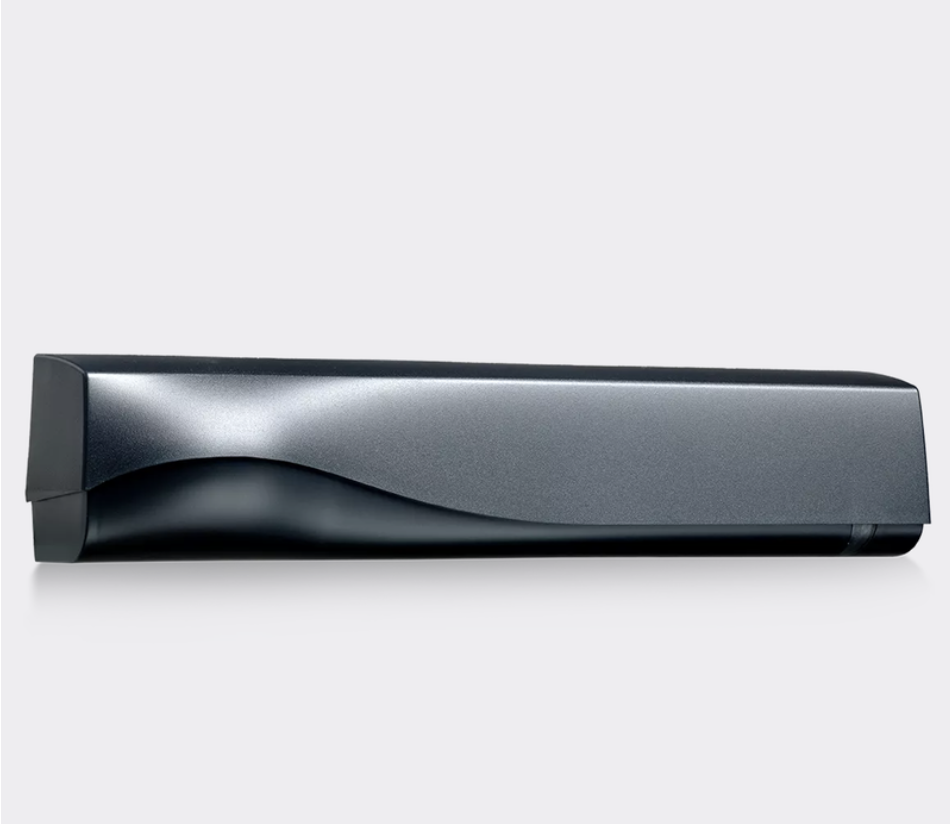
Modern sensors like the BEA IXIO-DT1 combine radar and laser scanning to create adaptive 3D detection zones — generating the data layer that feeds predictive maintenance algorithms.
The architecture is familiar to anyone who has studied industrial IoT: sensor → gateway → analytics engine → alert system. What makes it notable in the automatic door context is the accessibility. Unlike factory-floor IoT deployments that require seven-figure investments, door-level predictive maintenance can be implemented incrementally — one building, one door at a time.
The Manufacturing Backbone
The viability of this approach depends on a factor that rarely makes headlines: the contract manufacturers that produce the components. These companies — the ones making the motors, controllers, and sensor arrays for brands like Assa Abloy, Gilgen, and BEA — are the ones embedding IoT capability into the hardware layer.
DoorDynamic, a contract manufacturer serving several of the industry’s leading automatic door brands, illustrates this shift. Beyond producing standard replacement parts, the company is integrating smart-compatible components — controllers and sensor systems designed to work with existing door infrastructure while adding predictive maintenance capabilities. The fact that a contract manufacturer, not the end brand, is driving this innovation is significant. It suggests that the intelligence layer in physical infrastructure is migrating downstream, closer to the components themselves.
What Enterprise Leaders Should Notice
The automatic door case study offers three lessons for enterprise technology leaders managing physical assets:
First, the ROI of predictive maintenance in physical infrastructure is measurable and fast. Early adopters report 30-40% reductions in unplanned downtime events, with payback periods under 18 months. For organizations managing portfolios of buildings, the aggregate savings are substantial.
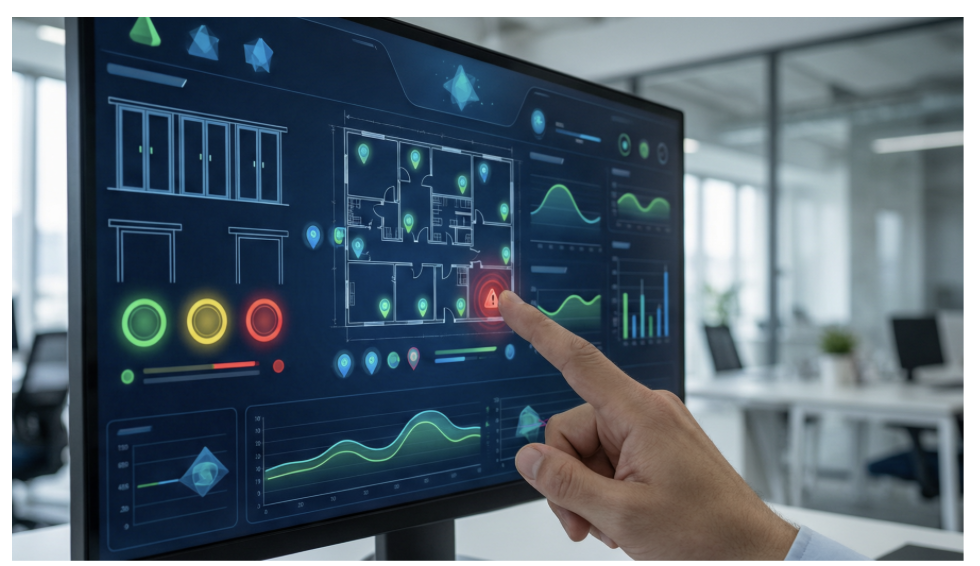
Enterprise building management dashboards aggregate sensor data from automatic doors, HVAC, and other physical systems — enabling predictive alerts, cycle tracking, and energy optimization in a single interface.
Second, the supply chain for smart physical infrastructure is more flexible than assumed. The availability of certified compatible components — from manufacturers like DoorDynamic — means that upgrading to IoT-enabled hardware does not require committing to a single brand’s ecosystem. Compatible smart sensors and controllers can be mixed with existing OEM systems.
Third, the data generated by physical infrastructure has value beyond maintenance. Door cycle data informs space utilization analysis. Entry pattern data feeds security analytics. Energy consumption data supports sustainability reporting. The door is not just a door — it is a data source.
The Broader Pattern
What is happening with automatic doors is a microcosm of a larger shift. Across physical infrastructure — HVAC, elevators, fire suppression, lighting — AI-driven predictive maintenance is moving from novelty to standard practice. The enablers are the same in each case: affordable sensors, cloud analytics, and contract manufacturers willing to embed intelligence into commodity components.
For enterprise leaders, the strategic question is not whether to adopt these technologies. It is whether the organizations managing their physical assets are prepared to leverage them.