This past year, Doximity surveyed more than 3,000 physicians in the U.S. across two periods, finding that 94% today are either using AI or interested in doing so.
The specific uses tell you more than the top-line number: 87% want AI for literature search, 86% for drafting patient support letters, and 84% for patient education. Those aren’t diagnostic work, rather they’re communication tasks, and it’s medical communications that’s absorbing AI adoption first in life sciences.
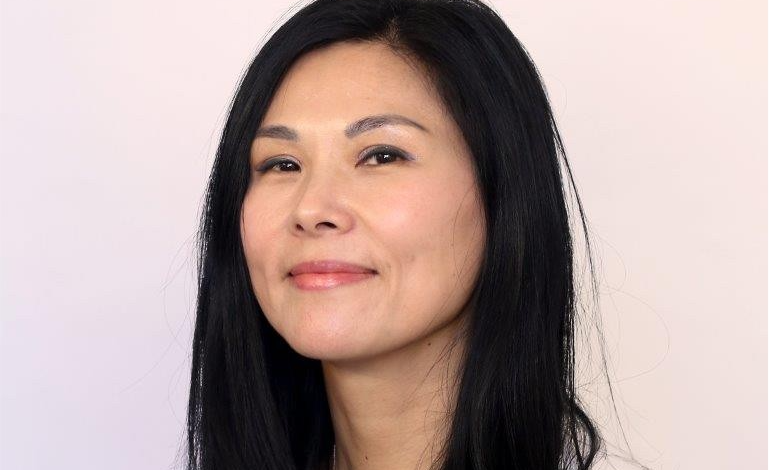
That’s the backdrop for Prezent Vivo’s announcement this month that Alice Choi (article’s featured photo) is joining as the company’s COO.
Choi spent her earlier career at McCann Health and across the Omnicom network, working in commercial leadership. She earlier began in academia, earning a master’s degree and PhD before moving into medical communications, and has led teams delivering programs for biopharma clients from the inside of that system.
Her prior experience should be an important asset here. A BBSW AI Committee survey of 60 senior data leaders in biotech and pharma R&D found AI now part of daily work at most organizations, but only one in three has moved beyond pilots to enterprise-scale deployment. The bottleneck, according to that survey, isn’t ideas. It’s the delivery system, including privacy, integration and regulatory uncertainty.

Organizations with governance and data foundations already in place were found to be nearly 10 times more likely to reach scale than those without.
Medical communications agencies sit right in the middle of that intersection. A congress poster or an advisory board deck has to clear medical, legal, and regulatory review before it reaches a physician, and that review process is exactly what makes agency work slow and, per Prezent Vivo’s own figures, expensive enough that senior experts spend up to 40% of their time on production work like formatting and first drafts rather than scientific strategy.
Said Rajat Mishra, Co-Founder and CEO of Prezent Vivo, “At Prezent Vivo, Alice leverages her industry knowledge to help us understand where AI can create meaningful value across medical communications.”
“Her combination of deep medical communications connectivity and hands-on operating and commercial experience makes her a powerful force in expanding Prezent Vivo’s presence in the market,” added the executive.
Francine Carrick, who joined as President when Vivo launched after 22 years in medical communications herself, framed it similarly: “Alice’s understanding of our customers and the evolving medical communications landscape will be invaluable as we scale. She brings a unique ability to connect scientific rigor, creative storytelling, customer needs, and operational execution.”
The 2026 Medical Affairs Benchmark Report, drawing on more than 40 pharma and medtech organizations, and separate surveys from the Medical Science Liaison Society, point to the same pattern the BBSW data shows in R&D: interest in AI across medical affairs and communications is now close to universal, and the open question has moved from whether to adopt it to who can operationalize it inside a regulated workflow without breaking compliance.
Sara Rodrigues, an Associate Director of Medical Affairs at Vertex, described at a recent PharmaBrands event how her team built AI agents trained exclusively on approved sources specifically because an agent trained on anything looser wouldn’t survive review. That’s the same constraint Prezent Vivo is building around.
Prezent Vivo has reported working with more than 150 life sciences companies, including 45 of the top 50 biopharma organizations, since Prezent launched five years ago.