Introduction
An orange tabby notices a crescent reflected in a rooftop bowl. When the light slips away, the cat follows it across wet tiles and onto a hanging sock. I used an AI video generator to tell this 32-second story through familiar feline behavior: sniffing, crouching, tugging, and looking up. Keeping the animal realistic lets one unusual detail—the wandering moonlight—carry the fantasy and the final reveal.
Why the Story Needs a Clear Goal and Reversal
A short animal story needs a goal the viewer can recognize, a pursuit that becomes harder, and a final image that changes the meaning of the chase. Those three beats create momentum without requiring dialogue.
Here the orange cat follows a reflected crescent across a wet rooftop, pulls it from a sock, and finally looks up at the real moon. The reversal works because the cat remains curious and physically believable throughout.
Keep the Cat Movement Realistic
The first creative decision was also the strictest: every action had to be plausible for a real cat. The tabby could approach, sniff, tap with one paw, crouch, follow a moving point of light, grip loose fabric with its mouth, and turn its head toward the sky. It could not stand upright, use its forepaws as hands, perform a human gesture, or suddenly acquire a cartoon expression.
That constraint made the fantasy cleaner. Instead of asking the animal to sell the joke, I asked the environment to carry it. The crescent reflection becomes the only supernatural actor. It moves from water to roof tile, climbs to a clothesline, hides on a sock, and finally reveals the real moon above. The cat remains the audience’s believable guide through an unbelievable event.
For anyone using an AI animation generator with animals, this is a useful order of operations: define the species-appropriate behavior first, then add one visual exception. If every element is magical, there is no stable reality for the twist to disrupt.
Keep Four Visual Details Consistent
Before generating motion, I wrote four promises that every clip had to keep.
1. The animal promise
The same adult orange tabby appears throughout, with a white chin, white front paws, amber eyes, a teal collar, and realistic proportions. These anchors are more dependable than a vague instruction such as “same cat.”
2. The place promise
All action occurs on the same rain-darkened rooftop at blue hour. Terracotta tiles, a low brick parapet, warm apartment windows, and a clothesline establish a compact geography. The viewer should understand where the bowl, chase path, and sock exist relative to one another.
3. The light promise
The sky always contains a small crescent moon, never a full moon. Its reflection has a cool silver-blue glow. The moon itself stays distant and restrained while the reflected crescent may move like a bright ribbon across wet surfaces.
4. The cloth promise
The sock is lightweight enough for a cat to pull with its mouth. It hangs low, slips free under tension, and falls naturally. The fabric—not the cat’s anatomy—provides the exaggerated motion at the climax.
These details give the image-to-video generator concrete objects, positions, materials, and movements to carry from one scene to the next.
Watch the Complete Rooftop Story
Scene 1: Curiosity Begins in Water
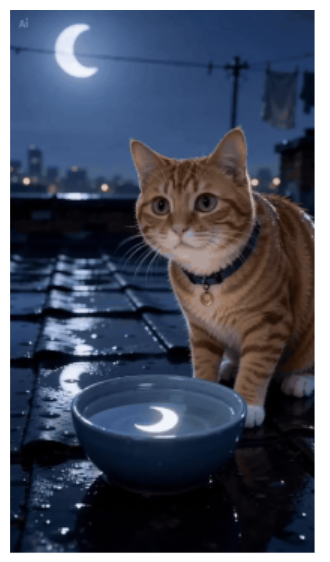
The tabby approaches a cobalt enamel bowl and studies the small crescent reflected in the rainwater. A tentative paw tap is enough to begin the story; there is no need for narration or a title card.
Scene 2: A Ripple Opens the Chase
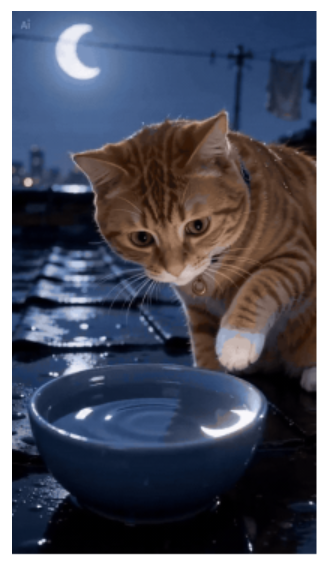
Ripples bend the crescent, which slips over the rim as a narrow streak of light. The cat’s attention transfers from bowl to rooftop before the cut. That shared direction of gaze creates the handoff into the chase.
Scene 3: Curiosity Becomes Pursuit
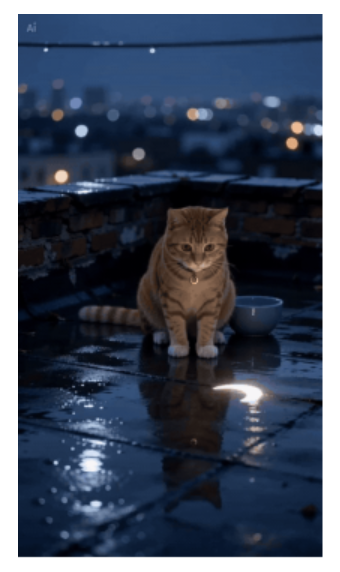
The silver streak skims across wet terracotta. The tabby follows low to the ground, moving with cautious feline steps rather than sprinting like a human-shaped mascot. Reflections on the tiles keep the magical object legible without turning the whole setting into fantasy.
Scene 4: The Trail Changes Height
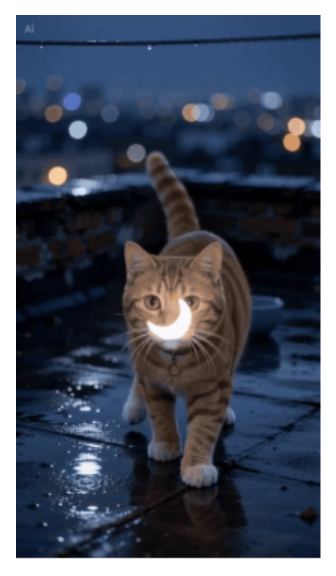
The light rises toward the clothesline. The cat stops and looks up, creating a natural pause between horizontal chase and vertical discovery. This beat also lets the audience register the sock before it becomes important.
Scene 5: A New Object Inherits the Mystery
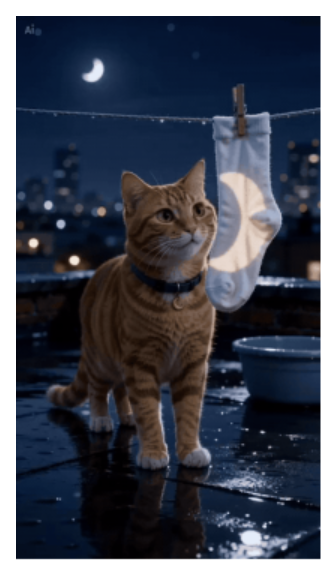
The crescent settles onto a white sock. The cat approaches, sniffs, and chooses the loose fabric as its next target. The action stays grounded: an ordinary animal investigates an ordinary object carrying an extraordinary mark.
Scene 6: The Cat Pulls With Its Mouth
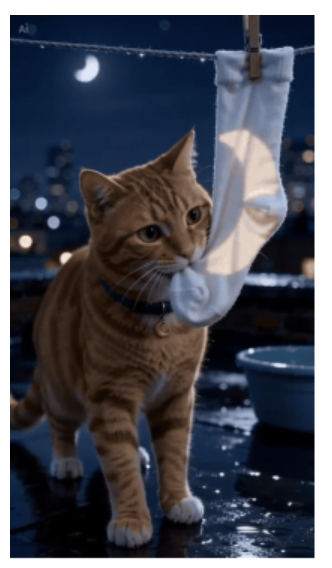
The tabby grips the sock with its mouth and shifts backward on all four paws. The tension travels through the jaw and neck into the fabric, making the tug feel like ordinary feline behavior.
Scene 7: The Apparent Prize Falls Away
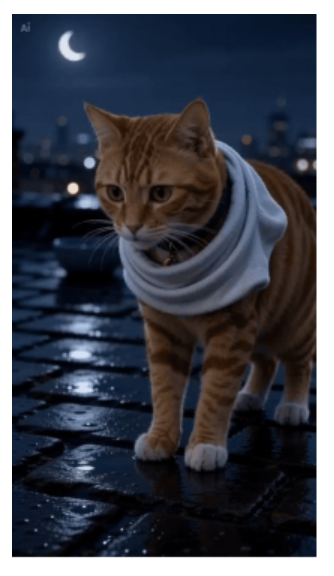
The sock slips from the line and drops. For a moment, the moving moonlight seems to have been caught. Then the fabric settles and the glowing crescent remains as a print, turning a simple chase into a tiny discovery.
Scene 8: The Final Look Reframes the Chase
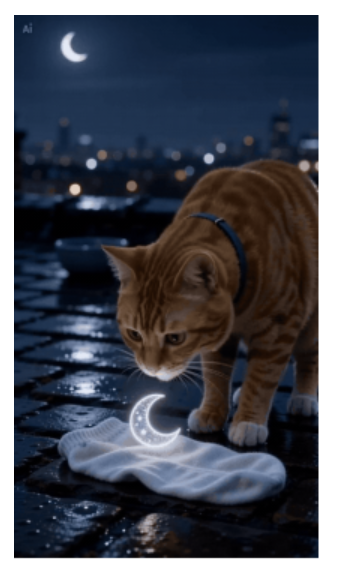
The cat looks from the marked sock to the same small crescent overhead. The moon has not been stolen; the rooftop adventure has produced an echo of it. The restrained ending gives the audience space to connect the two shapes.
Why a Realistic Cat Makes the Fantasy More Believable
Photorealism does not automatically make an AI scene better. It works here because the humor depends on contrast. A stylized character could plausibly pocket moonlight, ride a scooter, or address the camera. A real cat cannot. When a convincingly ordinary tabby encounters a reflection that behaves incorrectly, the visual contradiction arrives faster.
Realism also shifts the emotional tone. The scene feels observed rather than performed. Small details—the wet fur edges, paw hesitation, ear direction, and tension on cloth—invite viewers to read familiar animal behavior. That recognition gives the reveal a gentle, almost accidental charm instead of the cadence of a scripted gag.
For a realistic look, pay attention to the small physical connections: paws meeting tiles, ears following the light, and cloth responding to the mouth grip. These details keep the rooftop encounter grounded.
Write Prompts for Natural Cat Movement
I found it more reliable to build prompts in a physical order:
- Identity: species, age, coat pattern, eye color, collar, and proportions.
- Posture: all four paws on the roof, low crouch, head angle, and tail position.
- Action: one verb at a time—sniffs, taps, follows, grips, tugs, releases, looks.
- Force: what causes movement, such as jaw tension pulling lightweight fabric downward.
- Environment response: water ripples, wet tiles reflect, the sock stretches, the line rebounds.
- Camera rule: low cat-height framing, restrained tracking, stable horizon, and no sudden zoom.
- Negative constraints: no upright stance, no human hands, no extra limbs, no talking, no costume change, and no full moon.
This grammar converts a mood into an event that has causes and consequences. It also makes revision specific. If the cat stands up, the correction belongs in posture and negative constraints. If the sock floats, the missing information is force and environment response.
Keep the Tug and Moon Shape Consistent
Describe the cat gripping the sock with its mouth while all four paws remain on the roof. A backward weight shift explains the tension in the cloth and gives the tug a familiar feline posture.
Keep the distant moon a small crescent in every reference and prompt. The final comparison depends on recognizing the same shape on the sock and in the sky.
Create the Rooftop Scenes in CapCut
Upload a prepared rooftop image to CapCut’s AI video generator and use it as the starting point for the first scene. Choose a realistic style and portrait framing that leaves space around the cat’s movement.
For the following scenes, carry forward the tabby’s markings, collar, tiles, and crescent shape. Create the bowl discovery, chase, sock tug, and final look as four connected actions. Refine pacing in the edit so the gaze leads naturally from one target to the next.
Summary
Natural cat behavior gives the moving moonlight a believable setting. Keep the tabby low to the roof, let the sock respond to its mouth grip, and connect the final crescent to the sky. Create your own animal adventure with CapCut’s AI video generator, using a clear reference image and one unusual detail that develops throughout the story.